A NEW mutant strain of mpox has been detected in England, as disease experts “feared would happen if the virus continued to spread globally”.
The strain was spotted in a person who’d recently travelled to Asia and contained the genetic material of two existing clades – what’s known as a recombinant.
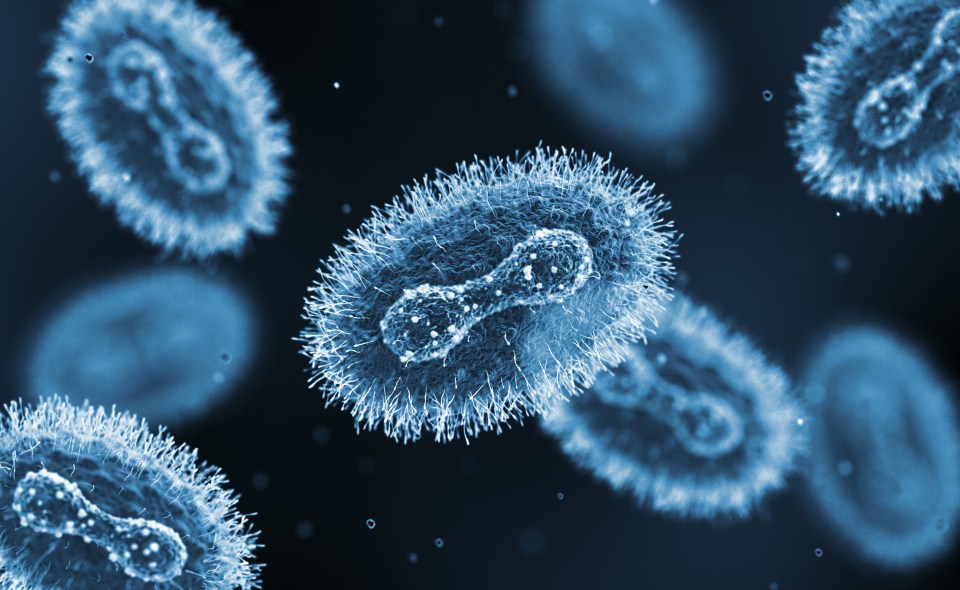
There are two distinct clades of mpox – clade I (with subclades Ia and Ib) and clade II (with subclades IIa and IIb).
The mutant strain combined elements of clade Ib and IIb of the virus.
The UK Health Security Agency (UKHSA) said this isn’t an unexpected occurrence, as both clades are currently circulating.
But it highlighted mpox’s continued potential to evolve, the health watchdog warned.

Meanwhile, other disease experts said the formation of hybrid viruses like this one was “rare” – and worried whether the new mpox strain would be more infectious or severe.
Dr Boghuma Titanji, assistant professor of medicine at Emory University, said: “The identification of a recombinant mpox strain containing elements of both clade I and clade II is precisely what experts in the field feared would happen if the virus continued to spread globally without a decisive response to stop it.
“The key concern now is whether events like this will alter the virus’s transmissibility or virulence.
“There are also implications for how well existing testing platforms can identify these emerging recombinant strains.
“The more mpox circulation we permit, the more opportunities the virus has to recombine and adapt, further entrenching mpox virus as a human pathogen that is not going away.”
UKHSA, which picked up the virus in the traveller through genomic testing, said it was continuing to “assess the significance of the strain” and had shared its findings with the World Health Organization (WHO) so that it could be monitored on a global level.
Dr Katy Sinka, head of sexually transmitted infections at UKHSA, said: “It’s normal for viruses to evolve, and further analysis will help us understand more about how mpox is changing.”
Mpox usually causes flu-like symptoms and a blistery rash.
It’s passed on through close physical contact or by touching contaminated surfaces and objects.
The 2022 outbreak of mpox, described by the World Health Organization as “sudden and rapid”, was caused by the clade IIb strain.
There were around 3,500 cases in the UK by the end of 2022, and it still circulates at low levels, mostly spread by sexual contact.
Clade Ib, a more severe strain, first emerged from the Democratic Republic of the Congo (DRC) in November 2023 and has spread rapidly across the African continent since August 2024 – prompting the WHO to declare a public health emergency.
Though rare, cases have been detected in the UK and Europe.
The UK has a routine mpox vaccination programme, offered to certain eligible groups.
Studies show the vaccine is around 75 to 80 per cent effective in protecting against mpox.
Dr Sinka said: “Although mpox infection is mild for many, it can be severe.
“Getting vaccinated is a proven effective way to protect yourself against severe disease, so please make sure to get the jab if you are eligible.
“It is important to remain alert to the risks from this unpleasant illness.
“Anyone who thinks they may have mpox should contact NHS 111 for advice on what to do.”
Can I get the jab?
THE NHS is offering the mpox vaccine to people who are at increased risk of catching mpox.
You may be able to have the mpox vaccine if:
- you’re a man who has sex with other men and you have multiple partners, participate in group sex, or attend sex-on-premises venues (staff at these venues may also be eligible)
- you’ve had contact with someone who has mpox
If you’ve had contact with someone who has mpox, the contact tracing team should contact you.
They will check your risk of catching mpox and tell you if you need to have an mpox vaccine.
‘Rare event’
Prof Geoffrey Smith, a professor at the Sir William Dunn School of Pathology at the University of Oxford, said: “It has been known for more than 50 years that the genomes of closely related poxviruses can recombine to produce hybrid or recombinant viruses.
“But for this to happen, the same cell has to be infected with both parent viruses at the same time and it is inside the infected cell that recombination takes place to form the hybrid virus.
“Therefore, this is a rare event.”
Commenting on the new mutant strain, Prof Trudie Lang – director of the Global Health Network at the University of Oxford – said: “It is of concern that there is an mpox case in the UK, and of further concern that it is a new recombinant mpox virus.
“This case highlights that mpox is circulating globally and is evolving, as is predictable with these viruses.”
She pointed out that the continuing mpox outbreak in Africa shows “this virus can cause severe disease, and so measures to reduce transmission and prevent spread are vital”.
“In the UK we have excellent systems to identify cases, control onward infection, and implement vaccination campaigns as needed, and these measures should rapidly control this situation in the UK,” Prof Lang went on.
“Elsewhere in the world, in more vulnerable populations and where case detection and access to vaccinations is not so assured, this is harder to achieve.”
Disease experts will be closely monitoring the mutant strain to understand how it affects those it infects and how transmissible it is.
“With clade Ib we observed changes in transmission, seeing person-to-person close contact as well as sexual transmission,” she pointed out.
In comparison, the clade IIb outbreak in 2023 was mostly fuelled by “close sexual transmission”.
“So, if further cases of this strain appear in the UK, or anywhere in the world, it will be important to understand the route of transmission, the presentation and severity of disease, so we can assess whether this strain is more or less dangerous than previous ones and respond accordingly with a connected global effort,” Prof Lang stated.
Mpox symptoms
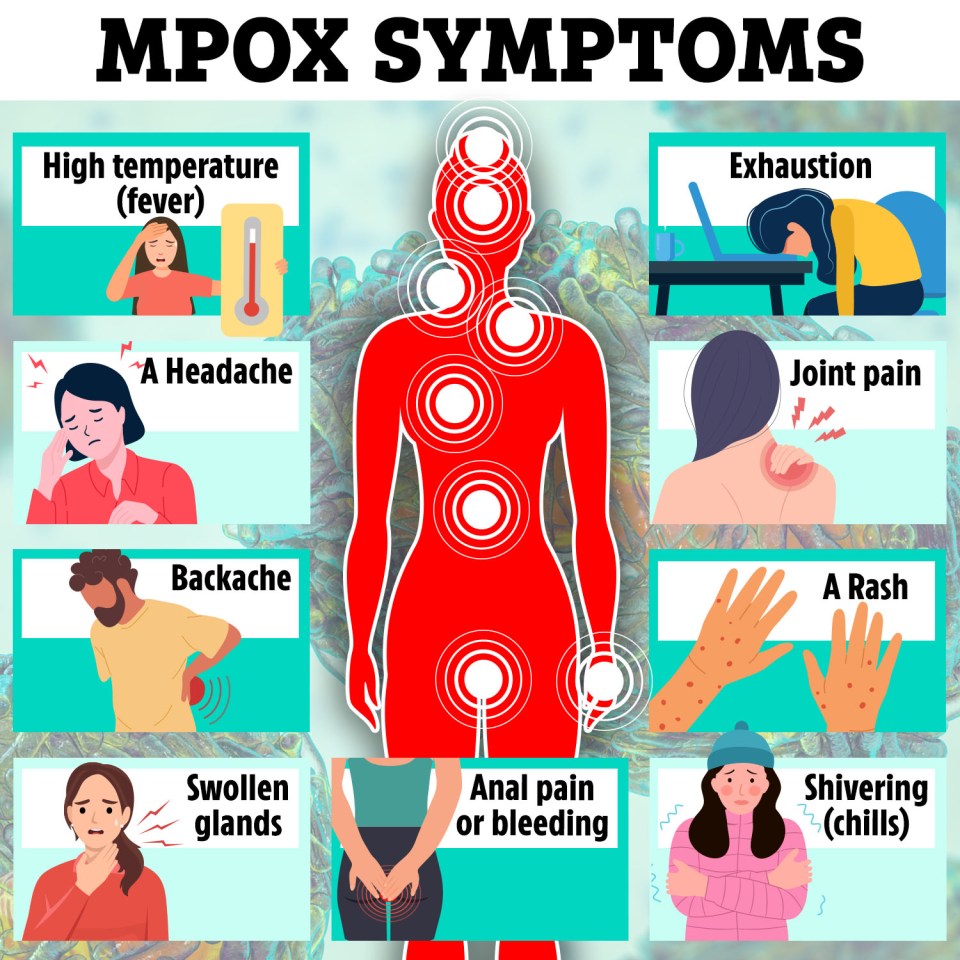
You can develop mpox between five and 21 days after coming into contact with an infected person.
Most people who catch mpox will recover within several weeks without any treatment.
However, severe illness can occur in some.
The illness begins with:
- Fever
- Headache
- Muscle aches
- Backache
- Swollen lymph nodes
- Chills
- Exhaustion
- Joint pain
However, not all people who have mpox experience all of these symptoms.
One to five days after a fever starts, a rash develops, often beginning on the face then spreading to other parts of the body including the soles of the feet and palms of the hands.
The rash can also affect the mouth, genitals and anus.
It tends to be made up of blisters that form scabs which eventually fall off.
Someone who has mpox is contagious until all the scabs have fallen off and there is intact skin underneath.
The scabs may also contain infectious virus material.
Source: UKHSA