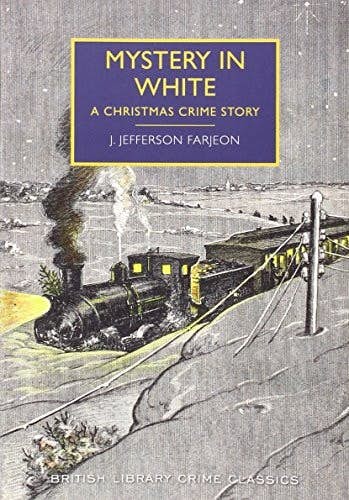
This is the season for Xmas thrills, or at least the cosiness of dark evenings, reading indoors, and thinking about the murder of others, although how will these stories appear with climate change: more fantastical possibly than country house, peer in the library, tales. As usual, there is a cornucopia of choice, not that that is the most appropriate term. Having favourably reviewed Flic Everett’s Murder at Mistletoe Manor (Penguin, 2025, £9.99) in my last, I can now welcome J. Jefferson Farjeon’s Mystery in White (1937), which was published by the British Library in 2014 and is now reprinted at £14.99 in a hardback special edition, although ignore the claim for a new introduction by Martin Edwards, as that is an apology for a prospectus of change. Nicely printed and very well bound and this is a classic of the stranded at Christmas genre, in this case due to a train becoming stuck in the snow, and passengers taking refuge. Brilliant.
A 2024 volume from the series (1948, £9.99), Elizabeth Anthony’s Dramatic Murder takes us to a castle on a Scottish private island for death and then to the tensions of the London theatrical world for plot and denouement. Noelle Albright’s The Christmas Eve Murders (Quercus, 2024) takes us to the Yorkshire Dales, a village pub, and heavy snow for menace. The takeaway, as with Mistletoe Manor and the hosts of such tales, is be careful with whom you are stranded. As with Janice Hallett’s The Killer Question (2025), a pub quiz plays a major contextual role, although the direction of travel is very different. The motto of this quick, well-poised novel is “Those lost along the way were a reminder that tomorrow is never promised.” A part of the plot is given away by the plural of the title, but suspense is ably maintained.
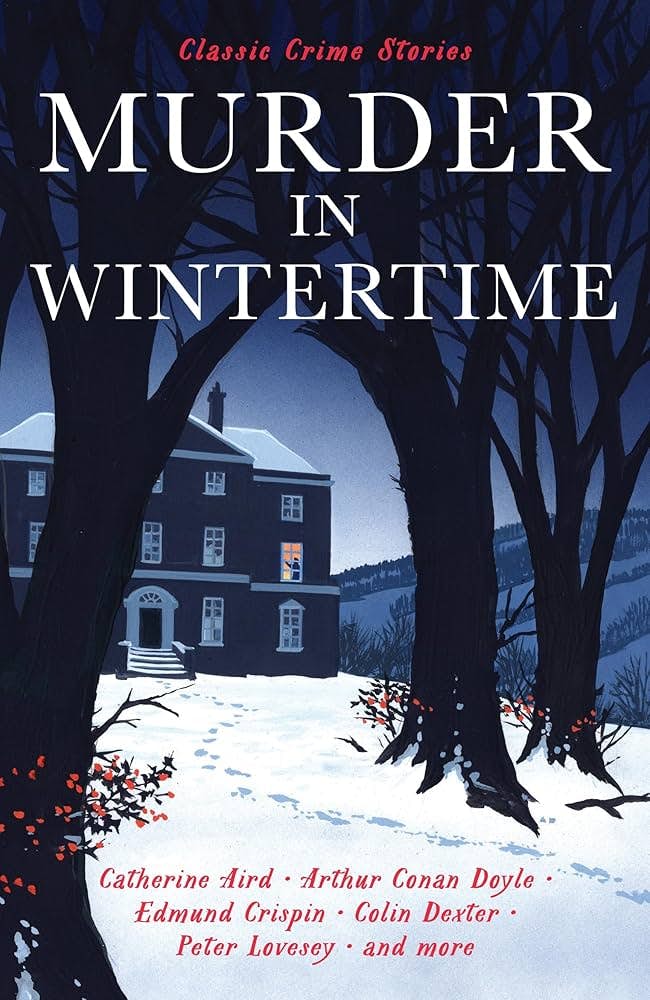
Murder in Wintertime (Profile, 2025) follows earlier selections edited by Cecily Gayford and again is a considerable success. There are nine contributors, the longest Edmund Crispin with “The Hours of Darkness” which amounts to nearly a third of the book. The contributors are well-known but also less familiar. Peter Lovesey kicks off with “The Haunted Crescent”, set in a Bath in 1988 that is far from snowy, and drawing heavily on a murder in the same house in 1838 with a brilliant twist at the end. A masterpiece in the economy of space, skill in scripting and sparsely but successfully executed necessities of suspense and characterisation.
Carter Dickson’s “New Murders for Old” is another murder/ghost story, one in which murderous deceit is held at bay by human decency and divine intervention. A very fine piece of writing. P.D. James’s “A Very Commonplace Murder” is the same, one focused on a truly disturbed individual with, again, a good twist at the end. A setting among the poor serves to capture limited expectations and a perverse quest for significance. Crispin moves the setting to a snowy stately home, starting with hide and seek.
Crispin deploys a detective novelist who comments on the genre and on the views of others, as in:
Richard Neame, with whom I’ve just been carrying on a turgid dialogue regarding the Sociological significance of the Detective Novel. Of course detective novels have no more sociological significance than any other kind of novel … he has some fancy about the detective novel being connected with the rise of Nazism … Crime as actually practiced has little or nothing to do with the detective novel, which is a conventional — unreal genre, as purely imaginative as an interplanetary tale or a medieval cosmology. Naturally it has to be concerned with what’s possible, but what’s probable is practically outside its sphere.
Catherine Aird’s “Losing the Plot” is a boundary/leylandii dispute between neighbours, wit rather than death, Will Scott’s “The Christmas Train”, which also focuses on wit, as does Colin Dexter’s grittier “The Carpet Bagger” in which Morse has a cameo. William Bankier’s “A Hint of Danger” ably links surprise, fraud, murder and deceit, while Conan Doyle’s “An Exciting Christmas Eve” does not work.
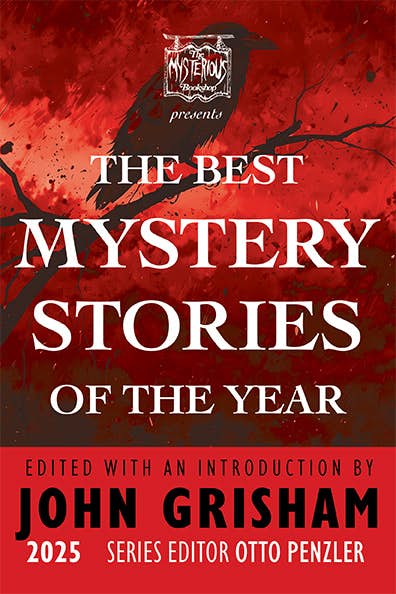
Far from Christmas, but my book of the month is The Best Mystery Stories of the Year. 2025 (Mysterious Press, 2025, $17.95). Like last year’s intro by Anthony Horowitz, the intro by John Grisham is weak. Entitled “Murderers I Have Known”, it in fact deals (and pretty feebly) with two killers, each acquitted on the grounds of self-defense, he had represented, and a gangster he observed when found guilty. The Foreword, by the ever-active Otto Penzler, reviews the field noting that literary journals and “the popular consumer magazines” have become less important, while small presses have become much more so. The volume offers the 20 best short stories from 2024, “an “honour roll” of another ten who nearly made the cut, plus a 1906 bonus story, Jacques Futrelle’s “The Problem of Cell 13”, an Augustus S.F.X.Van Dusen story about an apparently impossible escape.
David Avallone’s “The Golden Road” is a brilliant account of love and murder, Craig Buck’s “Home Game” one of marital deceit and murder, V.P. Chandler’s “Under the Blackjack Tree”, a masterly child’s account of deception and killing set in 1930s Texas, Tracy Falenwolfe’s “Jamming at Jollies’ double-cross upon double-cross, and James Hearn’s “Totality” a skilful exposure of an alibi by means of an eclipse. April Kelly’s “The art of Disappearance” has justified murderous deceit in the Everglades, Erika Krouse’s “Eat My Moose” is on mercy killings in Alaska, an unconventional inclusion, Tom Larsen’s “The Other Brother” is an Ecuador-set get-the-right-one mystery, Billie Livingston’s “Same Old Song” addressing the legacy of the author’s trickster father, Kai Lovelace’s “Only a Story” sees a reader of adventure stories pulled into a deadly one of his own, Sean McCluskey’s “The Secret Menu” finds a private-eye chasing an adulterer who turns out to be anything but, with suffocating consequences, Richard McMahan has a shot dog an unexpected route into a murder-story. Lou Manfredo’s “Dream Stuff” is a skilful and witty tribute to the world of Bogart and Hammett, Karen Odden’s “Her Dangerously Clever Hands” gives us deceit among a gang of Victorian female thieves, Anna Scotti’s “A New Weariness” has her adroit use of Lori, her witness-protection protagonist.
Shelagh Smith’s “Snapshot” is a haunting tale of the aftermath of death, while Casey Stegman’s “Effie’s Oasis” is a murderous comeuppance for evil, with an elderly sick cleaner as the moral lodestar and avenger. No Osman-like mediocrity here.
Changed identities, an American staple feature in Lamont Turner’s “The Lost and the Lonely”. Joseph Walker writes beautifully in “Run and Gun”, as in “Her face had the slightly startled look of recent cosmetic surgery”. Conspiracies intersect in a brilliant Dallas-set tale which richly deserves reading. Andrew Welsh-Huggins’ “Through Thick and Thin” looks at the reach of past crime, blackmail, and he destructiveness of the quest for an answer. Brilliant.
Goodness me! A murder at World’s End. My own nephew slaughtered under the grisliest of circumstances. A ticking clock. A house filled with suspects. An unsolvable case that would confound even the most brilliant of minds … Conrad was murdered … by someone inside this house … whose aim was … to make it seem like it was impossible. Because that would produce suspicion, hearsay, prejudice and all the worst excesses of human nature. Because that would elicit so much chaos and confusion that the truth would become occluded … I’m the only person in the house clever enough to solve the mystery, and you shall push my bath chair. I’ll also need you to investigate my relatives, eavesdrop on conversations, threaten suspects, lie to the police and maybe break a few fingers.
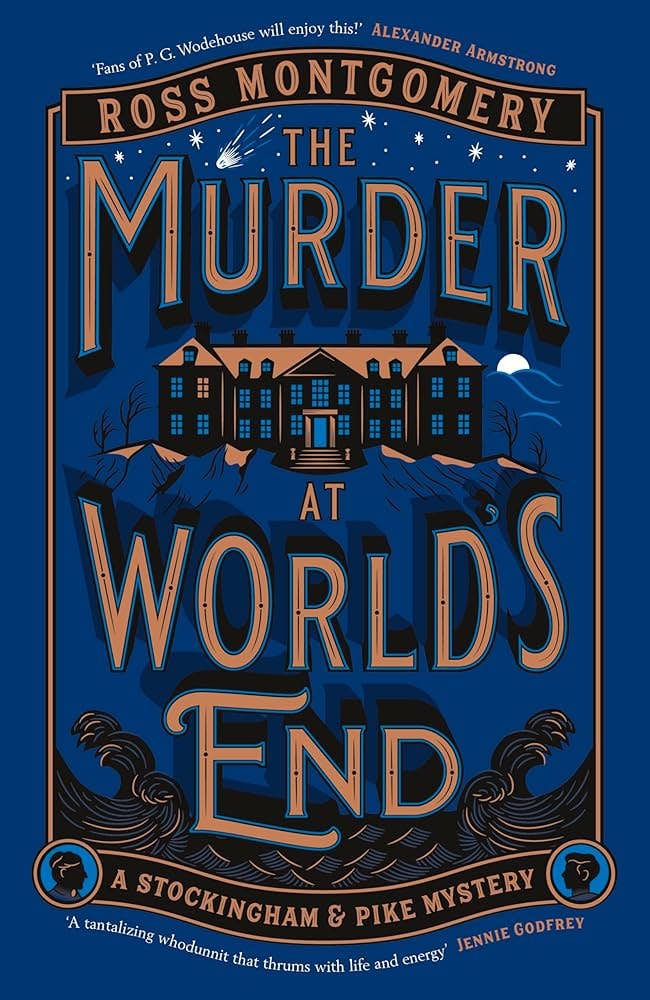
Although set in May 1910, Ross Montgomery’s The Murder at World’s End (2025, Viking, £16.99) is a Christmas-style story, with a cut-off Cornish tidal island the setting for the murder of the study-confined Viscount of Tithe Hall. An absurd Police Inspector, villainous relatives, and the crime to be solved by Miss Decima Stockingham, the 80-year-old termagant aunt of the Viscount, Stephen Pike, who recruit the assistance of Temperance, a bright maid. A delight to read with an excellent solution and several good closing twists.
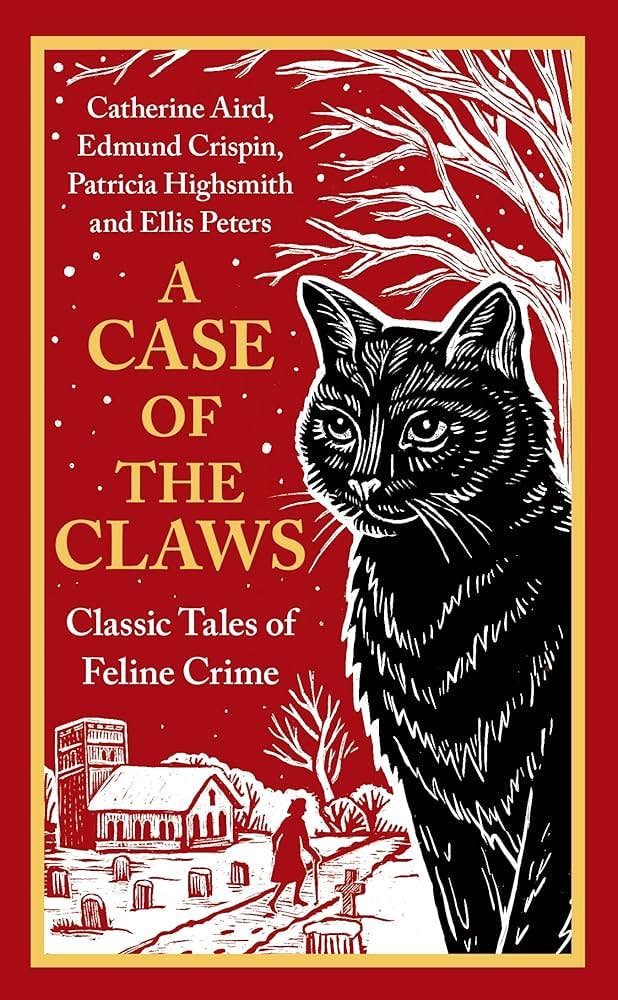
Christmas for the feline fraternity is provided by A Case of The Claws (Profile, 2025, £9.99), an attractive pocket-sized hardback with apt illustrations that reprints stories of Edmund Crispin (1954), Ellis Peters (1976), Catherine Aird (2003) and Patricia Highsmith (2004). The cover proclaims “Classic Tales of Feline Crime”, which is a “reviewers’ warning”, because the criminals are humans and the observant cats bring justice. Peters and Aird note the violent coarsening of English life, with elderly ladies the victims but a cat-cop combination bringing justice. Highsmith takes us to Acapulco, with Ming responsible for the death of a violent American exploiter of his lover, Ming’s partner. With his characteristic verve, Crispin takes us to the Copping case in which Gervase Fen offers a brisk account of a locked room murder which is brilliantly disentangled.
Following The Lover of No Fixed Abode and Runaway Horses, An Enigma by the Sea (2026, £10.99), is the third novel by Carlo Fruttero and Franco Lucentini to be published by the excellent Bitter Lemon Press, although an English translation of this 1991 work was first published in 1994. This handsome paperback is very welcome. Set in the Gualdana, a villa-stretch of the Tyrrhenian coastline in the gloomy chill and darkness of winter, this is an account of an Italy of extraordinary individuals facing a growing reality of perturbation slipping into paranoia. Murder does not occur until well into the novel, by when a dystopia is well to the fore, one in which depression is commonplace and society held up to be dysfunctional, although the Carabinieri receive praise.
Having not been overly impressed by the previous Michael Connelly, I was much more satisfied by his The Proving Ground (Orion, 2025, £22), a return to the Lincoln Lawyer format, with AI in the frame for the chatbot that helped lead an adolescent to kill his former girlfriend. The usual courtroom dynamics and extramural efforts and trickery, but all whipped together into a successful page-turner, though the chance to put the chatbot on the stand was not taken.
AI of a very different type is to the fore in Nelson and Alex DeMilles’ The Tinmen (Sphere, 2025, £25). Set in Camp Hayden in the American desert, this novel sees secret war games between American Rangers and armed robots, with the killing by one of the latter of the principal scientist, Major Ames, leading to the discovery of a deep-state conspiracy. The epic ends in a battle to the death, with many “crushed in the gutter of a history book as the pages kept turning”. A goodies versus baddies story, with true grit, resilience and integrity put to the test. Plot somewhat sparse of sense, but certainly readable within its parameters. The detection focuses on the why and the who.
Unfortunately, this equation does not work in Les Hinton’s first novel, Dying Days (Whitefox, 2025, £9.99). Blurbed by Jeffrey Archer, Michael Dobbs and William Shawcross, but heavily overwritten and without glimmers of interest in the use of language or in the characterisation. Explosions attacking leading British and American newspapers touch off a plot of pace in which a caricature baddy is resisted by a Fleet Street old hand and a press newbie in a plot that moves between Britain and New York with a cast of implausables littering the embattled remains of print journalism and the wider world of the connected. Weak.
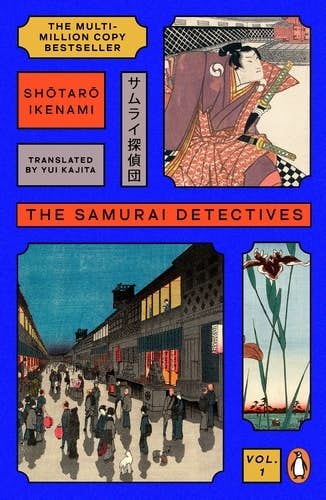
Turning to quality, the increasingly active translation of major Japanese works continues with that of Shotaro Ikenami’s The Samurai Detectives (1973; Penguin, 2025, £10.99). Set in the late eighteenth century, this is a set of conspiracy/adventure stories with a common cast of resolute saviours, Akiyama Daijiro, a swordsman of great skill and integrity, his retired father, Kohei, and Mifuyu, a young swordswoman. They introduce us to a finely realised world of rank, money, honour, deceit, the need for integrity in a bitter world, swords, clothes, the contours of place; all presented clearly and with lines as if from a haiku, as in the opening “The bamboo grove swayed in the cold wind”.
Book-launches in my experience rarely see bomb explosions and firefights. And then there is Australia. Far from Christmas country homes, Chris Hammen’s Legacy (Headline, 2005, £20) is an Outback survival novel in the Martin Scarsden series which takes the protagonist from true-crime exposé writer to target. Set in a “fly-speck settlement” in “a hellscape of reds and oranges and yellows”, this is in part an Australian version Western, with a familiar, well-etched shoot-out at the end, a families’ saga of old loves and feuds, a world definable at the end by guns. Reads well.
Eman Quotah’s The Night Is Not For You (Wildfire, 2025, £20), begins with a gory alley-killing blamed by some on a jinn like the Umm Ad-Duwais of the United Arab Emirates, becomes serial killing, and has some fine observant writing about growing up in the small town Arab world:
We eat our sandwiches and fruit in the sun with our backs to each other, bees buzzing at our knuckles and in our ears, while my father thinks about a dead man and God’s plan and mortality, and I fantasize about stealing a donkey, about independence, about leaving and never coming back.
Detective fiction plays a role in growing up:
… we find a bunch of translated Agatha Christie books in the school library, and we became obsessed with Hercule Poirot and his moustache. Susu draws a comic about Hercule. He discovers a well of poisoned water. The poison is highly diluted, so people die slowly and painfully over many years.
Differing forms of magic, truth or proof play a role in a story that becomes increasingly spectral, one with particular sites having potency. The police are marginal and identities dissolve and reform. Better written and more mysterious than Legacy, though the latter is readily fit for purpose.
The successful M.W. Craven takes his Washington Poe series forward in The Final Vow (Constable, 2025, £20), with a remorseless sniper terrorising Britain. This is not a subtle book, but one with transactional language:
Commander Unsworth, the man who’d smirked when Poe had been suspended, had met Ezekiel Puck’s police convoy at the entrance to Charing Cross Police Station. Poe was in the first car. Unsworth had flashed Poe a constipated smile then nodded for him to follow him into an office he’d annexed. He’d tried to apologise, but Poe wasn’t having any of it.
Similarly, the descriptions lack interest, allusion or potency: “last night’s wind had blow itself out. It was warm, not hot. Summer was hanging on, but its colours were changing. Green leaves now tinged with yellow”.
Those interested in the bibliography of detective fiction and mindful of the formative role of publishers should turn to Maigret and the Penguin Books (Penguin Collection Society, 2015) which includes not only a detailed illustrated historical bibliography but also relevant essays by Julian Barnes and James Mackay. The same could be done for other authors.
For those who want their crime on screen, Ruth Ware’s 2016 novel The Woman in Cabin 10 has become a Netflix Film, directed by Simon Stone, with Keira Knightley and Guy Pearce as the main players. Works well, with excellent photography, although I cannot see Knightley getting the seat at the gala.
Jeremy Black’s books include The Game Is Afoot: The Enduring World of Sherlock Holmes; In Pursuit of Poirot; The Age of Nightmare: The Gothic and British Culture, 1750-1900; and English Culture: From the 18th Century to the Present Day.