“He’d read a lot of detective novels. Terrible ones, exciting ones, bestsellers. Those that were mysteriously praised to the skies, despite their leaden flaws, and those he unearthed dead and yellowed, on the shelves of a second-hand bookshop, which sprang instantly to life when he read them. He had grown familiar with the grammar — the formula of clues, red herrings and diversions, and the great reveal. It occurred to him that detective fiction employed much of the same techniques as counter-espionage — notably, deduction, intuition, examination, counteraction and control.”
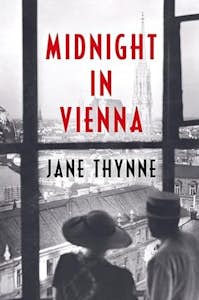
Harry Fox in Jane Thynne’s Midnight in Vienna (Quercus, 2024, £20), is my book of the year because I only read it in 2025.
There are snowy scenes in the standard Yuletide roundup, as in G.B. Rubin’s excellent Murder at Christmas (Simon and Schuster, 2025, £16.99), a 1932 reader-agent story that offers much as entertainment. The same year is chosen for another interactive book, Henry Lewis’s The Bookshop Murder (Sphere, 2025, £18.99) which would make an attractive Christmas present and game.
The prewar period in December ice and snow is differently approached by the excellent Tom Mead in my runner-up with his Cabaret Macabre (Head of Zeus, 2024, £9.99), in which a country house in 1938 sees murderous tensions within and around the family of Sir Giles Drury, a hanging judge, and his unfaithful wife Lady Elspeth. Joseph Spector and Inspector Flint are brought in to serve particular personal interests but find themselves addressing a brilliant murder-puzzle in the style of John Dickson Carr. Though trains in 1938 did not run from Greenwich to Paddington before a descent to the Tube, the writing is very good: “Now she was able to live the life of a diva without the exertion of actually being one”, and there are explicit references to the masters as in “‘A veritable Dr Thorndyke,’ Spector commented”.
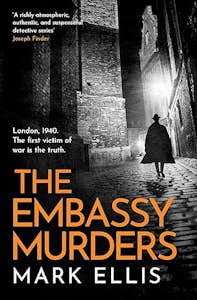
The grim winter a year later, that of 1939-40, is the setting for Mark Ellis’s The Embassy Murders (published in 2018 as Prince’s Gate, paperback in 2023, Headline Accent, £12.99), in which Detective Chief Inspector Frank Merlin of Scotland Yard deals with the murders of two employees of the American Embassy and the hit-and-run killing of an émigré scientist. With Joe Kennedy (the would-be Donald Trump of his age?) to the fore, this is a plot in which murders interplay with sexual drives, Appeasement, and a widespread seediness. Fear of offending the Americans plays a major role.
Yet Yuletide roundups are misleading as most detective novels do not deal with such settings, while global warming makes a dismal of drizzle a more likely prospect at Christmas, as indeed captured in the Devon-set Nick Louth The Deep End that is reviewed later. I deliberately handled several assured Christmas works in my November accolades and, instead, turn here to a broader prospect of death.
Set in a cold Oxford in 1901, A.D. Bell’s The Book Binder’s Secret (HQ, 2025, £20) follows Lilian, an apprentice bookbinder, who discovers past secrets when rebinding a book. A puzzle becomes deadly in a hypnotic novel with fine writing and a skilful ability to discover the culture and society of the past. As such there is a
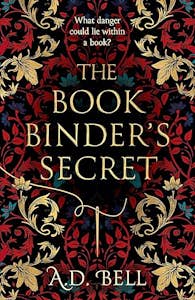
Dickensian character to plotting, individuals, and writing, not least with both backstory and the death of the villain. This is my book of the month and, as it is a really first-rate debut novel, I have selected it as the best book actually published in 2025. The quality of writing tends to be underplayed as a factor in many reviews of detective fiction, for example, frequently, those in The Times, but this quality is a key element in what is a branch of literature, one involving far more than just plotting. For those who enjoy bookbinding, the studies to read include those by David Pearson, notably his forthcoming Bookbindings: An Illustrated History (Bodleian Library Publishing, 2026), and his more detailed relevant backlist.
For quality of writing, as well as a 1938 setting shared with Mead, there is Midnight in Vienna, a novel as well as a detective story set, unlike Mead but like Ellis, in the complex international interactions of the period, and one that introduces the Stella Fry/Harry Fox combination.
Christianna Brand returns in sparkling form in Death in High Heels (1941; British Library Crime Classics, 2025, £10.99), a debut novel that was to be characteristic of her wit and able plotting. Set in Christophe et Cic, a fashionable West End boutique, this sees sudden death through oxalic acid (used for hat-cleaning; I did not know either), and a spiral of suspicion as ten potential culprits are shuffled and reshuffled. More sex than a modern reader might anticipate, and a clichéd negative presentation of homosexuals, as well as lots of throw-away lines as in “Bunny soon changed all that, but he did it up in the so-called modern style, and though it was extraordinarily well done, it was a trifle behind the times”. A complex plot and one of those floorplans would have helped, but really high-quality writing, although she gets better in her later novels.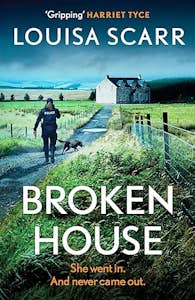
Louisa Scarr continues her PC Lucy Halliday series with Broken House (Canelo, 2025, £9.99), an account, focused on a police dog-handler, of male cruelty to women, tensions between sisters, the working of dogs and their learned forensic skills, all enlivened by an excellent plot and an ability to twist and turn between disappearances, emotions and the hunting down of villainy. First-rate.
Nick Louth’s The Deep End (Canelo, 2025, £9.99) takes forward his last, with corruption and evil in the Devon and Cornwall Police even more to the fore. An apparent suicide at Teignmouth, with truly horrible gulls at play on the corpse, unexpectedly takes us into a plot in which the aside/sub-plot overwhelms the main in a skilfully constructed account with much on the tensions of relations between women alongside a more standard toxic masculinity. The continental link near the close is not credible, but this is an excellent page-turner that has a good courtroom conclusion. 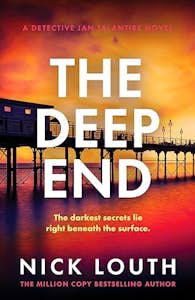
Lynne McEwan’s The Winter Dead (Canelo, 2025, £9.99) also takes forward a series, in this case with DI Shona Oliver finding a blood-soaked hammer in some wood she is helping a local publican to stack. Amidst thick snow, South-West Scotland, at winter’s absent mercy, is the ably-etched setting. We rapidly escalate to a missing ranger and possible culprits: “A tree rustler, the eagle killer, the gang of housebreakers and now a wronged husband.” Meanwhile, “Life becomes a long list of departures”. Giving “a free character analysis” is all-too-necessary, especially for a narcissistic poet.
I find the failure of most reviewers to comment on the quality of writing depressing, but then I benefited greatly from the comprehension taught as part of an excellent education in English Literature at school (high school for American friends). Indeed, particularly after I came top in the English mock A-level by 10 per cent, Michael Fitch, the Head of English, wanted me to apply for English at Cambridge and that interest has led me to write books on Shakespeare, Defoe, Fielding, Smollett, Austen, Dickens and English culture as a whole, both in the eighteenth century and over the last half-millennium.
So, I read carefully for clarity, imagery, sentence structure and other necessaries. And I like apt and arresting phrases, as these from Midnight in Vienna: “disappointment would string like the gnats around the campfire in the drizzle … Politics tinged the air like petrol … the rain edged air … fancied herself as an intellectual on the basis of working in a French restaurant…” Unfortunately, many reviewers appear unwilling or unable to comment on style and therefore leave readers exposed.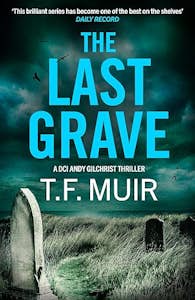
Yet, consider the contrasts when reading. For example, two of the tough cops, hard men, raw Scotland genre came to me this month. One, T.F. Muir’s The Last Grave (Constable, 2025, £25), deploying his DCI Andy Gilchrist, is well-written, and moves as a result apace, with the murder of investigative journalists leading to a diving into Glasgow mob family feuding. A sideline over terminal illness and mercy-killing. In contrast, Quintin Jardine’s Dead Man’s Tale (Hodder Headline, 2025) who throws to the fore Bob Skinner is clunky in tone and tempo, poorly-written, with lots of poor characterisation, and is one to miss. Too much writing of the “Her brow was knitted” quality, or, rather, lack of it.
I similarly found it difficult to engage with Ruth Kelly’s The After Party (Pan, 2025, £9.99), a somewhat overwrought and certainly overwritten piece on the aftermath of friendship in the shape of disappearance and murder. “I tell myself it’s safe to breathe again” for the clichés end with the close of this. Set around Abraham Lincoln’s assassination in 1865, David Cairns’s The Case of the Hydegild Sacrifice (Finavon Press, 2026, £9.99) is also poorly written.
Although better-written, I had to give up on M.J. White’s The Stolen Dead (Hera, 2025, £9.99). The combination of a psychopath haunting the Suffolk beaches and a psychic able to sense echoes from the past, including speech, did not work for me.
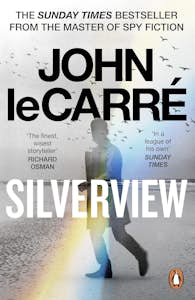
Reading from the past, a superior thriller is provided by John Le Carré’s Silverview (Penguin, 2021), which was unpublished when he died in 2020, “written, but never signed off” in the words of his son Nick who only had to add “a clandestine brush pass”. Unlike many of Le Carré’s work, this is brief, which helps greatly. The settings, characterisation, and dialogue are well-realised, but the plot is somewhat predictable for his later years. Britain has lost direction, America is a toxic ally, there are ludicrous ideas in the run-up of Gulf War Two including “gifting [sic] of Gaza and South Lebanon to Israel … Enormous secret armies of international mercenaries under false flags,” and there is apparently justification for treason — in this case supplying information to a Gaza-based organisation on British planning. Le Carré is scarcely subtle:
“poor, toothless, leaderless, Britain tagging along behind because it still dreams of greatness and doesn’t know what else to dream about … the Service as the problem rather than the solution … in the absence of any coherent British foreign policy, the Service was getting too big for its boots.”
There is an air of decline in Silverview, the home of two of the key characters, but also in the implausible plotting — both of the story and of several of the set-pieces. But the brevity helps and Silverview is certainly better than many of the Le Carré’s from The Honourable Schoolboy on.