WHEN two men stormed into 13-year-old Contessa Miller’s bedroom in the middle of the night, she had no idea her mother had forked out thousands for her to be kidnapped.
Contessa, now 50, says she was snatched from her home and taken without consent under a system sold to parents as help, healing and last-resort care.
Every year, thousands of “troubled” children are removed from their own homes and taken to remote camps, therapeutic boarding schools or rehab centres.
Using adverts dressed up as guidance, parents are quietly persuaded that distance is discipline.
Carefully staged images of forests, campfires and laughing children sell the illusion of healing – and “wilderness therapy” is presented to parents as a reset button for struggling teenagers.
The message is carefully crafted: remove your child from their world, place them somewhere remote, and they will return changed for the better.
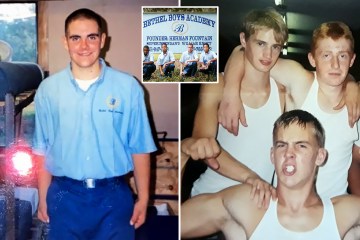
But, in Netflix’s Hell Camp, survivors claimed children were “hit, starved and tied to trees” for days under Steve Cartisano’s so-called survival programme Challenger Foundation, launched in 1988 as one of the first wilderness therapy camps.
Many former attendees, including Paris Hilton, say the experience was brutal – with long-lasting damage.
Paris shocked audiences in 2020 when she chose to publicly confront a past she had kept hidden for years – revealing that her fame had masked deep psychological scars stemming from her teenage years.
She described being pulled from her bed by people she did not know and transported thousands of miles away against her will.
In a similar harrowing story, Contessa was 13 when she was jolted awake at 3am to find two men standing over her bed in 1989.
The men were not breaking in – they were hired “escorts” and had been sent with her mother’s permission at the price of over $20,000.
The two men were carrying a handwritten note: “Go with these people, don’t give them any hassle, you’ll be home before you know it.”
The first thing they asked was not her name, or whether she was scared.
“Have you got a bra on?” were the words she heard to break the silence.
Moments later, Contessa says, the men grabbed her “by the shoulders” and forced her out of the house.
At the time, her relationship with her mum had deteriorated to the point that Contessa had asked to be put up for adoption.
When the men arrived, she believed this was finally happening – that she was being taken to another family.
She had no idea that what lay ahead was not a fresh start, but something far more extreme.
The men drove her in a rented car from her home in Virginia to Beacon Field private airport, bypassing the rituals and safeguards most people associate with travel.
There were no passport checks, no security queues, no chance encounters with staff who might ask questions, and escorted directly onto a private jet.
Contessa told The Sun: “Once I was on that plane, I could just feel it, there was so much fear, just so much of it. Once that door closes on the plane, you realise that’s it – you’re going to have a different life from now on.”
Roughly ten minutes into the flight, as the jet crossed state lines, the reality of what was happening began to settle.
She was not being taken to a new family. She was being sent to Wilderness Therapy.
After landing in Utah, Contessa was transferred into another vehicle and blindfolded for the long drive to the programme site called Challengers.
The billion dollar question is how is this legal? There is no law against it so there is no law they’re breaking
Contessa Miller
When they arrived, she was strip searched and every personal possession was taken. In return, she was given a trash bag containing clothes her mother had packed, two wool blankets, a tarp, a seatbelt and a piece of string.
The first three-week phase of the programme was called “Primitive” and the children were given no food for three days, Contessa says.
Each day, they were forced to hike for miles across desert terrain, carrying what little they had as their bodies weakened and hunger sharpened their thoughts.
“That’s when you learn a different side of hunger,” Contessa said. “I was looking at lizards thinking, can I eat that?”
By the end of the first day, her feet were blistered, swollen and bleeding – the skin torn raw by hours of walking without proper footwear or medical care.
They were made to carve spoons from splintered sticks and smash open tins with stones – and anyone who failed was left hungry.
During one hike, a snake struck Contessa’s foot, its fangs catching on her boot as it tried to bite through the leather.
Starving, they decided to kill it and eat it for dinner. After not eating meat in days, Contessa said it was “crunchy and chewy and tasted like chicken.”
Contessa said she would often refuse to complete hikes due to the sheer pain in her feet and body.
But she was punished and taken away in the dark to finish the hike.
At night, when the children lay asleep, their trousers and shoes were taken away to prevent any thoughts of escape.
But Contessa said: “The thought didn’t even cross my mind. Where would I even go?”
The “therapy” camp was located deep in Utah’s remote desert wilderness, an isolated landscape of vast open plains, canyons and scrubland, miles from towns, roads or mobile signal.
Extreme heat, sudden storms and freezing nights were a constant threat rather than an exception.
Looking back now, Contessa asks: “As an adult I have these questions, why are they able to use that land – or even have permits to have kids out there?
“The billion dollar question is how is this legal? There is no law against it so there is no law they’re breaking.”
On another hike, Contessa says each child was given a plastic bag with rice, oatmeal and flour and basic rations before being sent to a distant point and separated from one another.
Blindfolded once again, they were led to isolated locations to complete the so-called “solos” challenge, a prolonged period of total isolation lasting up to eight days.
Alone in the wilderness, the children were expected to survive entirely by themselves.
The weeks leading up to it were framed as training – learning how to build fires, shelters and prepare food.
Contessa said she was “starving” for days – unable to build a fire or make food despite trying. At night, she slept until two wool blankets.
“The only shelter we would have was the tarp we were carrying that was rolled up as a back pack,” she said.
“We would use that to make a shelter – but the weather in Utah is very extreme very fast and very quick – high winds, rain and a lot of heat.
“It’ll leak on you, fly away, when you’re out there and there’s no place to shelter it is really scary and its not like you can say, ‘mum can and save me’.”
Back at camp, Contessa was given just two squares of toilet paper each time she used the toilet.
Children were reduced to numbers, called out by digit, forced to sing or count to 100 while relieving themselves, dignity deliberately eroded.
At Steve Cartisano’s Challenger Foundation, survivors say the abuse escalated after he moved operations overseas to dodge legal scrutiny following the death of teen Kristen Chase in Utah.
Kristen, 13, died in scorching heat on her fourth day at the Challenger Foundation camp after being forced to hike Utah’s brutal Kaiparowits Plateau.
Cartisano and Challenger were charged with negligent homicide and nine misdemeanor counts of child abuse.
There are hundreds of cases of wilderness therapy victims who we have referred that are still ongoing
Kathryn Kosmides
But Kathryn Kosmides, an advocate and legal advisor for victims, said it’s still difficult to hold the organisers accountable.
“There are hundreds of cases of wilderness therapy victims who we have referred that are still ongoing,” she told The Sun.
“Looking from a legal perspective, there has to be harm that occurs and damages that happened afterwards and how is there a lifelong impact.
“A lot of it is psychological damage but the harms that occur… often don’t pass the legal threshold.
“And they can say, ‘oh, well, depriving them of food, or taking their clothes away from them is part of the programme, and their parents signed a bunch of paperwork they probably didn’t read’, to allow this behaviour to happen.
“It’s unfortunate because they’re minors and their parents are signing away their rights.”
Kosmides warned that staff screening for the camps is deeply flawed.
She said: “Even if you’ve been arrested for sexual assault, or domestic violence, or these things that might be disqualifications, it might not show up on these background checks.”
‘Strip searched and abandoned’
Now 22-years-old, Gertie Siegel was taken to a wilderness therapy camp when she was 12 while living in Vermont.
Kidnapped and dragged out of her home, Gertie found herself straight on a plane, bound to Trails, North Carolina, ready to join a Wilderness Therapy programme costing $50,000.
She told The Sun: “When I first arrived I realised I was lied to and I was not actually at a summer camp,” she says. “I kept thinking this can’t be real. I must be dreaming.”
Upon arrival, staff escorted her to a “shed” where she was “strip searched” and had all her belongings confiscated. The only item she was allowed to keep from home was her underwear.
Gertie alleges that she was made to stand naked at just 12-years-old in front of adult men.
On her first night, she claims she was wrapped tightly in a tarp and physically restrained while trying to sleep, with an adult lying on top of her to prevent escape.
“We were constantly refused food,” she says. “I lost about 20 per cent of my body weight.”
On long hikes, children were denied bathroom breaks, even when they begged. Some urinated on themselves after staff refused to stop.
Children were pressured into confronting one another in group sessions – forced to repeat that they were “bad kids” and to practise apologies to their parents.
“There was no consideration for how this would impact us,” Gertie says.
I was set up to fail. My parents thought I was going to Trails to get legitimate therapeutic hell
Gertie Siegel
The Sun revisited Trails Carolina’s website – pulling up the exact pages that existed at the time she was taken.
Images show smiling children kayaking and language promising safety, structure and healing.
Gertie says the activities shown did not happen, and the reassuring picture presented to families bore no resemblance to the reality she experienced.
When Gertie returned home, she says her parents did not believe her account.
“I was set up to fail,” she says. “My parents thought I was going to Trails to get legitimate therapeutic help.”
That changed only after the death of a 12-year-old boy named Clark at Trails Carolina.
“By the time Clark died, that’s when my parents believed me,” Gertie says.
After his death, Trails released a statement claiming more than 2,700 families had passed through the programme.
“They impacted a lot of children,” Gertie says.
Across the US, it’s thought between 120,000 and 200,000 “troubled teens” live in these types of facilities, governed by a patchwork of state-by-state regulations.