

A MUM and her teenage daughter who were thought to have died from food poisoning were actually killed by the deadly spy poison, ricin.
The disturbing outcome of the post-mortem tests have triggered a chilling murder probe.
Sara Di Vita, 15, and her mum Antonella Di Ielsi, 50, died just days after a family meal in the tiny Italian town of Pietracatella.
But what first appeared to be a tragic case of food poisoning has now turned into a suspected pre-meditated double homicide after forensic tests uncovered traces of the lethal toxin.
Ricin – a rare, odourless poison famously used by the KGB during the Cold War to assassinate enemies – was found in the victims’ blood and in Di Ielsi’s hair.
Investigators are now racing to find out who slipped the poison into the family’s food.

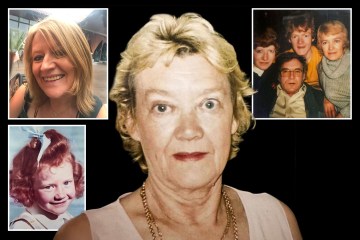
The mother and daughter fell ill after a meal at their home on December 23 in Pietracatella, a rural community in southern Italy with just 1,200 residents.
Sara’s father, Gianni Di Vita, an accountant and twice-elected former mayor who also served as a local treasurer for Italy’s centre-left Democratic Party, was also at the dinner.
He developed symptoms of poisoning but survived.
Detectives believe the toxin was consumed during the December 23 meal because the couple’s other daughter – Sara’s older sister – was not present that night and has shown no symptoms.
The day after the dinner, Sara and Antonella went to hospital complaining of nausea, vomiting and severe stomach pain.
Doctors diagnosed them with stomach flu and sent them home.
When their symptoms worsened they returned and were eventually admitted – but both died with what doctors described as “unusual speed”.
Sara died on December 27 and Antonella the following day.
Cardarelli Hospital intensive care chief Dr Vincenzo Cuzzone said the deaths unfolded at terrifying speed.
“They began showing symptoms after a meal, but the details are still incomplete,” he said.
“There was liver failure, followed by a cascade of events, one after another, at extraordinary speed, ultimately leading to multiple organ failure.”
He added: “I had the impression some external factor stopped their heart.”
Initially, doctors suspected gastroenteritis or food poisoning.
Other possible explanations – including botulism, listeria, fulminant hepatitis or chemical contamination – were also examined.
Five doctors who treated the pair are now under investigation for suspected manslaughter and negligence over claims the poisoning was misdiagnosed.
Prosecutors say such probes are routine in cases like this.
Just a few milligrams of ricin can cause organ failure and death within three to five days.
Professor Gianni Sava, a pharmacology expert, told La Repubblica that as little as 14 milligrams could kill a 70kg adult.
The toxin is produced from castor beans and is notoriously difficult to trace.
Investigators are also examining the mysterious illness suffered by Sara’s father around the same time.
According to La Repubblica, Gianni Di Vita was admitted to Rome’s Spallanzani Hospital – initially in intensive care before moving to a general ward where he remained for about ten days.
Despite extensive toxicology and microbiology tests, ricin was never detected in his system.
This has become one of the central questions in the investigation.
Detectives are trying to determine whether he may have ingested a very small dose – enough to make him ill but not leave detectable traces.
Another possibility being explored is whether his illness was completely unrelated to the poisoning.
Complicating matters further is that Spallanzani specialises in infectious diseases rather than toxicology – meaning ricin was not specifically tested for at the time.
In the early stages of the investigation, police examined whether contaminated food could be responsible.
Officers seized leftovers from the family home including fish, seafood and mushrooms.
Items collected included clams, mussels, cuttlefish, cod, flour and jars of mushrooms preserved in oil.
Early theories focused on the possibility that a deadly death cap mushroom had accidentally been mixed into the food.
Amanita phalloides – known as the death cap – is one of the world’s most poisonous mushrooms and responsible for around 90 per cent of fatal mushroom poisonings worldwide.
Even half a cap contains enough toxin to kill an adult.
But tests ruled out botulism and contamination from rat poison used during pest control at the family’s granary.
The discovery of ricin has now shifted the investigation dramatically toward deliberate poisoning.
Detectives are preparing to carry out a fresh search of the family home.
Forensic police will analyse dishes and everyday objects that may still contain traces of the toxin.
Investigators are also combing through computers and phones to see if anyone searched online for information about ricin.
Because the substance is extremely difficult to obtain – especially in a small rural town like Pietracatella – detectives are also examining whether it may have been purchased through hidden online marketplaces such as the dark web.
Attention is also turning to the family itself.
Sara’s older sister Alice – who was also taken to Spallanzani Hospital during the ordeal but never showed symptoms – will be interviewed again.
Rumours of possible family tensions, which circulated in the village shortly after the deaths, are also expected to be explored further as detectives question relatives and people close to the family.
A key breakthrough could come with the full results of the victims’ autopsies, expected by the end of April.
Experts hope the examinations will clarify the exact timing and method of the poisoning.
The case has stunned Pietracatella, where residents struggle to believe someone from their tight-knit community could be responsible.
Mayor Antonio Tommasone said: “We are a small community and everyone has always got on with each other, there has never been any tension.
“We are like family. We trust the investigators, but we are struggling to believe this was anything but an accidental death.”
Friends of Sara said they spoke to the teenager on Boxing Day – just hours before her condition rapidly deteriorated.
They told local media: “We last spoke to Sara on Boxing Day, over the phone.
“She believed the heavy treatment at the hospital would be sufficient and didn’t expect her condition to deteriorate.”
Sara’s father Gianni, who survived the mysterious illness, said: “I’m feeling better, but I still can’t understand what happened.”
The sinister use of ricin has chilling echoes of one of the most famous assassinations of the Cold War.
In 1978 Bulgarian dissident Georgi Markov – who had defected to the West and worked for the BBC in London – was attacked as he crossed Waterloo Bridge on his way to work.
An unknown assailant jabbed him in the leg with an umbrella fitted with a hidden device.
Markov developed a fever that evening and died four days later.
Scientists at the Porton Down chemical and biological weapons laboratory in Wiltshire later discovered a tiny pellet embedded in his leg that was believed to contain ricin.
KGB defectors later said the Soviet spy agency had orchestrated the umbrella attack.
Just before Markov’s death, another Bulgarian defector in Paris developed a fever after a similar attack but survived.
Doctors later found a pellet containing ricin beneath his skin.