A woman accused of murdering her girlfriend and burying her body in their garden denied knowing anything about her disappearance when quizzed by a journalist, a court heard.
Anna Podedworna said ‘God is up there and he knows … what had happened’ before giggling when asked about the whereabouts of Izabela Zablocka.
Podedworna also suggested Ms Zablocka may have taken her own life or entered into an arranged marriage with a Pakistani man. She told the Polish journalist who turned up at her home in Derby asking about where Ms Zablocka was: ‘You know, honestly, I really don’t know.’
Podedworna, now 40, is on trial accused of murder, preventing a lawful burial and perverting the course of justice.
Ms Zablocka’s body was found in June last year buried under hardstanding of the home the two women shared – 15 years after she last had contact with her family.
She had been dismembered, bound with electrical tape and her remains put in two plastic bin bags having suffered a ‘violent death’ sometime between August 28 and October 1 in 2010, Derby Crown Court has heard.
Jurors have been told Podedworna cut Ms Zablocka’s body in half using skills she learned while employed as a butcher and then ‘got on with her life as normal’ – including having two children with a local man.
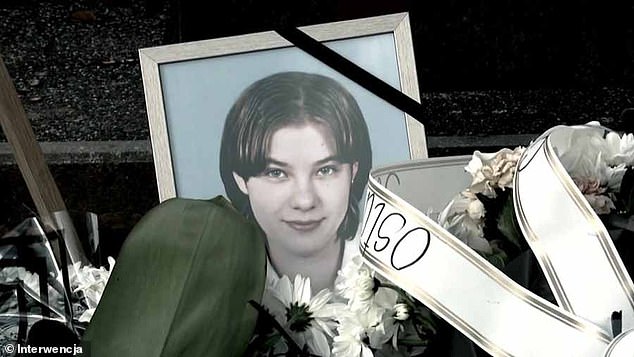
Izabela Zablocka (pictured) last made contact with her family in August 2010. Her remains were found 15 years later buried in the back garden of a terraced home in Derby where she used to live
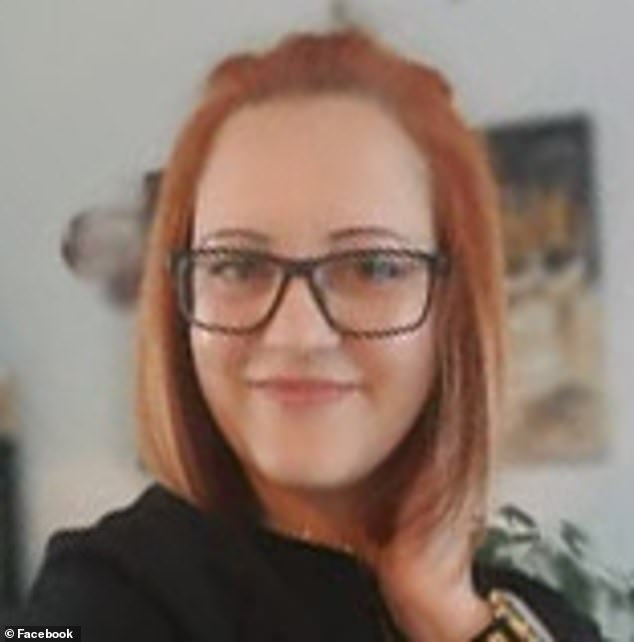
Anna Podedworna (pictured) now 40, denies murder, preventing a lawful burial and perverting the course of justice. She told a TV reporter she had know idea where Ms Zablocka was
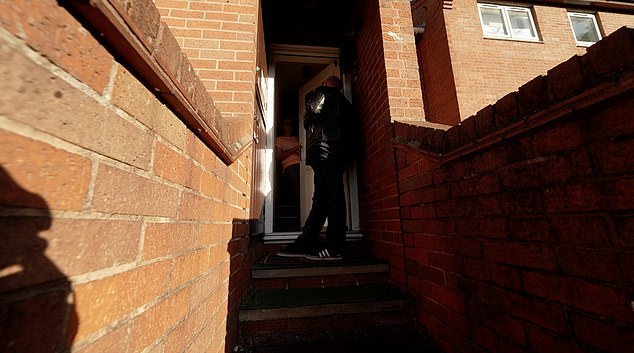
The moment she spoke to a Polish journalist was caught on camera
The court heard she contacted Derbyshire Police in 2025 saying she knew where her former partner could be found just days after TV journalist Rafal Zalewski called at her home, requesting an interview.
She then went to a police station and told officers Ms Zablocka, then aged 30, died in an ‘accident’ during a violent confrontation and the remains were found during a search days later.
A recording of the interview with Mr Zalewski, which took place in May 2025, was played to jurors in Derby on Monday.
In the 20-minute clip, Podedworna repeatedly denies knowing where Ms Zablocka is. She claims the missing woman had a problem with alcohol and used drugs and ‘was a good person but she also did a lot of bad things too’.
She told the reporter their relationship started to deteriorate after Ms Zablocka refused to have gender reassignment surgery. The two women had moved to the UK from Poland in 2009 and found work at a food processing factory.
Podedworna said: ‘It was like this, I was with her but I told her that…you will go for surgery and so on.
‘We came with the intention to earn money, she was to go for surgery because I said I didn’t want to live with a girl, there were other plans, they were…it looked completely different.’
Mr Zalewski said: ‘So it was about gender reassignment?’
Podedworna replied: ‘Yes. And later I told her that…I just will not be living with you because I don’t want to, right?
Mr Zalewski said: ‘Didn’t she want that surgery?’ to which Podedworna answered: ‘I mean…she supposedly wanted it, but one had to go to work and earn money for it…
‘But one wouldn’t want to go to work because…one wouldn’t want to.’
Asked if this was when the relationship started to deteriorate she replied: ‘Yes’.
She also denied leaving Ms Zablocka for a man, saying she did not meet him until ‘maybe a year or two later’.
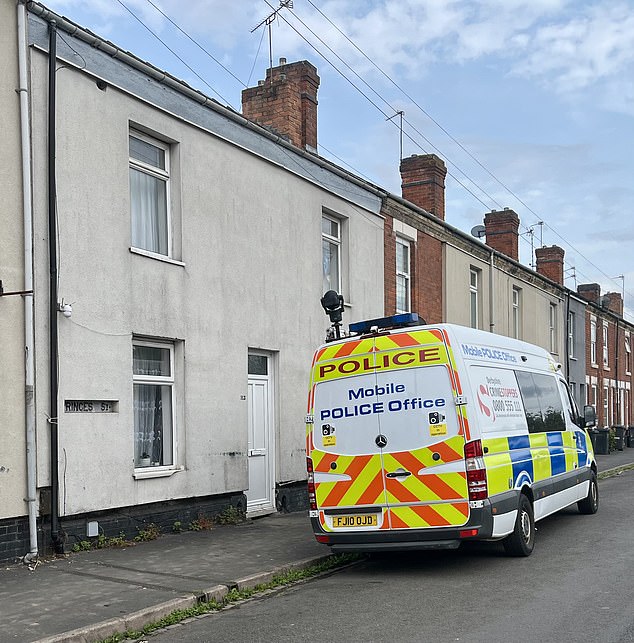
The property in Princes Street, Derby, where the remains were found in June 2025
When asked if she believed Ms Zablocka was still alive after 15 years she said: ‘Not really. God is up there and he knows best what happened.’
The court heard Ms Zablocka was born and brought up in Trzebiatow, a small town in north-west Poland.
She married and had a daughter called Katarzyna, but the relationship did not last and they separated, and soon afterwards Ms Zablocka began a relationship with Podedworna.
The two women moved to the UK in 2009 in search of work leaving Ms Zablocka’s daughter, then aged nine, with relatives in Poland.
The two women found work at a local poultry factory – Cranberry Foods in Scropton, Derbyshire.
Prosecutor Gordon Aspden KC said that while in the UK Ms Zablocka kept in touch with her family in Poland by telephone and would call them every few days without fail.
The last time they spoke to her was Saturday, August 28, 2010.
Mr Aspden said: ‘Following this telephone call Izabela’s family neither saw nor heard from her ever again.
‘To all intents and purposes she completely disappeared off the face of the earth. What had happened to Izabela? Where was she?’
He said shortly after her final telephone call to her mother, Podedworna murdered her.
Mr Aspden said that having done so she then ‘dismembered Izabela’s body by cutting it in half with a large knife, trussed it up with electrical tape, placed these now bloody human remains in black plastic bin bags and buried them in the back garden.
‘A section of concrete hardstanding was then laid over the top to hide Izabela’s filthy, makeshift grave,’ he said.
‘By her conduct the defendant demonstrated that she was determined to conceal what she had done, and determined to destroy all incriminating evidence of the murder she had committed.’
He said her ‘post-murder cover-up’ involved a ‘series of deliberate, calculated, gruesome, and time-consuming acts which she carried out with resolve and purpose over a period of several days’.
Mr Aspden said precisely how and why the defendant murdered Ms Zablocka ‘only she now knows and, for obvious reasons, she will never reveal’.
But he said there was evidence of sexual jealousy, and of the relationship having been a stormy and turbulent one.
He said: ‘It was against this toxic backdrop and in this volatile setting that the murder of Izabela Zablocka was committed.’
Ms Zablocka’s family reported her missing. first to the police in the UK in November 2010, and then to the police in Poland in January 2011.
Mr Aspden said her family was ‘forced to live in a state of constant anxiety and dread – unsure whether she was dead or alive’ but to their ‘lasting credit’ never gave up on her and clung to the hope that one day they would see her again.
The court heard that in 2024, Ms Zablocka’s daughter, by then in her mid-twenties, contacted ‘Missing for Years’ asking for help finding her mother.
The organisation contacted Podedworna, who was still living in Derby, but she denied knowing Ms Zablocka and said she did not know what had happened to her.
Then, in May 2025, Mr Zalewski contacted the defendant and requested an interview with her.
Mr Aspden said it was a ‘tipping point’. He said: ‘At last the defendant could feel that justice was finally catching up with her. The mounting pressure caused her to crack.’
On May 21, 2025, Podedworna emailed Derbyshire Police and told them that she wished to provide them with evidence.
She later told them they would find Miss Zablocka’s body buried in the back garden of their former home in Princes Street, Derby.
Podedworna went to a police station where she told officers Miss Zablocka had died by accident during a violent confrontation between them and she was defending herself.
Mr Aspden said: ‘This new and freshly-created claim of self-defence was yet another lie by the defendant to conceal her guilt, to cover up the murder, and to deceive and hoodwink those around her.’
She told police there had been an ‘accident’ and the two women had fought and she had hit Miss Zablocka while trying to defend herself. She said it ‘happened very fast…’ adding: ‘She wasn’t alive.’
The court heard that during the 15 years following the murder, she had ‘got on with her life as normal’. Her mother and sister had joined her in the UK. She then went on to form a relationship with a local man and had two children by him.
Her house was searched when police found a diary which contained extensive references to religion including one note which read: ‘I accept that I have sinned against a perfect God.’
Police made the ‘grim and bleak discovery’ on Sunday, June 1 last year. By that time all that remained was a skeleton and a few small fragments of human tissue.
Subsequent DNA tests established the remains belonged to Miss Zablocka.
Officers also found an ‘animal burial site’ just above the grave where Miss Zablocka’s remains were found containing bones belonging to two dogs, at least three cats and other animals.
Mr Aspden said Miss Zablocka was found ‘trussed up like a chicken’.
He said both of her legs had been hyperflexed backwards and upwards at the knees. Electrical tape had then been used to bind them tightly into this position.
The backs of her calves had been tied to the backs of her thighs.
‘In short, the lower half of her body had been trussed up like a chicken you might see in a supermarket.
‘Soil and other debris found inside the two black bin bags was sieved and a number of further body parts were recovered.’
Mr Aspden said Podedworna’s cover-up had proved to be ‘extremely successful’ and she had, ‘with a great deal of effort’, destroyed all evidence of how she had murdered Miss Zablocka.
Due to the passage of time, and the state in which the remains were found, it has not been possible to ascertain her cause of death, he said.
The trial continues.