Ministers are set for a clash with backbenchers over plans to scale down the legal rights of children with less severe special needs.
Currently, families of children with any kind of need are able to fight councils to obtain a legal document guaranteeing them expensive interventions.
A rise in diagnoses of milder cases of ADHD and autism has clogged up the system, meaning those with severe issues such as blindness are facing long waiting times.
However, last night, sources claimed in future only those with profound needs will be able to take the legal route.
All other cases will be dealt with at school level, with extra money being given to heads to lay on more special needs provision.
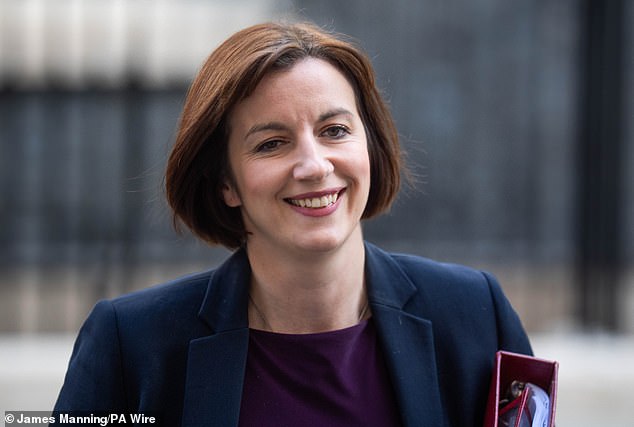
The plan, anticipated to be unveiled by Education Secretary Bridget Phillipson in an up-coming white paper, is likely to prompt a rebellion from backbench Labour MPs.
Last week Ian Lavery, MP for Blyth and Ashington, voiced fears a restructure could mean less help and told Politics Home: ‘Any reduction in support for individuals and their families is a no-go.’
However, it is understood that reforms are aimed at improving outcomes, rather than saving money.
And a Government source told The Times: ‘Our reforms will ensure that every child has the opportunity to get on in life, whatever their educational needs.’
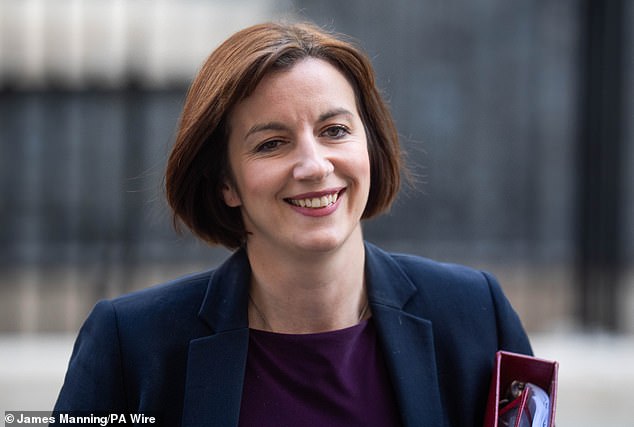
Ministers are set for a clash with backbenchers over plans to scale down the legal rights of children with less severe special needs (pictured: Education Secretary Bridget Phillipson)
The special educational needs and disabilities (Send) system is in crisis, with many councils at risk of financial collapse because of the expense.
Spending by councils on Send has doubled to almost £13 billion since 2016 and is forecast to almost double again by 2031 without reform.
It is down to the number of pupils with Education, Health and Care Plans (EHCPs) doubling to 430,000 in a decade.
EHCPs are legal documents entitling the holder to guaranteed taxpayer-funded help, but were only intended for severe cases when they were introduced in 2014.
However, now children with moderate mental health and developmental needs are also on waiting lists to get them, because their parents do not feel support is available at their schools.
Under the new proposals, the legal rights granted to these parents over their child’s support would be taken over by schools, which would deal with councils and the Government directly.
It is understood the white paper will say the system is unsustainable and forces parents to engage in lengthy legal processes for help.
Officials believe that EHCPs often ended up binding taxpayers into funding one-to-one sessions that could be replaced with a teaching assistant for several pupils with special needs in class.
Pupils already receiving special needs support are not expected to be affected by the reforms.
Those deemed to have very complex or acute needs would also be protected, as they are under the present system.
The affected parents are expected to retain a route to appeal against decisions, but this would not involve courts.
Mainstream schools have been allocated £3 billion to improve provision for pupils with Send and will be promised more support before the likely implementation of the reforms in 2028.
The Department for Education said: ‘These claims are speculative and do not represent government policy proposals.
‘We have launched the biggest national conversation on Send in a generation, with plans being directly shaped by parents, the sector and experts who know the system best. That engagement will drive reforms that protect what families value and fix what isn’t working.’
Of the 1.7 million pupils with Send, more than 430,000 have EHCPs, up from 236,806 in 2016. Almost 150,000 children have EHCPs for autism spectrum disorder, triple the figure in 2015.
The number of children who have ‘social, emotional and mental health needs’, which include ADHD, has risen from 28,000 to 71,000.
However, it is understood the Government is keen not to strip support from any pupils.
The source told The Times: ‘We are very wary of the visuals of hitting disabled children at such a moment of political weakness.’
It comes after Labour backbenchers forced a U-turn on cuts to the welfare budget earlier this year.
In September, Luke Sibieta, of the Institute for Fiscal Studies (IFS), said Send reforms could suffer a similar fate.
He said: ‘Any reforms are likely to generate controversy.
‘If the focus is on reducing legal rights to cut short-term costs, this could easily turn into welfare reforms mark two.’