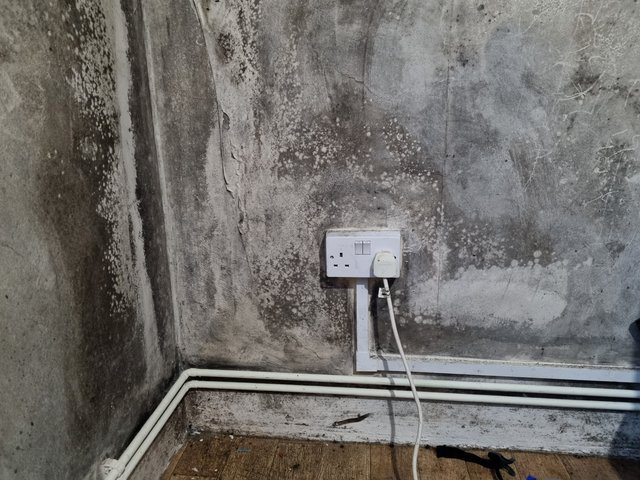
MILLIONS of tenants will benefit from greater protection from today, as tough new measures are introduced to tackle death-trap homes.
Social housing landlords in England will face court action and compensation orders if they fail to improve conditions for tenants quickly under a new law described as the lasting legacy of a two-year-old boy.
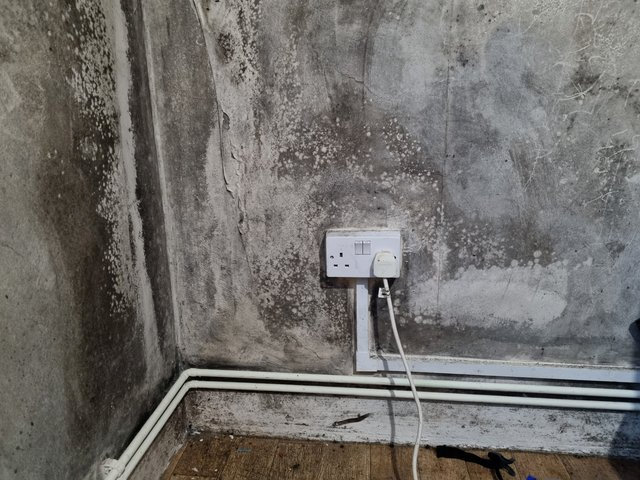
Awaab Ishak died in December 2020 from a respiratory condition caused by prolonged exposure to mould in his family’s housing association flat in Rochdale, Greater Manchester.
The toddler’s death caused outrage and prompted the passage of Awaab’s Law with a requirement for landlords to fix reported hazards in social housing more speedily and rehouse tenants in safe accommodation if necessary.
The new rules, coming into force from Monday, mean landlords across England‘s four million social rent homes will be required to take urgent action to fix dangerous homes.
The new legal duties include an obligation to fix health and safety hazards which are classed as an emergency within 24 hours of reporting.


Landlords must ensure damp and mould which is classed as significant is investigated within 10 working days of being notified and have a further five days to make properties safe.
They are also required to communicate their findings in writing to tenants within three working days of inspection.
If there are young children, disabled people or those with health conditions living in the property, alternative accommodation must be offered if homes cannot be made safe within the required timeframes.
Housing Secretary Steve Reed said: “Everyone deserves a safe and decent home to live in and Awaab Ishak is a powerful reminder of how this can sadly be a matter of life or death.
“Awaab’s family has fought hard for change and their work to protect millions of tenants’ lives will live on as a legacy to their son.
“Our changes will give tenants a stronger voice and force landlords to act urgently when lives are at risk, ensuring such tragedies are never repeated.”
The Government has also announced a £1million fund aimed at creating new ways of helping tenants engage with their landlords and having more influence over decisions affecting them.
A report published by the Housing Ombudsman in May warned of “simmering anger” at poor housing conditions, with complaints to the watchdog about substandard living conditions more than five times higher than they were five years ago.
The ombudsman found “clear and consistent failings” in maintenance to properties which it said has become a more “complex and costly” issue over the years.
The ombudsman, which deals with disputes between residents and social housing landlords in England, said there were 6,380 complaints investigated in the year to March 2025, up from 1,111 in the year to March 2020.
Reasons for complaints included asbestos, electrical and fire safety issues, pest control and leaks, damp and mould.
Campaigners are calling for the new tougher requirements for social landlords to act more quickly on issues to be applied urgently to the private rented sector.
While the Government has committed to extending Awaab’s Law to this sector, through the Renters’ Rights Bill which is currently awaiting royal assent, no firm timeframe has been given.
Awaab’s law – what you need to know
AWAAB’S Law is a new legal duty for social landlords to fix dangerous housing problems quickly — especially damp and mould.
It’s named after Awaab Ishak, a two-year-old boy who tragically died in 2020 after prolonged exposure to mould in his home.
This law is designed to make sure unsafe conditions are not left untreated and that landlords act fast when lives are at risk.
What’s changing?
Social landlords (like councils and housing associations) must now follow strict timeframes to fix serious problems:
- Emergency hazards (e.g. major leaks, exposed wiring): Must be fixed within 24 hours
- Damp and mould: Must be investigated within 10 working days
Must be made safe within five working days after inspection
Tenants must be told the findings within three working days after inspection has finished
Landlords must also consider tenants’ individual circumstances – for example, if there are young children, health conditions or disabilities — and act faster where needed.
If a home can’t be made safe in time, alternative accommodation must be offered.
What does this mean for me?
If you live in social housing in England:
- You can report damp, mould or other hazards and expect action within the new legal timeframes.
- If your landlord doesn’t act, you can challenge them – and they could face legal consequences, including being taken to court and forced to pay compensation.
Renters’ rights
If you are renting, and poor maintenance is contributing to a damp or mould problem, then your landlord should act.
Substandard insulation, rotting windows, leaks, rising damp and broken extractor fans fall under your landlord’s responsibilities.
You must keep the property adequately ventilated and heated to minimise condensation.
Jenny Lamb, from Shelter, previously told The Sun: “If you have a damp problem, report it to your landlord in writing, along with how long it has been going on.
“If no action is taken, contact your local authority, and they can carry out an environmental health inspection.”
But while many good landlords will act, some will unfortunately use a Section 21 “no fault” eviction order instead of carrying out repairs.
Jenny explains: “A tenant could find themselves in a scary position just for asserting their rights.”
The Government says Section 21 orders will be scrapped in the new Renters’ Rights Bill.
How to complain
Council, housing association and private tenants can all ask for compensation.
According to housing charity Shelter you could ask for compensation if:
- Your landlord does not make repairs within a reasonable time
- The repairs are poor quality or do not fix things
- Your home is unfit to live in
You should wait until your tenancy ends if you are a private tenant to avoid receiving a section 21 eviction notice.
First, you must make a complaint to your landlord.
To do so, use an email or letter to set out what your complaint is about, what you want your landlord to do and when you want them to respond.
Check if your landlord has a complaints procedure before you make your complaint.
Once this is done you can escalate your complaint to the Ombudsman.
It is free to make a complaint to the Housing Ombudsman if you are a resident in social housing.
You will need to explain what you think has gone wrong and what you think the landlord should do to put it right.
It will only consider investigating your complaint when it has received evidence that your landlord has supplied a full and final response to your complaint.
For a complaint to be investigated, it must be referred to the Housing Ombudsman within 12 months of the landlord’s final response.
The Ombudsman will then work with you and your landlord to reach an agreement, which is known as a resolution.
This is much quicker than going through a full investigation.
If you and your landlord agree to a resolution then it will set out the agreed terms in writing, also known as a determination.
Last year the Ombudsman made 5,465 determinations.
The Ombudsman will also follow up with you and the landlord to check that all of the agreed actions have been comp
When it will launch an investigation
If a solution cannot be found through a resolution then the Ombudsman’s dispute resolution team will complete a formal investigation of the case.
A full investigation can take 12 months while high-risk cases can be determined within 6 months.
An investigation will assess whether a landlord has acted fairly and whether their actions were reasonable, considering all the circumstances of the case.
The investigation will establish whether the landlord has been responsible for maladministration.
This could include if they:
- Failed to comply with any relevant legal obligations or relevant codes of practice
- Did not apply their own policies and procedures
- Behaved unreasonably when dealing with the issue
- Were unfair, unreasonable or incompetent
- Treated the resident in an unsympathetic, inappropriate or heavy-handed way
If this is the case then the Ombudsman may order the landlord to take steps to put things right.
Depending on the outcome of the investigation, it may set out orders and recommendations to the landlord in its report to put things right.
This could include telling the landlord to:


- Pay compensation
- Apologise
- Review its policies and procedures
- Complete any outstanding repairs
Landlords are obliged to follow any orders from the housing Ombu