THE number of meningitis cases linked to an outbreak in Kent that claimed two lives has fallen for the first time.
Experts believe that a “super spreader” event linked to a Canterbury nightclub sparked the initial spread of the infection with the number of confirmed cases reaching 34 yesterday.
Today health chiefs confirmed the number of cases linked to the outbreak, which left a baby girl critically ill, has fallen to 29.
It comes as…
The decrease comes after some “confirmed” cases were downgraded following further tests, the UK Health Security Agency (UKHSA) said.
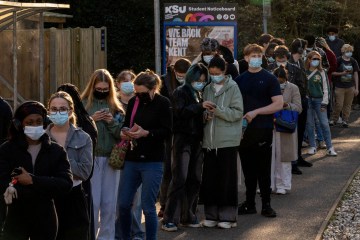

As of 12.30pm on March 21, the number of confirmed cases was 20 and nine suspected cases remain under investigation, bringing the total to 29.
The UKHSA said: “Some cases initially classified as confirmed cases have been reclassified following further laboratory results and clinical investigation.
“As further laboratory assessments are completing, we expect some further probable cases to be downgraded in the coming days.”
Cases have been confirmed at two universities, four schools in Kent, as well as one institution in London.
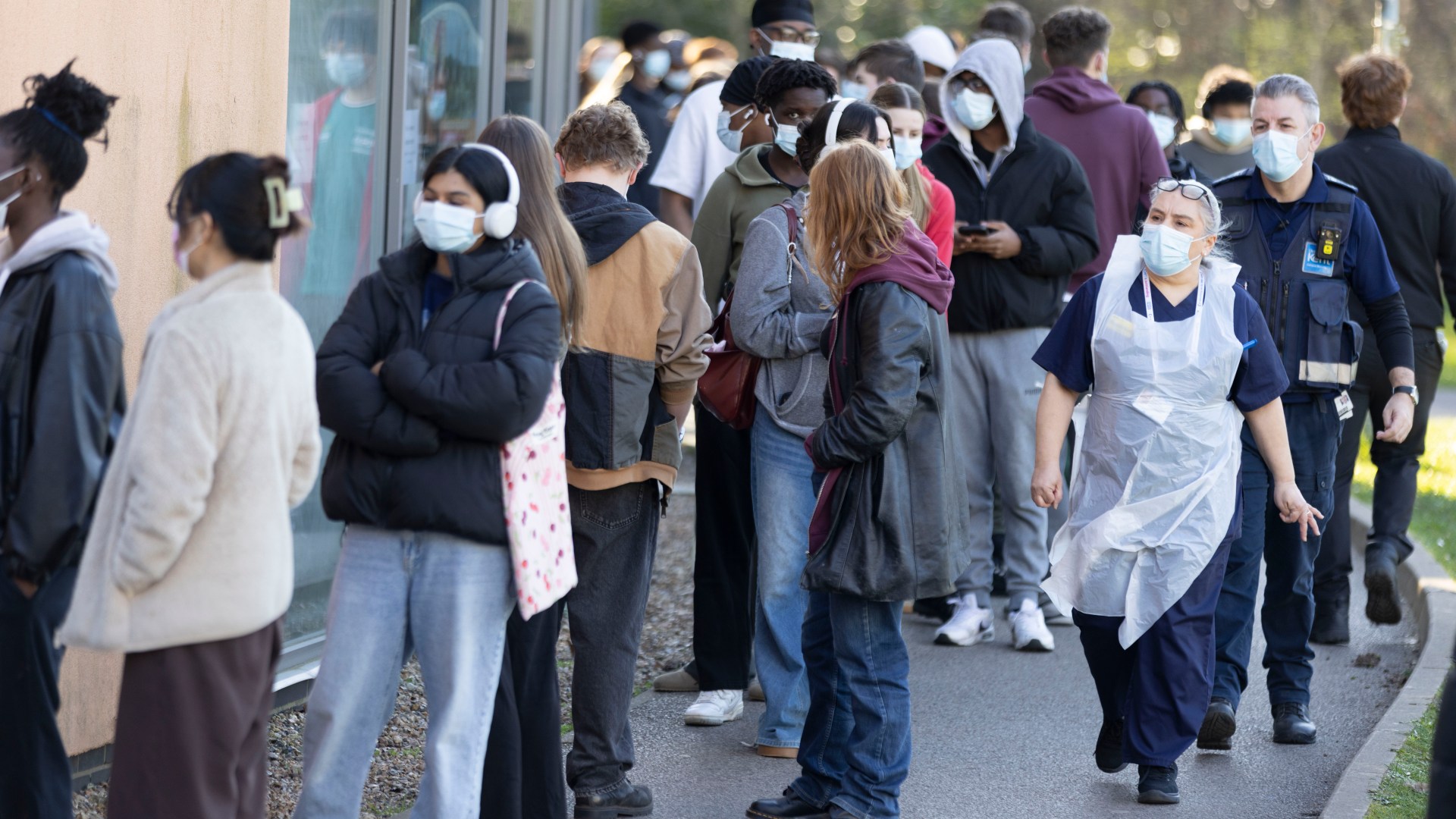
Experts fear students carrying the disease could spread it across the country as thousands head home from Uni for Easter.
It is believed the outbreak was sparked by a “super spreader” event at the now closed Club Chemistry in Canterbury.
Dr Eliza Gil, a clinical lecturer at the London School of Hygiene & Tropical Medicine told The Guardian she suspected the outbreak was triggered by a superspreader at the club who shed a lot of the MenB bacteria.
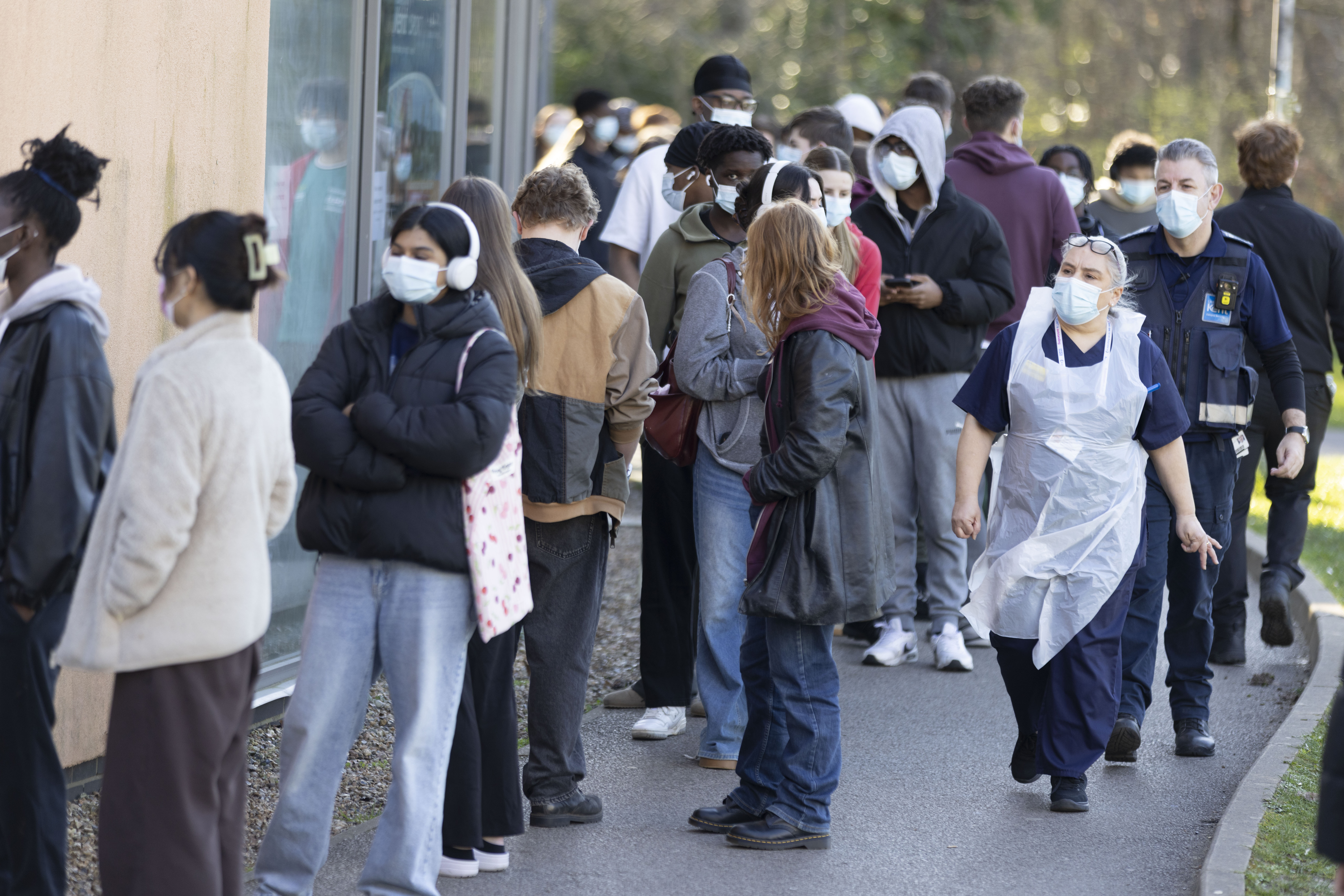
Some 4,500 vaccinations have been administered in the wake of the outbreak, the UK Health Security Agency (UKHSA) confirmed.
Scientists believe the vaccine will be effective against the strain of Meningitis B seen in the county.
The UKHSA is looking into whether the strain in circulation is more easily spread or likely to cause severe illness.
What is meningitis and what are the symptoms?
Meningitis is an infection of the protective membranes that surround the brain and spinal cord – called the meninges.
It can be very serious if not treated quickly – it can cause life-threatening sepsis and result in permanent damage to the brain or nerves.
Symptoms include:
- A high temperature (fever)
- Being sick
- A headache
- A rash that does not fade when a glass is rolled over it (but a rash will not always develop)
- A stiff neck
- A dislike of bright lights
- Drowsiness or unresponsiveness
- Seizures (fits)
Call 999 for an ambulance or go to your nearest A&E immediately if you think you or someone you look after could have meningitis or sepsis.
Meningitis is usually caused by a bacterial or viral infection.
Bacterial meningitis is rarer but more serious than viral meningitis.
Vaccinations offer some protection against certain causes of meningitis.
These include the:
- MenB vaccine – offered to babies aged 8 weeks, followed by a second dose at 16 weeks and a booster at 1 year
- 6-in-1 vaccine – offered to babies at 8, 12 and 16 weeks of age
- pneumococcal vaccine – 2 doses offered to babies at 12 weeks and 1 year, and a single dose offered to adults aged 65 or over
- Hib/MenC vaccine – offered to babies at 1 year of age
- MMR vaccine – offered to babies at 1 year and a second dose at 3 years and 4 months
- MenACWY vaccine – offered to teenagers, sixth formers and “fresher” students going to university for the first time
Source: NHS
Health officials are desperate to contain the devastating surge, which has been declared a national incident.
Some experts fear that revellers sharing vapes at Club Chemistry in Canterbury could be behind the “unprecedented” number of cases seen.
We exclusively told how one student was left blind and unable to walk after contracting the bug while celebrating her 21st at Club Chemistry.
Annabelle Mackay’s housemates saved her life after rushing her to hospital when she collapsed in Canterbury.
Prof Robert Dingwall, from Nottingham Trent University, told Sun Health: “There have been outbreaks of meningitis long before there were vapes.
“But it is possible that there’s a new factor with vaping, passing it around and people picking up each other’s saliva.
“Vapes are new and they get passed around perhaps in a way that cigarettes weren’t.
“And smoke irritates the throat and the lungs which could upset their immune response.
“So other people’s saliva triggers a reaction that would not have been triggered in the days before vapes.”
The UKHSA previously issued an alert for the NHS across England on signs and symptoms of meningitis to look out for.
It urged doctors to have a “high index of suspicion where a young person aged 16 to 30 attends with consistent signs or symptoms” of the bug.
Last weekend, French authorities alerted the UKHSA to a confirmed case of meningitis in France, with the person now in a “stable” condition.
And European health chiefs have also urged doctors across the continent to be vigilant for meningitis cases and mask up, where necessary.
The European Centre for Disease Prevention and Control (ECDC) said it is ‘monitoring the situation through event-based surveillance’.
In the UK most people above primary school age are unprotected against MenB because routine jabs for babies were only introduced in 2015.
Instead, the MenB jab is available privately at high street and supermarket pharmacies for roughly £150 per dose.
MENINGITIS OUTBREAK TIMELINE
March 5, 6 and 7
“Super-spreader event” as more than 2,000 revellers attend Club Chemistry across the weekend.
March 12
French authorities become aware of a case of meningitis in a student who attended University of Kent.
March 13
Medics at East Kent Hospitals NHS Trust alert local UKHSA branch of the first case of invasive meningitis.
March 14
UKHSA contact University of Kent.
French authorities finally alert UK health officials to the confirmed case in France.
Hospitals report a number of young adults with symptoms consistent with the disease and contact tracing begins.
March 15
Antibiotics are offered to those traced in connection with the outbreak and distribution begins in halls of residences with cases.
UKHSA stands up “full scale response” and schools with cases are identified
A public health alert is issued.
March 16
Club Chemistry highlighted as potential link to “invasive” spread
Two youngsters – 18-year-old sixth form student Juliette and a 21-year-old from the University of Kent – are confirmed to have died as a result of the outbreak.
Total of 13 cases
March 17
Health Secretary Wes Streeting says four cases of Meningitis B are confirmed and 11 are under investigation. All cases are linked to Kent.
Total of 15 cases
March 18
UKHSA says there are now nine confirmed cases, with strain in six cases confirmed to be MenB – 11 more being investigated but no further deaths.
Canterbury Christ Church University confirms meningitis case in a student.
Roughly 2,500 doses of antibiotics are given out and 5,000 students are offered vaccines.
Total of 20 cases
March 19
First confirmed case at a school in London, with four schools now affected in Kent. UKHSA says there are 15 confirmed and 12 cases still under investigation.
Total of 27 cases
March 20
The UKHSA says it had been notified of 18 confirmed and 11 probable cases of meningitis linked to Kent.
Health bosses warn the outbreak could spark “clusters” nationwide as students return home for the Easter break.
Total of 29 cases
March 21
Health officials confirm 23 laboratory cases and 11 reported cases remain under investigation.
Total of 34 cases