This article is taken from the March 2026 issue of The Critic. To get the full magazine why not subscribe? Get five issues for just £25.
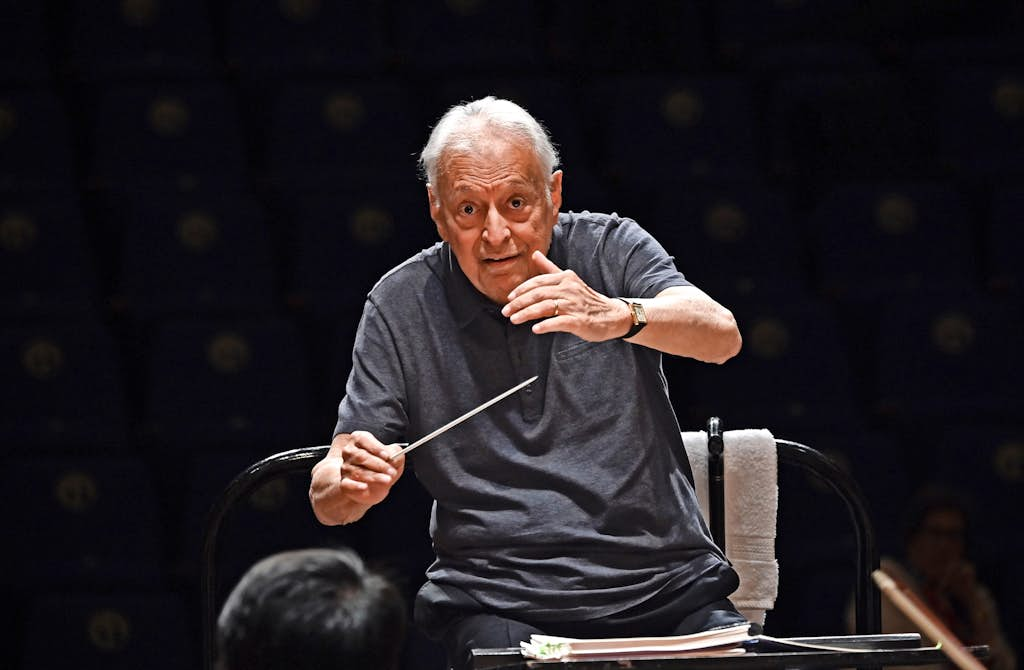
In the run-up to his 90th birthday, Zubin Mehta decided to sever contact with Israel. The Indian conductor, head of the Israel Philharmonic Orchestra for half a century, told an interviewer in Bombay that he had scrapped this year’s engagements in Israel in protest at “Mr Netanyahu’s way of treating the whole Palestinian issue”. Artists, he added, “must take a stand.”
His declaration seemed impulsive and somewhat ill-informed. Mehta said Netanyahu had a “huge” majority in Parliament, rather than a fragile coalition, and would be re-elected, which is far from certain. Whatever he meant, Zubin Mehta signalled that he was giving up on a nation and an orchestra that have been the bedrock of his career.
Mehta’s walk-out is not without precedent in his métier. Herbert von Karajan abandoned the Berlin Philharmonic in April 1989 after 35 years as music-director-for-life, ostensibly over a choice of principal clarinet but essentially because players contested his dictatorial powers. In mortal agony, Karajan died at home four months later.
Bernard Haitink left the Concertgebouw orchestra after a quarter-century in charge. “By no means thick-skinned” (as a eulogist put it), the Dutchman had a catalogue of complaints against the orchestra administrators and found that Britain treated him better. Each man’s achievements are secured in several hundred recordings.
Mehta’s posterity is less assured. The most efficient maestro of his generation — blessed with a brain surgeon’s hands and a barn owl’s ears — he never commanded a premier ensemble. Raised in Bombay, where his father started India’s only symphony orchestra, Zubin studied in 1950s Vienna in the same class as Claudio Abbado and won an assistant post in Liverpool, where he encountered racial prejudice.
In 1960 he became music director in Montreal, then Los Angeles. Neither was major league, but Mehta’s musical energy and post-colonial agenda won them world attention. He linked arms with a gang of emergent Israelis led by Daniel Barenboim, whom Mehta treated as a kid brother.
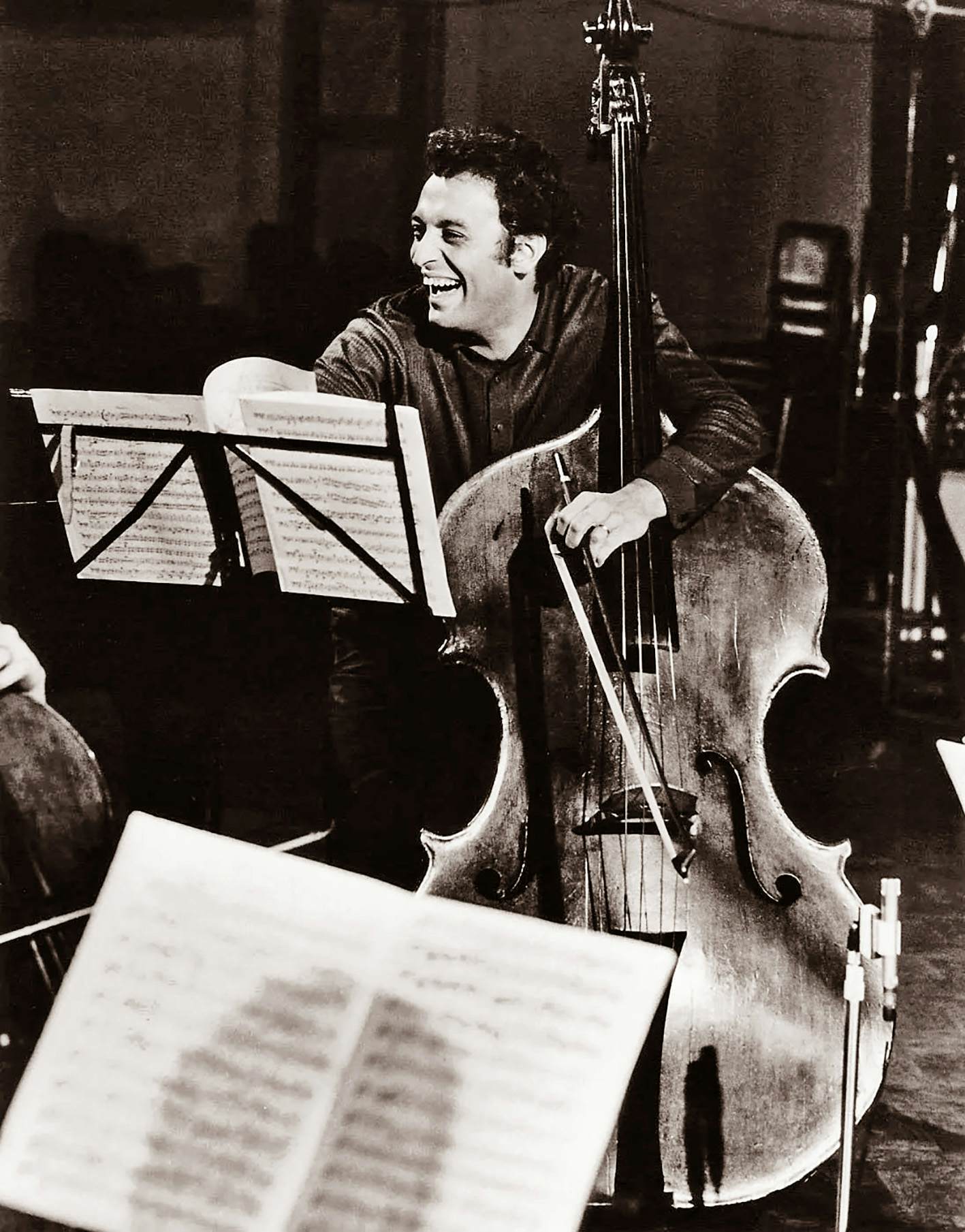
With the violinists Itzhak Perlman and Pinchas Zukerman, and Barenboim’s fiancée Jacqueline du Pré, he played bass in Schubert’s Trout Quintet in quite the most joyous classical concert ever seen on television. Informal to a fault, they chimed with Sixties vibes.
In 1978, nominated by the godfatherly Isaac Stern, Mehta was named music director of the New York Philharmonic, an orchestra in some confusion. It had seen off the ascetic Pierre Boulez and yearned for a return to Leonard Bernstein’s flair.
Mehta, brisk in rehearsal and brilliant with blue-rinse donors, lacked vision, initiative and innovation. His relationship with the players, a biographer noted, was never good, and his 13 years felt much longer.
His most fulfilling period came in Munich where Peter Jonas, British head of Bavarian State Opera, hired him as Generalmusikdirektor on a promise that he would have to do nothing more than what he did best, which is to guide voices and orchestra to Valhalla. Over eight years Mehta treated Munich to many Italian weepies, along with an epochal Wagner Ring and a climactic Schoenberg Moses und Aron.
He was a seasonal fixture in Berlin and Vienna, where Philharmonic players took obvious pleasure in working with him. A Bartók concerto in Berlin, followed by a Strauss tone-poem, sticks in my memory like a Michelin-starred dinner served on silver plate. Mehta was the supreme chef for a special occasion. The Viennese acknowledged his mastery with the gift of the New Year’s Day concert, which he conducted no fewer than five times.
Ultimate fame and fortune came with the Three Tenors concert of 1990, the best-selling classical album of all time. Mehta was the perfect mediator between Pavarotti, Domingo and Carreras mega-egos, the arbiter of taste amidst trash. At the summit of his firefly career, he demanded six-figure fees without losing his demotic appeal.
As he fluttered from one pay-night to the next, his anchor was an unshakeable connection to the state of Israel and its orchestra. The bond began in 1961 with a shared minority mindset — Mehta’s as Parsi in India, Israel’s as a refuge for Jews.
He conducted the Israel Philharmonic 24 times in 1966. The next year he flew in when the nation was blacked out for war and stayed as witness at Barenboim and Du Pré’s wedding. Every time Israel came under threat, Zubin Mehta was first on the plane, boosting morale, entertaining the armed forces all the way up to South Lebanon.
He conducted concerts in gas masks during the 1991 Gulf War and posed with its political leaders, Netanyahu included.
Musically, Mehta absorbed Gustav Mahler’s rhythms and ironies from musicians who spoke the same way. He loved Israeli casual style and raised millions for the Philharmonic in American galas.
Over five decades he was the orchestra’s poster boy. When it was time to hand over the baton, he did so with unalloyed joy to his Israeli protégé, Lahav Shani. At no time was there a shiver of friction between Zubin Mehta and his chosen people.
Until now. After the Hamas onslaught of 7 October 2022 and during the ensuing Gaza war, Zubin Mehta was a no-show. As Lahav Shani conducted beneath Iranian missiles, Mehta stayed shtum. Never an activist like Barenboim, he loosened his ties with Israel.
Why? Either in solidarity with his lifelong pal, Barenboim, or out of what the Germans call Lebensmüdigkeit, weariness with life. When he turns 90 this April, the Israel Philharmonic will play on.
Update: As we go to press, we learn that Zubin Mehta has reversed his decision and will conduct the Israel Philharmonic in January 2027.