PARENT’S were today urged to keep their children at home if they’ve got a fever in a bid to tackle rising measles cases.
More than 190 children have been infected with the highly contagious virus since the start of 2026 figures show, with Enfield – the first hot spot to see cases erupt – recording at least 71.
In an emergency meeting held by the London Assembly today to discuss the outbreak, officials warned that it was hard for doctors to identify if a rash is measles.
Other experts, who admitted they were “not confident” the cases wouldn’t continue to surge, also called on parents to keep their children away from school at the earliest signs of illness.
A rise in measles, dubbed “the world’s most infectious disease”, has already forced some Enfield schools to instate infection control policies stopping unvaccinated kids from coming to school.
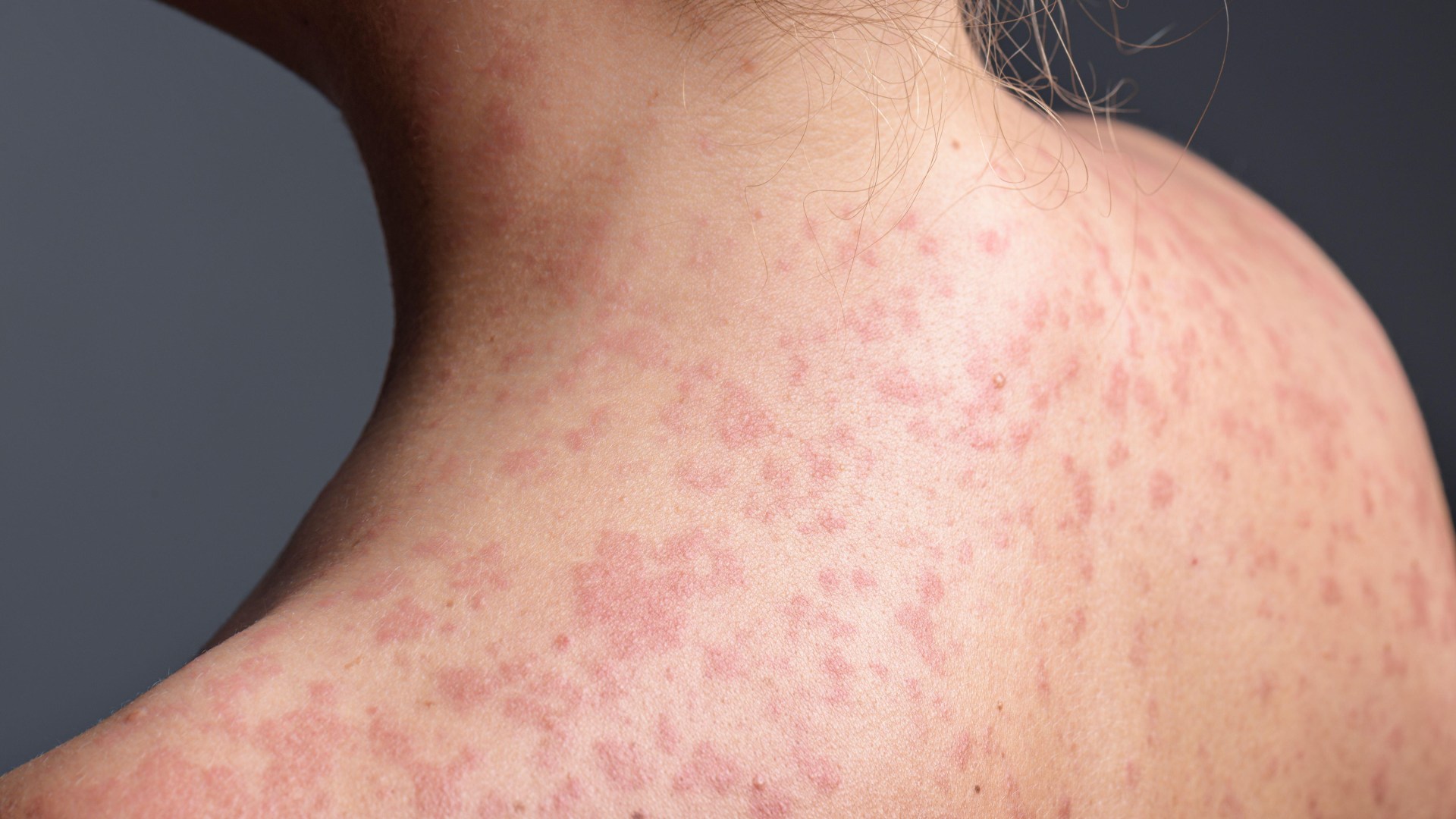
Measles, which mostly produces flu-like symptoms and a rash, can cause very serious and even fatal health complications if it spreads to the lungs or the brain.
One in five children who get infected will be hospitalised, according to estimates, with one in 15 developing serious complications like meningitis or sepsis.
Nalini Iyanger, a consultant in health protection at the UK Health Security Agency (UKHSA), told the meeting: “We don’t want children to be home unnecessarily. But if they have a fever illness, the advice is to keep your child at home.
“That is the best way to contain it. It’s an important infection control measure for any infection.”
But she also suggested that cases in Enfield itself may be beginning to “stabilise”.
She added: “In Enfield there are 71 confirmed cases, 12 more than we reported in the week prior.
“We are seeing signs that it has stabilised but we’re not at all being complicit about it.
“We’re doing everything we can to control it but I couldn’t say that numbers wouldn’t go up.
“We know there are unvaccinated children which means there is the potential for the outbreak to grow.”
UKHSA figures show there were 195 confirmed measles cases across England as of March 2, a rise of 23 per cent on the previous week.
Cases in Enfield rose from 59 to 71.
Experts, today, also acknowledged that cases may be higher.
A leaked internal UKHSA report last month suggested there had been 340 suspected cases in London since the start of the year.
The document, marked “official sensitive”, said that 34 confirmed cases linked to a single school in Enfield, between January 20 and February 7 this year.
Probed on this by the London Assembly health committee lead Emma Best, Dr Yimmy Chow, regional deputy director at UKHSA London, said: “On suspected cases, there has been a report that says we’ve got 300 within the ward. But these are suspected and not necessarily confident.
“Suspected cases are much higher because they need to be verified.
“With measles being a childhood rash, as there are many different types of rashes, it can be hard for clinicians to be certain it is measles.
“We’re in close contact with GPs and hospitals to make sure that we are getting accurate reports of suspected cases.”
Later, when asked if she was confident with the response to the outbreak, Susan Elden, a consultant in public health for the NHS in London, said: “I will only be confident when we have 95 per cent vaccine coverage and regain our measles elimination status.
“So no, we’re not confident. I know it was mentioned that the outbreak has stabilised. What we are confident about is how we have organised ourselves at a local level to rapidly deploy things in place.”
The UK was stripped of its ‘measles-free’ status earlier this year, after 3,681 confirmed cases of the infection in 2024, the worst outbreak Britain has seen in almost a decade.
Last year, England recorded 957 cases, following large outbreaks and one death.
Countries are only labelled “measles-free” by global health officials if cases are rare, imported from abroad and quickly brought under control, a threshold the UK no longer meets.
Two doses of the measles, mumps and rubella (MMR) vaccine offers up to 99 per cent protection against the illnesses, which can lead to hearing loss and problems during pregnancy.
Without it, just one measles infection can spread the virus to 9 out of 10 unvaccinated people nearby.
At least 95 per cent of the population needs to be vaccinated to prevent outbreaks, under public health guidance.
Yet, as few as just over half of children have had both MMR jabs in parts of London.
Uptake of the MMR jab collapsed in the late 90s and early 2000s in the wake of a 1998 study by the now discredited medic Andrew Wakefield which falsely linked the jabs to autism.
MMR uptake in England was about 91 per cent prior to Wakefield’s study being published but plummeted to 80 per cent in the aftermath.
What parents should know about the MMRV jab
- The MMRV vaccine is offered to all young children in the UK. It protects against measles, mumps, rubella and chickenpox.
- Now, one dose is given to children at 12 months, and another at 18 months. Older children born on or after 1 January 2020 are also offered one or two doses of the vaccine.
- The MMR vaccine (previously offered) is recommended for anyone born on or before 31 December 2019 who missed having this vaccine when they were younger.
- Since the introduction of the measles vaccine in 1968, 20 million measles cases and 4,500 deaths have been prevented in the UK, according to the UK Health and Security Agency.
- Measles usually starts with cold-like symptoms, followed by a rash a few days later.
- Children should stay off nursery or school for at least four days from when the rash first appears.
- People usually feel better within seven to 10 days, but complications make the virus deadly on rare occassions.
- For more information on vaccination, visit https://www.nhs.uk/vaccinations/mmrv-vaccine/