MYSTERY-HUNTERS have another Bermuda Triangle puzzle to chew over – a huge hidden structure lurking below the region.
Scientists have probed the area below Bermuda and found something “unlike anything else on Earth“.
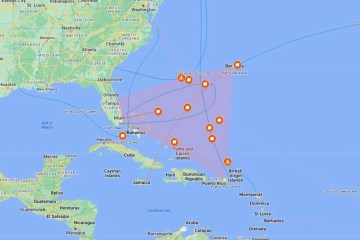
The Bermuda Triangle is an urban legend linked to an area in the North Atlantic Ocean that’s roughly between Florida, Bermuda, and Puerto Rico.
It’s believed to be a paranormal region where aircraft, ships, and people disappear in unusual circumstances.
Scientists say that’s simply not the case – but they have uncovered a genuine mystery beneath the island of Bermuda.
By probing deep underground, scientists were able to find a mysterious 12.4-mile thick layer of rock.
Read more on Bermuda Triangle

“Typically, you have the bottom of the oceanic crust and then it would be expected to be the mantle,” said seismologist William Frazer, of Carnegie Science, speaking to Live Science.
“But in Bermuda, there is this other layer that is emplaced beneath the crust, within the tectonic plate that Bermuda sits on,” Frazer, who led the study, continued.
This layer of crust sits beneath Bermuda between the crust and mantle.
Bermuda is considered a “geological anomaly” that is very different from other volcanic islands.
These islands typically sit on a large seafloor bulge called a bathymetric swell.
And usually, heat rising from a hot rock plume makes the plate above it bulge.
Bermuda does sit on a swell, but scientists have been unable to find signs of a hot plume.
On top of that, there hasn’t been an active volcano there in over 30 million years.
“Unlike other prominent bathymetric swells, such as Hawaii, it lacks age-progressive volcanism, a deeply rooted mantle plume, and modern volcanism,” the study authors note.
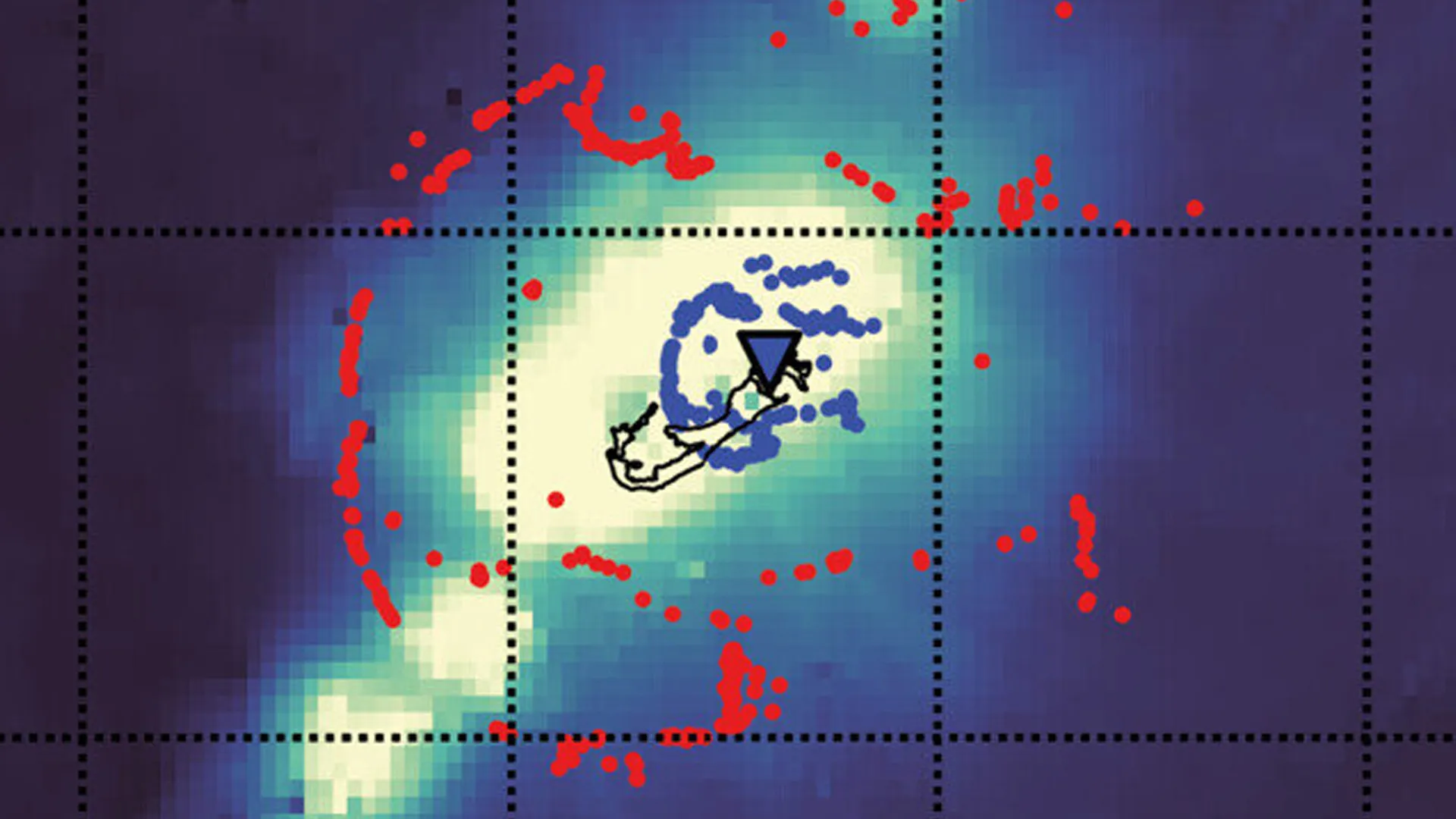
So to investigate this, scientists used recordings of earthquakes to create an image of what’s underneath the island.
They were taken from a seismic station on Bermuda that records even very distant earthquakes around the world.
And the scientists were able to locate areas underground where the waves from the earthquakes changed suddenly.
This was how they were able to reveal the mysterious thick layer of rock.
This layer – less dense than the surrounding rock – is about two or three times thicker than what is usually found at other ocean islands.
BERMUDA TRIANGLE – THE REAL EXPLANATIONS
There are a number of plausible explanations for the mystery, but the most revered are extreme weather patterns or human error.
1. Tropical cyclones – These powerful storms form in tropical waters and have killed thousands of people. The cyclones have been blamed for a number of sinkings – including the Pride of Baltimore on May 14, 1986.
2. Methane Hydrates – Huge underwater gas explosions could explain the disappearance of ships in the Triangle. Because of accidental drillings or landslides under the surface of the earth, the wide bed of gas could be unlocked, reducing the density of water dramatically. Due to extremely low density water, ships suddenly sink to the bottom. The combustible gas could also blow aircraft to pieces.
3. Electronic fog – The most notable theory of the Bermuda Triangle, electronic fog is a meteorological phenomenon which sticks to an aircraft or a ship. It’s said that the fog causes equipment on aircrafts and ships to malfunction – such as spinning of compasses.
4. Human error – Some, like Australian scientist Dr Karl Kruszelnicki, simply blame human error.
“According to Lloyds of London and the US coast guard, the number of planes that go missing in the Bermuda Triangle is the same as anywhere in the world on a percentage basis,” he argues.
This potentially caused businessman Harvey Conover to lose his sailing yacht, the Revonoc, as he sailed into the teeth of a storm south of Florida on January 1, 1958.
5. The hexagonal clouds – The newest explanation is the clouds causing terrifying 170mph winds air bombs. These winds are powerful enough to generate waves of more than 45ft high as “air bombs” are forced to come crashing down towards the ocean.
The researchers think that this “underplating” layer is made up of magma that cooled into a less dense type of rock.
And the difference in density provides enough buoyancy to hold up the large swell.
“This thick layer beneath the crust likely was emplaced when Bermuda was volcanically active 30–35 million years ago and could support the bathymetric swell,” the study notes.
Now the researchers want to find out if any other such structures exist beneath ocean islands around the world – or if Bermuda is totally unique.
“Understanding a place like Bermuda, which is an extreme location, is important to understand places that are less extreme,” Frazer told Live Science.
“And gives us a sense of what are the more normal processes that happen on Earth and what are the more extreme processes that happen.”
Bermuda is actually an archipelago of 181 islands, although it appears as a single landmass due to bridges between the main islands.
The British Overseas Territory is very remote, with its closest land being North Carolina, which is 643 miles away to the west-northwest in the United States.