Margaret Thatcher had two affairs while married to her husband Denis, a new book has claimed.
The Iron Lady, Prime Minister from 1979 to 1990, relied on her husband throughout a marriage which lasted more than 50 years.
She described Denis as ‘the golden thread running through my life’ and, indeed, there was barely a whiff of scandal across the decades they spent in the public eye.
But Tina Gaudoin, in her new book The Incidental Feminist, has made bombshell claims about the Tory party’s longest serving PM since the late 19th Century and her private life.
The book, released to coincide with what would be her 100th birthday, says that Mrs Thatcher had two affairs, the first in her early days as an MP and the second with a fellow politician, The Times reports.
Ms Gaudoin told the Cheltenham Literature Festival that multiple sources, including novelist and ex-Conservative minister Jonathan Aitken, informed her that the former PM got involved with someone else ‘very early on in her parliamentary career’.
She said she had also been told that Mrs Thatcher had an affair with Sir Humphrey Atkins, MP for Spelthorne, later in her life.
Mr Atkins was secretary of state for Northern Ireland under the Iron Lady between 1979 and 1981 and was handed a life peerage in 1987, becoming Baron Colnbrook of Waltham St Lawrence – Lord Colnbrook.
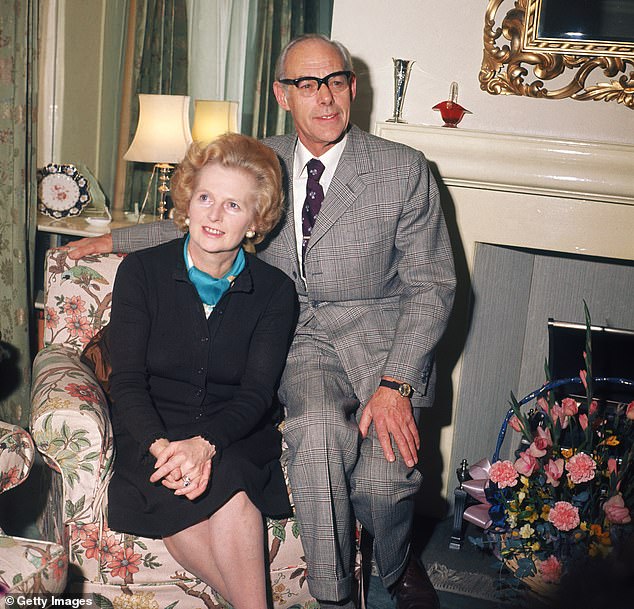
Margaret Thatcher had two affairs while married to her husband Denis, a new book has claimed (pictured: the pair in 1976)
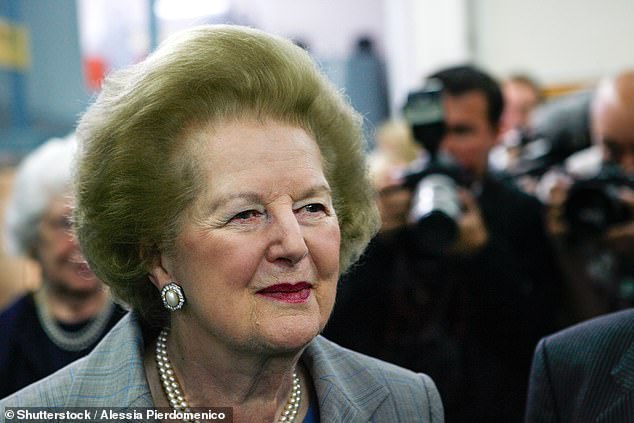
Tina Gaudoin, in her new book The Incidental Feminist coinciding with what would be Mrs Thatcher’s 100th birthday, has made bombshell claims about the ex-Tory PM, pictured in 2007
He was married to Margaret Spencer-Nairn and had four children, before dying in 1996, six years after Mrs Thatcher left office.
Asked about Atkins, Aitken said: ‘There were knowledgeable rumours to that effect at the time. His good looks might have appealed to her, but his political brain was hopeless.’
Another politician explained to Ms Gaudoin that rumours had been swirling about Atkins’s promotions despite being regarded as less capable than others.
Further sources told her that Mrs Thatcher had an ‘extracurricular friendship’ with Lord Bell, Mrs Thatcher’s head of PR.
This included him placing his hand on her knee ‘and other stuff’ at dinner receptions, which had been ‘one of her favourite things’.
Lord Moore, who penned Mrs Thatcher’s authorised biography, said he had heard the Arkins rumour before but had never found any compelling evidence for it.
He added that he was unaware of the Lord Bell story, branding it ‘vanishingly unlikely’.
The book, published last month, also analyses Denis’s unexpected friendship with Mandy Rice-Davies, a model and showgirl heavily involved in the 1963 Profumo affair.
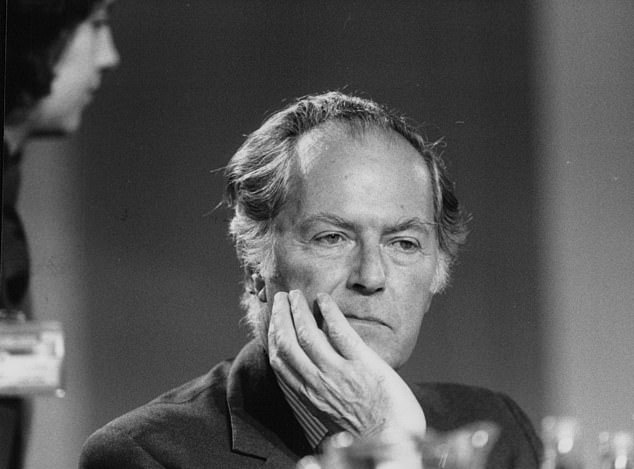
Ms Gaudoin said she had been told that Mrs Thatcher had an affair with Sir Humphrey Atkins, MP for Spelthorne, pictured, later in her life
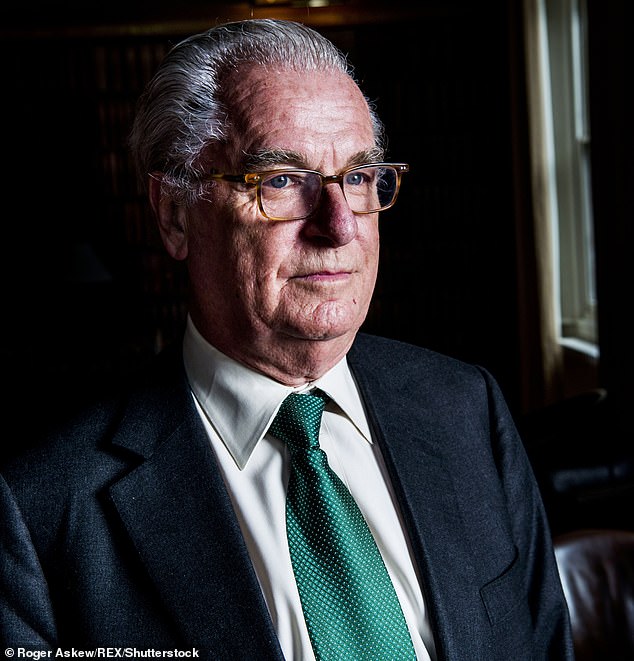
Further sources told her that Mrs Thatcher had an ‘extracurricular friendship’ with Lord Bell, Mrs Thatcher’s head of PR, pictured in 2014
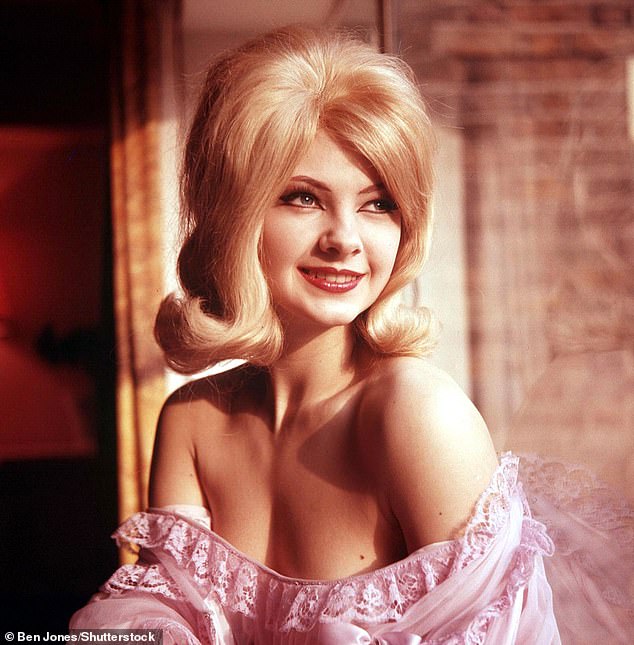
The book, published last month, also analyses Denis’s unexpected friendship with Mandy Rice-Davies, a model and showgirl heavily involved in the 1963 Profumo affair
Mrs Thatcher’s husband would apparently holiday with Ms Rice-Davies and even sent her letters beginning ‘Mandy dear’.
It comes after nomination papers that secured Mrs Thatcher the leadership of the Conservative Party against all odds in 1975 were found in a dusty garage.
They belonged to Tory grandee Sir Edward du Cann, who was chairman of the party’s hugely influential 1922 Committee during the contest.
One of the papers, which is dated January 27, 1975, is written and signed by Mrs Thatcher’s key supporter Keith Joseph.
Another – dated a few days later – was penned by her campaign manager Airey Neave, who was murdered by the IRA in 1979.
Also in the trove, which is being sold at auction with an estimate of £100,000, is a sheet signed by Mrs Thatcher that confirmed her victory in the contest.
It shows how, in the second round, she received 146 votes from Tory colleagues – 67 more than nearest challenger Willie Whitelaw.
Outgoing leader and former prime minister Sir Edward Heath had resigned after getting fewer votes than Mrs Thatcher in the first ballot.
Mrs Thatcher had been considered a rank outsider when the contest began.