This article is taken from the November 2025 issue of The Critic. To get the full magazine why not subscribe? Get five issues for just £25.
A book called “Twelve Churches” suggests a richly illustrated coffee-table tome. Indeed, only the most charismatic of authors could possibly pull off the challenge of discussing buildings in text alone. Yet Fergus Butler-Gallie, the young Church of England vicar, writer and broadcaster, is just such a man. His radiant personality, and keen passion for his subject matter, are manifest on every page of Twelve Churches.
This is very much a Christian book, peppered with references across the many corners of Christian literature: there are leaps from Clement of Alexandria to Eusebius of Caesarea, from Matthew’s Gospel to Professor Linda Woodhead (an expert in Christian demography), from Martin Luther King Jr to G.K. Chesterton.
Butler-Gallie combines genuine curiosity about his subject matter, as both an expositor and a student of church history and its architecture. He radiates a charged, if appropriately humble, sense of the panoptic universalism that must be a feature of any properly Christian view of things.
What, then, does Butler-Gallie wish to convey about his dozen churches? The central goal is to show how it is the buildings themselves — whether St Peter’s in Rome; the 16th Street Baptist Church in Birmingham, Alabama; or the Templo de las Americas in the Dominican Republic — that have forged Christian communities, have underpinned their identities, and still powerfully impact the societies which engulf them.
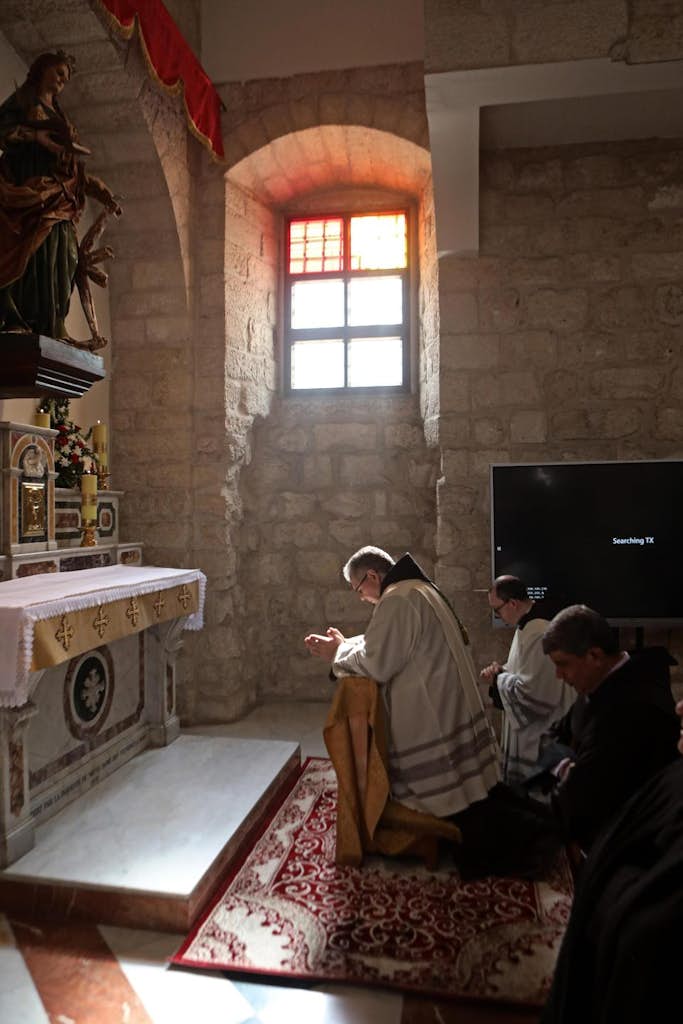
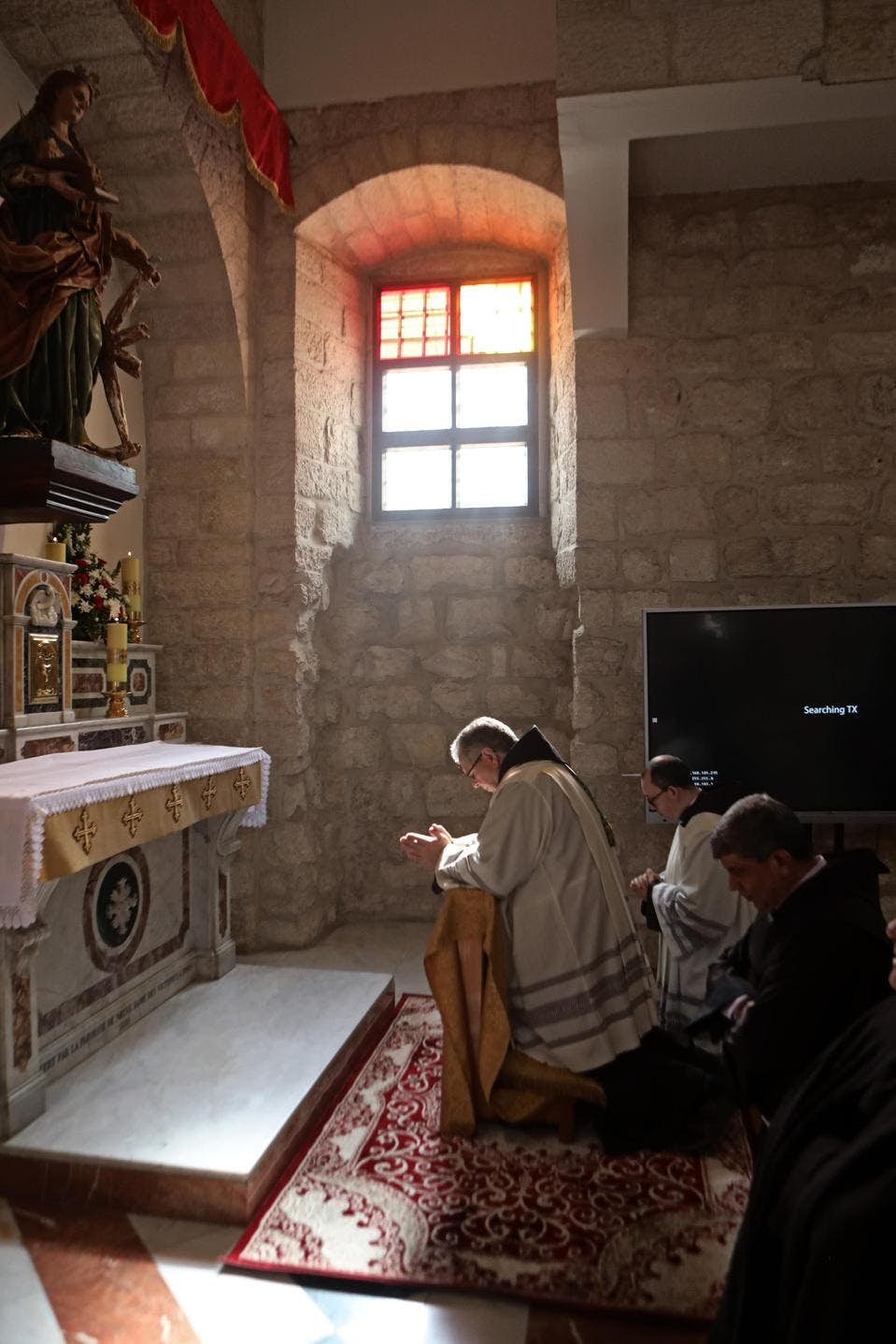
The story begins on the troubled terrain of Palestine, where Butler-Gallie detects in the very architecture of the Church of the Nativity in the West Bank that “in the small and powerless, a beauty and grace and truth might be found that are lacking in the strong and monumental”. The church encourages reflection on the paradox of Christian architecture: so often what fascinates and inspires is the grand, imposing, and majestic; and yet the small, simple and subtle can hold such sacred power.
What is more, as Butler-Gallie demonstrates, the Church of the Nativity is a home for multiple Christian communities — Greek Orthodox, Roman Catholic, Armenian, Coptic, Ethiopian, Syriac — and venerated by other Christian traditions too. All confront their shared origin in one shared space.
The journey between churches in the book moves through both space and time. In the beginning, at Bethlehem, we start, moving forward chronologically. Butler-Gallie is particularly engaging on the complex history of the Hagia Sophia in Constantinople/Istanbul. He weaves together a punchy narrative of the building’s changing fortunes over the centuries, and its place in the political machinations of Presidents Atatürk and Erdogan.
Later in the book, an absorbing chapter on Tanzania and its 19th century Anglican Cathedral of Christ Church, Zanzibar, explores a quite different set of issues: transatlantic slavery, the profit motive and the theology of love. Zanzibar was then the most profitable slave market in the world; only in 1873 was slavery abolished, the year that the cathedral was constructed — on the city’s slave market.
Anguished debates arose about whether a place of torture and indignity can really be immediately repurposed as a place of sanctity. As for the building’s architectural mish-mash — a mix of Tyrolean tower, Byzantine cistern and part Moorish warehouse, inter alia — it was carefully chosen to avoid offending the sensibilities of the local sultan. Alongside his careful consideration of these topics, Butler-Gallie segues into the world of the early church, to compare its character with what he finds in modern Zanzibar.
What Butler-Gallie offers his readers, then, is a rich tapestry of material, interweaving past and present. In each location he puts his readers in touch with the current circumstances and communities of his chosen church, as well as with its earlier history. He thus blends historical exposition with much varied philosophical and theological contemplation and discussion. It is a book, then, for omnivores.
The careful reader might note the occasional lack of emphasis on matters of inter-religious conflict and interaction, and on failures and irresolvable problems within the contexts he explores. The upbeat tone he strikes throughout can gloss over some matters on which he might have dwelt more.
But Twelve Churches succeeds in standing out for its humanity, its seemingly unbounded curiosity, and its broaching of a whole range of fundamental and broad-ranging questions. Taken as a whole, its contents stand as an implicit rebuke against narrowness of thought: it insists that, to confront Christianity, its legacy and its future, is to look at its material presence, as we find it, the world over. It is well worth keeping on the coffee table.