This article is taken from the November 2025 issue of The Critic. To get the full magazine why not subscribe? Get five issues for just £25.
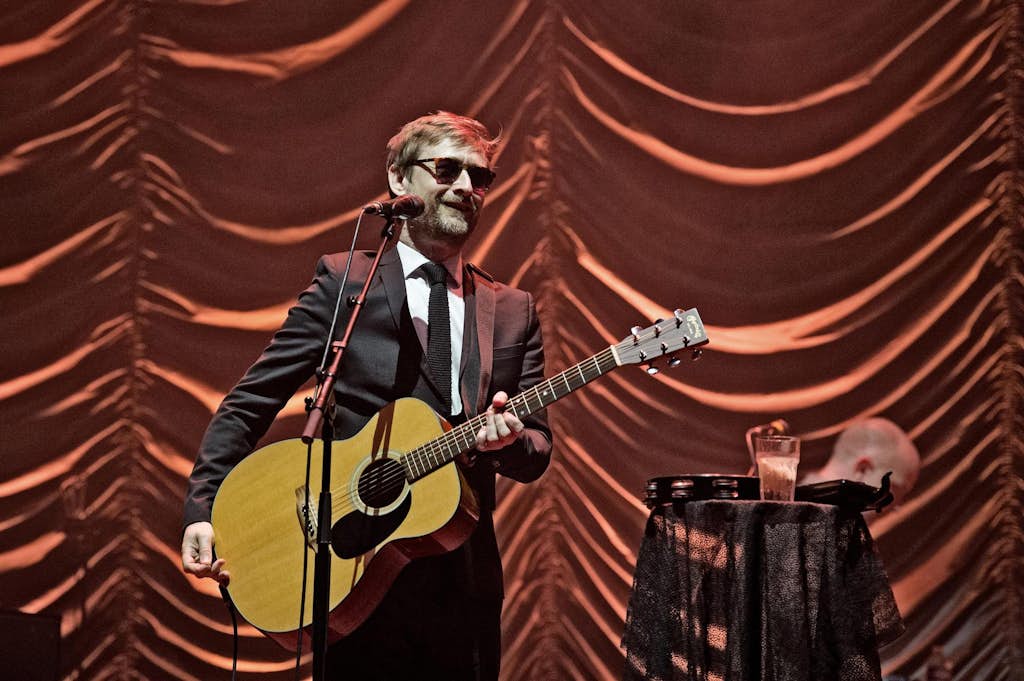
Midway through The Divine Comedy’s show at the Forum, Bath, a roadie rolled a drinks trolley on stage, and Neil Hannon (who, as the founder, sole continuous member and singular creative force, really is The Divine Comedy) introduced his band by mixing them a round of drinks. It was a delicious moment: silly, charming and incongruous, and therefore perfectly Hannon.
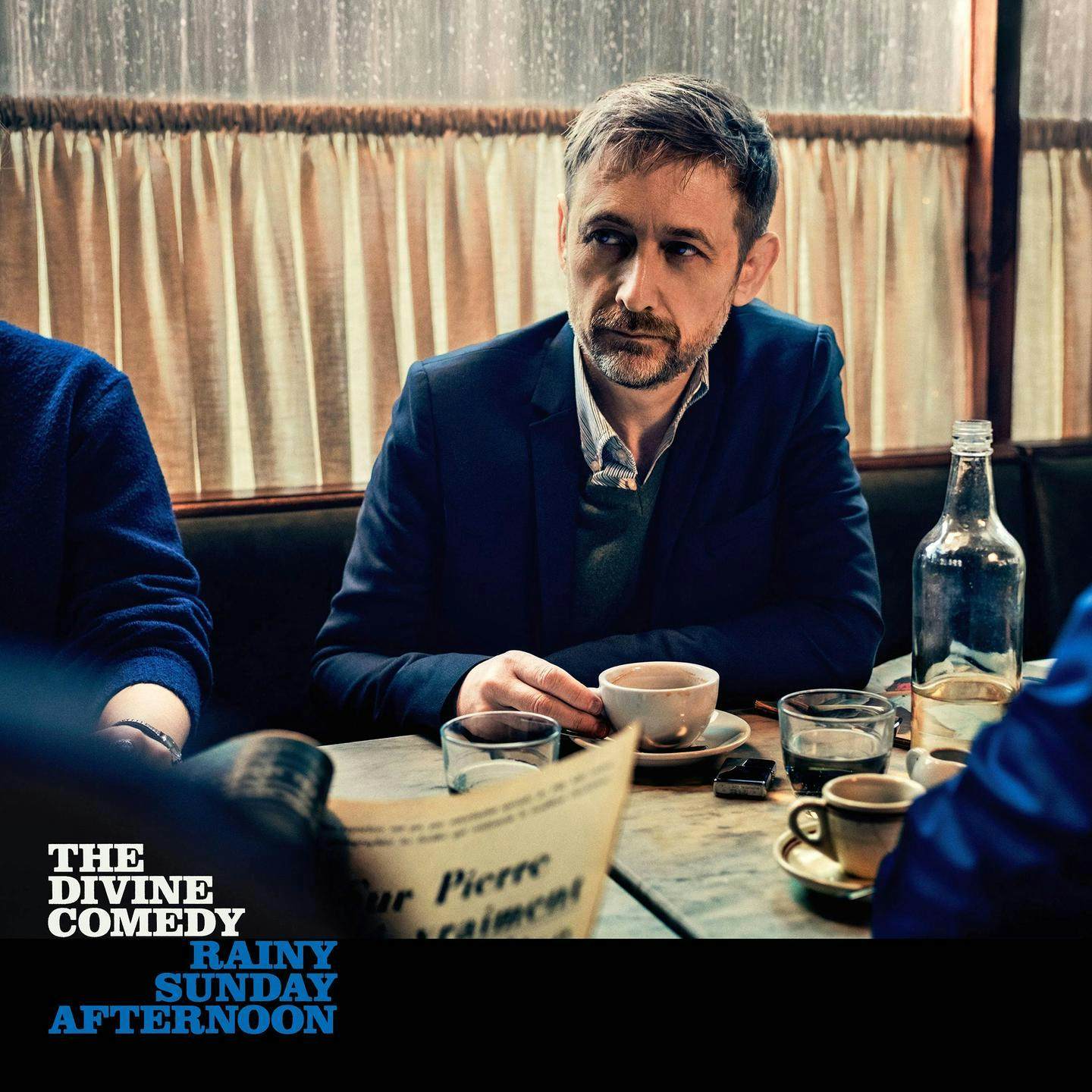
The musical bed to all this was “Mar a Lago by the Sea” from Rainy Sunday Afternoon, which is The Divine Comedy’s thirteenth album. It’s a breezily wistful piece of easy listening, with lyrics that bite.
Taking the character of a future Donald Trump, Hannon reminisces about the glory days in a corrupt paradise: “Cheating losers on the greens/ Swapping wives for beauty queens/ Making turgid wedding speeches/ Entertaining fascist leeches.”
Then, two songs later, he’d become a whole different Hannon, dropping to his knees and writhing on his back like a chamber-pop Prince as he tore through “Our Mutual Friend”, a devastating story of desire and betrayal.
Hannon is one of the true greats of songwriting, able to take his pick from a catalogue bristling with classics. He’s an astonishing singer, who never allows his technical facility to overtake his narrative instincts. But he’s also, irresistably, a showman.
It would be an exaggeration, but not a very large one, to say that my entire adult personality is the outcome of a three-decade project to become the kind of person Hannon might fancy.
In 1996, The Divine Comedy had flown under the radar for three albums when the single “Something for the Weekend” caught the attention of Chris Evans (then hosting the Radio 1 breakfast show) and blew up.
I saw him on Top of the Pops, and acquired a teenage crush that’s lasted a lifetime. Skinny, foppish and choirboy-pretty, Hannon made a deliciously unlikely pop star.
And “Something for the Weekend” is a deliciously unlikely hit — a horny, bookish piece of galloping baroque that riffs on a line from Stella Gibbons’s Cold Comfort Farm and sounds like what would happen if Scott Walker had watched a lot of Carry On films.
But this was the late Britpop era, and deliciously unlikely was in. The more eccentric and ironic, the better, and Hannon was swept up in the scene, even though his feelings on his own Britishness were complicated.
Northern Irish by birth, Anglo-Irish by inheritance (his father was a Church of Ireland bishop), and today Irish by choice (he lives in Co. Kildare), Hannon has described himself as “a weird hybrid”.
The album Casanova cemented his success. Hannon said in a later interview that he’d noticed other bands dipping into references from the ’60s and ’70s, and had written the song with an awareness of “the way the wind was blowing. That sounds quite knowing, but I already loved John Barry, The Kinks, Adam Faith and, of course, Scott Walker”. His influences were right for the moment. So were his lyrics. As laddism was hitting its peak, Hannon was literate and witty about the state of masculinity.
Not all of it aged well, but the best was sharply prescient. “Becoming More Like Alfie” is a Serge Gainsborough-style chanson about following the FHM-reading herd, and the fact that the FHM-reading herd embraced it only makes it better.
If that was all Hannon offered, Casanova would have come off as cynical. But right at the heart of the album, nestled at the end of side A, is a piece of pure sweetness: “Songs of Love” — also the Father Ted theme tune. In it, Hannon plays the eternal outsider, observing the mating rituals of “pubescent beasts” as he tries “to find words/ As light as the birds/ That circle above.”
That push-pull between the satiric and the romantic is what defines Hannon. There are other funny songwriters, and there are other poignant songwriters, but there are vanishingly few who can do both brilliantly. There might only be Hannon who can do both perfectly in one song, as he does in “A Lady of a Certain Age” from the 2006 album Victory for the Comic Muse.
Rapturously welcomed by the Bath audience, the song sharply sketches a former It girl’s hollow triumphs and sad old age. Each chorus ends with her shaving a few decades off her age, and her younger male companion saying “you couldn’t be” — chivalrously at first, and then not chivalrously at all.
This could have been a cruel song, but Hannon treats his subject with such tenderness that you’re more likely to cry for her than laugh at her.
That humane treatment of mortality is a longstanding Hannon theme, and on Rainy Sunday Afternoon it’s stronger than ever. The first two songs on the album, “Achilles” and “The Last Time I Saw the Old Man”, are about death. They were also the first two songs of the concert, which you might imagine would be a bit of a downer to start with.
But in Hannon’s universe, the inevitability of loss is just a reason to love harder: the encore ended with an ecstatic performance of “Tonight We Fly”, from 1994’s Promenade (maybe my favourite Divine Comedy album). “And when we die/ Oh, will we be that/ Disappointed or sad/ If heaven doesn’t exist/ What will we have missed/ This life is the best we’ve ever had” goes the final verse, and as Hannon sang it, I knew I’d had exactly the kind of night those words are about.