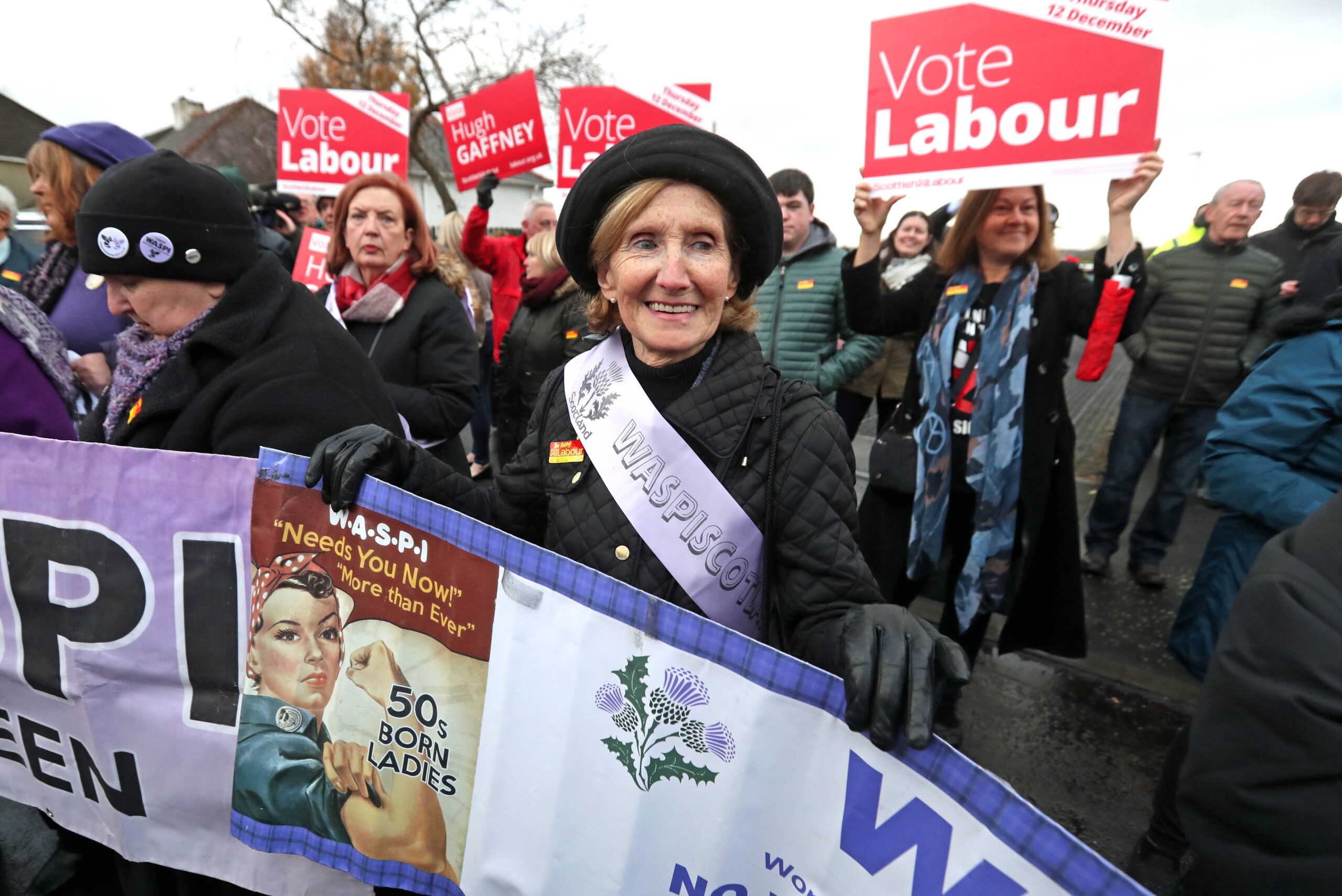
Once upon a time, the British Labour Party had a strong track record of protecting and caring about women. In previous governments, it passed landmark equal-pay laws, brought in stricter laws around domestic violence, and introduced legislation to ban discrimination on the basis of sex.
But today it is difficult to ignore the fact that Labour is no longer especially concerned with the plight of women and girls. Last week, Baroness Falkner of Margravine, the former head of the Equality and Human Rights Commission (EHRC), told the Times she believed the party had “abandoned” women over issues like transgender ideology and the grooming gangs scandal. Falkner pointed to the fact that the government has so far failed to publish statutory guidance on single-sex spaces in line with the Supreme Court’s April 2025 ruling that “sex” in the Equality Act refers to biological sex, not self-declared identity. Falkner believes this is because ministers are “terrified of MPs” who are gunning for “trans self-identification or trans inclusion to prevail across all areas of society.” The EHRC has already provided the government with drafted guidance on how public bodies, businesses and employers should interpret the ruling, but this is yet to be published—despite Falkner being “so certain of the lawfulness of our code that I don’t think I’ve ever been so certain about anything before.”
As a result of the government dragging its feet over this, NHS trusts, local councils, schools, and universities are struggling to interpret and implement the Supreme Court ruling. In some instances, biological men who identify as women are still being allowed to access single-sex spaces, like toilets and changing rooms. The government response to this has been equivalent to a shrug. In the meantime, women are expected to simply grin and bear it, as they have done for years now, and continue to allow men into their spaces. Their discomfort is wholly irrelevant to Labour, which remains uninterested in enforcing a legal judgment it would prefer never happened in the first place.
Regrettably, the Supreme Court ruling is far from the only women’s issue that Labour is content to ignore. As Falkner laments, the government has entirely let down the “oppressed and vulnerable” victims of grooming gangs. Over the course of years (in some areas, decades), thousands of girls were trafficked, raped, and tortured at the hands of predominantly Muslim Pakistani men across the country. The suffering of these mostly white, working-class girls was largely disregarded both by Labour and by previous governments. Starmer’s government, however, has been particularly obstinate in refusing to acknowledge the scale and horrors of the grooming gangs. After repeatedly refusing to properly investigate the scandal on a nationwide scale, with one MP even dismissing talk of grooming gangs as a right-wing “dog whistle,” Labour finally gave in to pressure and begrudgingly announced this summer that it would be holding a national inquiry.
This quickly began to disintegrate, as five of the grooming-gang survivors recruited to the panel quit the inquiry, accusing safeguarding minister Jess Phillips of expanding the investigation’s scope to include other forms of abuse—in what the five victims claimed was an attempt to downplay the involvement of Pakistani Muslim men. These accusations were rejected by Phillips, but were soon borne out in internal leaked emails.
Just last week, furor exploded over the moderate Labour MP Mike Tapp’s suggestion that the inquiry will, in fact, be investigating the possible links between grooming gangs and ethnicity, religion, and culture. Tapp quite reasonably stated that “we must identify and address any links” and ensure the government does not “turn away from this.” Naturally, his comments were met with the usual cries of “fascist rhetoric” from the far left, but even within Tapp’s own party, at least one MP reportedly lodged a complaint against him. He or she is apparently demanding to know whether it is the official government position that ethnic-minority groups are predisposed to child rape.
The harsh truth is that Labour is more committed to upholding the multicultural project than it is to protecting women and girls. If that were not the case, it wouldn’t still be failing spectacularly to police the country’s borders. The UK migration system is currently allowing large numbers of foreign men to enter the country illegally, many of whom we know nothing about. As of last year, foreign nationals are about 140 percent more likely to be convicted of sexual offenses than you’d expect from their share of the population. To make matters worse, a whistleblower from inside the Home Office revealed to the Telegraph last month that committing a crime is no barrier to being granted asylum in the UK—provided that the crime in question does not carry a sentence of more than 12 months. Even those foreign criminals who do manage to be hit with a deportation order are not guaranteed to actually be removed. The glacial pace of the British courts and appeals system means that some will wait years to be removed from the country, even when they have been found guilty of sexual assaults or other violent crime.
Subscribe Today
Get daily emails in your inbox
Labour’s lax approach to migrant crime has real consequences for the safety of women and girls. This week alone, we learned that two 17-year-old Afghan asylum seekers were sentenced for the abduction and rape of a 15-year-old in Leamington Spa; an Afghan national was charged with raping two 14-year-old girls in Bolton; and a failed asylum seeker from Trinidad staying in a state-run migrant hotel was found guilty of rape and sexual assault after the victim recorded the attack. These kinds of horrific stories have become a nearly weekly occurrence.
It is nearly impossible for Labour to defend women seriously today, because the threats have shifted and the party refuses to adjust. It is incapable of recognizing that women face dangers beyond vague notions of “discrimination” and “microaggressions.” It is stuck obsessing over menopause awareness schemes and policing online misogyny. Recognizing that the greater peril comes more from trans ideology, multiculturalism, and open borders would require a complete overhaul of Labour’s current worldview—something that has more in common with student unions than the trade unions of yore. That, in turn, would mean admitting that the ideology that most of the party has pledged allegiance to was not only wrong, but also actively dangerous.
It would be satisfying to imagine that, with growing public backlash against both gender ideology and mass migration, Labour will be forced to choose between its ideological commitments and women’s safety. In reality, it will likely continue to ride out scandal after depraved scandal, its political corpse propped up by voters who cling to old loyalties—or who support Labour on identitarian grounds. The only good that might come of this is that more women will come to learn what the British working classes have known for a long time: Labour has well and truly left them behind.