Schools are still relying on parent donations to make ends meet, despite Labour claiming they were going to ‘end Tory cuts’, a union has said.
The National Education Union (NEU) accused ministers of ‘failure’ due to schools having to ‘shake the collection tin’ to cover the basics.
A survey of 11,000 members found 66 per cent report their school relying on ‘donations and fundraising’ because of a lack of cash.
More than half – 53 per cent – of members said there is not enough money in their school budget to afford the staff they need to run the school.
It comes after Labour spent more than a decade campaigning heavily against what they claimed were ‘Tory cuts’ in schools, to try to topple the previous Government.
Although not officially affiliated politically, the NEU saw Labour as an ally during that era – with then party leader Jeremy Corbyn getting a standing ovation at the union’s annual conference in 2019.
However, now the union is threatening Education Secretary Bridget Phillipson with strikes over pay and conditions, with an indicative ballot of members currently taking place.
Yesterday, General Secretary Daniel Kebede said: ‘When even basic provisions cannot be met without having to shake a collection tin, then it is obvious this Government and [previous] governments have failed parents, teachers, leaders and above all, young people.

Schools are still relying on parent donations to make ends meet, despite Labour claiming they would ‘end Tory cuts’, the National Education Union has said (pictured: General Secretary Daniel Kebede)
‘Pupils in schools whose communities cannot afford to subsidise them are the ones who miss out.’
Survey respondents said donations and fundraising go towards covering basic running costs, building repairs, new equipment and school trips.
Schools are not legally allowed to demand money, but they can request voluntary contributions, with some families asked to pay hundreds per year.
Those working in more deprived schools were more likely to report their parents not being able to afford to donate.
One in three – 33 per cent – said their school building overheats in the summer, while 54 per cent said their school suffers from poor ventilation and 66 per cent said it leaks when it rains.
One respondent said: ‘Mostly, a lack of funding impacts our most vulnerable children. No adult support, no physical resources, no enrichment or immersive learning opportunities.’
Last year, the Institute for Fiscal Studies (IFS) said schools were facing ‘a particularly tight set of pressures’ in 2025/26, with growing costs expected to see them need to make savings despite increases in funding.
Meanwhile, the Department for Education (DfE) has recommended that teachers receive a 6.5 per cent pay increase over the next three years, which much of it having to be found via savings elsewhere in school budgets.
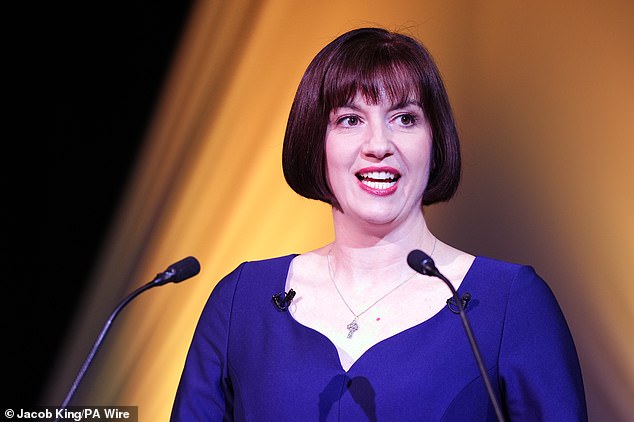
The union is threatening Education Secretary Bridget Phillipson (pictured) with strikes over pay and conditions, with an indicative ballot of members currently taking place
Mr Kebede said: ‘The Government have told schools to make efficiency savings to cover staff pay rises, but after 15 years of austerity, there is nothing more to cut.
‘The sooner the Government recognises that schools cannot make cuts without affecting the quality of education the better.’
A DfE spokesman said: ‘This government inherited a challenging financial position, but is putting record investment into our schools.
‘School funding is increasing by £1.7 billion in 2026-27, including funding for SEND reform announced within the Schools White Paper.
‘This investment is a critical step forward in our mission to support all children and young people to achieve and thrive and will support teachers and leaders to deliver high and rising standards across every school and for every pupil.’
Three in four teachers say ‘burnout’ made them want to leave
Three quarters of teachers say they have considered leaving their jobs due to ‘burnout’, a survey has found.
Polling of 1,000 secondary school teachers found 74 per cent were on the brink of a career change due to mental overload.
It also showed 70 per cent say stress is impacting their teaching – with 34 per cent saying the effect was ‘severe’.
The research also found nearly two in three – 63 per cent – said they ‘feel guilty’ that stress has affected the quality of their teaching.
More than two in five – 45 per cent – described themselves as a ‘bad teacher’ when they are going through periods of severe burnout.
And 64 per cent said burnout is negatively affecting pupil outcomes at their school.
Meanwhile, 31 per cent said they have worked while feeling ‘mentally unwell’ and 16 per cent have taken time off because of stress.
A quarter – 24 per cent – of those who have taken time off reported being absent for between 11 and 20 days.
The survey was commissioned by online school Minerva Virtual Academy (MVA), which said conditions of the job needed to be improved to make the profession more attractive.
Matt Wrack, General Secretary of the NASUWT, added: ‘Teachers are striving to do the best for their pupils, but are being hampered by excessive workloads and growing pastoral responsibilities which are driving up levels of chronic stress and burnout.
‘This is driving an unsustainable hamster wheel in which exhausted teachers feel they cannot deliver the quality of lessons they aspire to, leading to feelings of guilt which push them to work harder to meet the impossible demands being expected of them, which then only leads to further stress and fatigue.’
A DfE spokesman said: ‘Last year saw one of the lowest rates of teachers leaving the profession since 2010, and we are already delivering on our pledge to recruit and retain 6,500 more talented teachers with over 2,300 more secondary and special schoolteachers in classrooms this year.
‘Our Education Staff Wellbeing Charter sets out joint commitments from government, schools and colleges to improve staff wellbeing, and over 4,300 schools have signed up so far.
‘As part of our record investment into schools, we are providing an extra £1 million each year so that 2,500 leaders can access wellbeing support.’