Labour has been accused of ‘dithering’ over its promise to put Britain on a war footing, after key legislation was delayed.
Plans to prepare the military and vital industries for the outbreak of war have been pushed back until at least next year.
The Defence Readiness Bill was supposed to come into force early this year, but now the government will make no attempt to pass it until mid-2027 at the earliest.
Critics have warned the delay will send ‘damaging signals to adversaries and allies’ at a time when the world is becoming more dangerous – with conflict exploding in the Middle East while the war rages on in Ukraine.
The proposed bill, a core recommendation of the 2025 Strategic Defence Review, is designed to shift the UK to ‘warfighting readiness’.
This involves greater power for the government to secure and mobilise key industries, and for ministers to boost the reserve force.
Lord Coaker, a defence minister, said in June last year that the bill would come ‘some time at the beginning of 2026’.
However, there has been no confirmation it will feature in the King’s Speech next month, which sets the government’s agenda for the next session of parliament and would typically last more than a year.
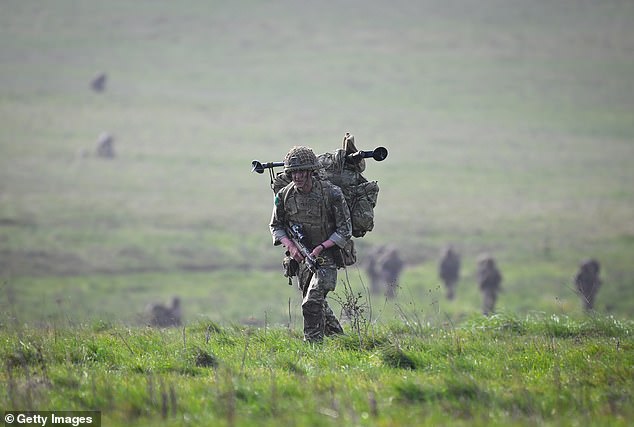
The bill to bolster the UK’s military and prepare it for war has been delayed
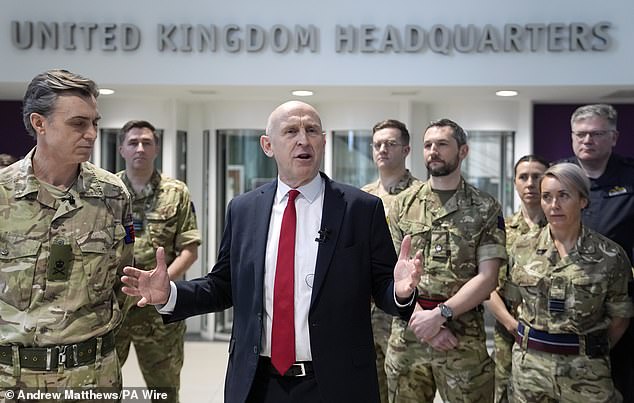
Defence Secretary John Healey speaking to military personnel during a visit to the Permanent Joint Headquarters in Northwood, London
The omission comes amid concerns from several departments that the necessary groundwork has not been laid.
James Cartlidge, the shadow defence secretary, told The Times this proves ‘Labour’s dither and delay on defence goes from bad to worse.’
He said: ‘At a time of war on multiple fronts and when our adversaries are rearming at a frightening pace, Labour are moving far too slowly.’
A Labour MP said the wait would ‘leave our defence even further behind’ at a time when the Iran war has shown ‘we need to mobilise and we need to wake up’.
Just as the momentum is knocked from the UK’s military revival, other governments around Europe have already made decisive adjustments to prepare their countries for war.
This year, Germany launched voluntary military service for all 18-year-old men, with the prospect of it becoming compulsory.
Last week, the rules were tightened so that fighting age men must ask the army for permission to leave the country for more than three months.
The legislation also includes a clause whereby those between the ages of 17 and 45 will require a permit from the Bundeswehr, the country’s military, to be able to depart from Germany for longer periods.
Germany’s leader Friedrich Merz’s hopes his country will become a major security power within Europe with the help of what he hopes will eventually be ‘the strongest conventional army’ in the continent.
His government has also promised to spend 3.5 per cent of the country’s GDP, €153billion (£133billion), by 2029 on defence as part of its aim to meet NATO’s five per cent target.
France is set to introduce a similar form of national service this summer, in which young adults can volunteer for ten months of paid military training.
A UK government spokesman told the newspaper: ‘We’re constantly hardening and sharpening our approach to homeland security, backed by the largest sustained increase in defence spending since the end of the Cold War, making the UK well able to respond to the threats we face. We don’t comment on speculation regarding the King’s Speech.’
The Ministry of Defence was approached for comment.