A decade in the making, Ken Burns’s much-ballyhooed The American Revolution gives the viewer a fair idea of what to expect in its opening moments. By the time young Ben Franklin wandered down the streets of Philadelphia carrying his famous bread loaves, the narrator Peter Coyote tells us, the Iroquois nation had already established “a democracy that had flourished for centuries.” Franklin, soon to join the ranks of the Founding Fathers, foresaw a “similar union” for his own country, which implies that one somehow led to the other. This is, to say the least, far-fetched.
To suggest that the Founders—classicists to a man—somehow learned the arts of governance from the Iroquois and not from the Greeks, the Romans, and their own British forebears is about what you’d expect from this six-part series, which the historian Tad Stoermer wants no part of.
Brushing aside the predictable superlatives of less knowledgeable reviewers, the author of the forthcoming Resistance History of the United States subjects the miniseries to a tarring-and-feathering that is, for the most part, well-deserved. Stoermer, coming from the left of the political spectrum, calls Burns’s American Revolution little more than “nationalist propaganda with better production values,” the object of which, quoting Burns, is “to put the us back in the U.S.”
This is understandable enough in these fractious times and sure to appeal to a great many viewers who will go away feeling better about their country—and, more importantly, about themselves. Just as Burns brings in the Iroquois, he attempts to show that Franklin, Adams, Jefferson, Madison, and the rest were themselves engaged in a comparably noble (if “flawed”) attempt to unify much of the American continent and the people who lived there, different and antagonistic as they could be. There were foundational principles at stake here and, if you don’t know the end of the story, they won. Hallelujah.
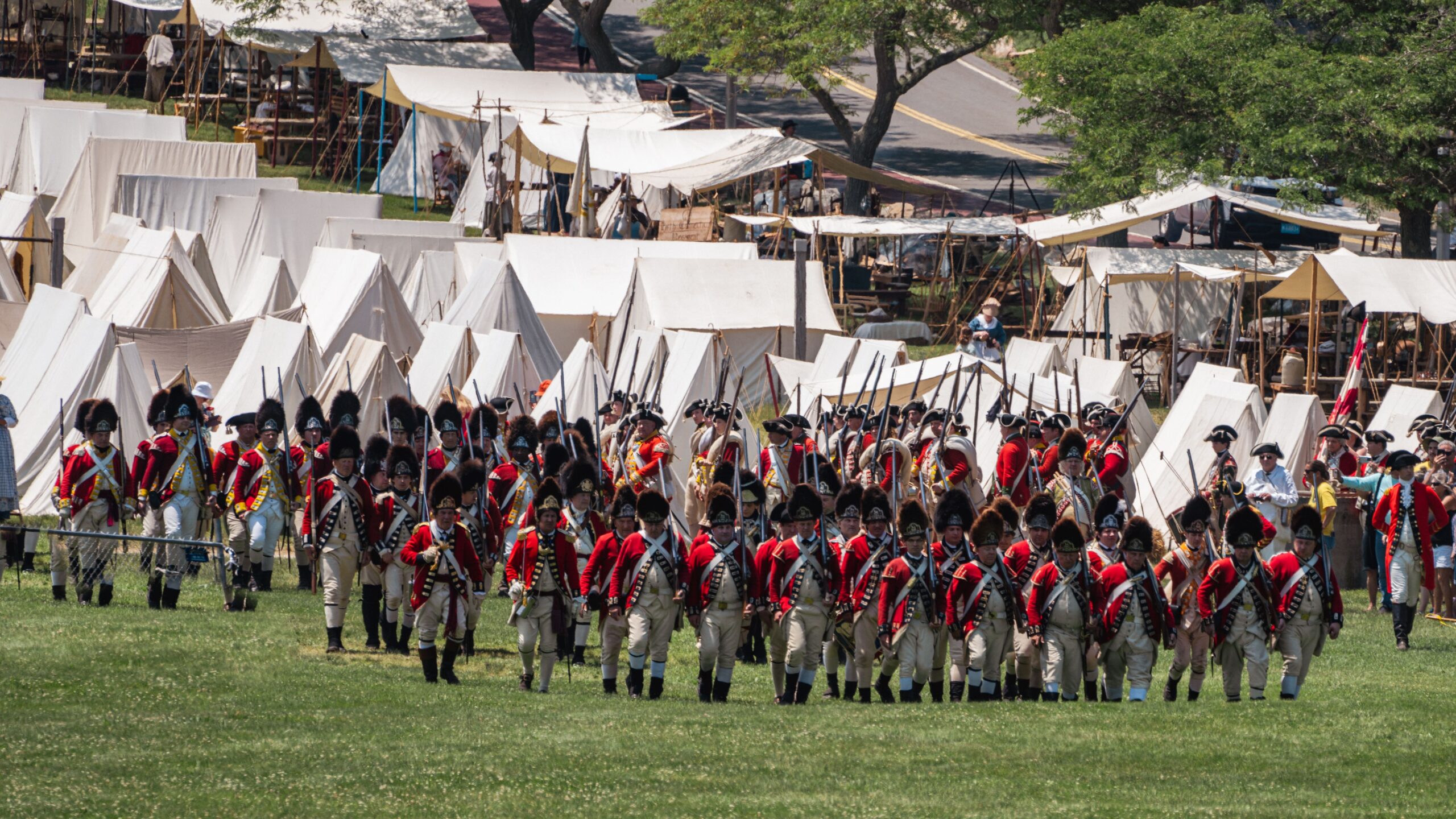
The soundtrack is predictably elegiac, as is the visual presentation, which, when Burns chronicled the American Civil War some 35 years ago, was more effective than it is today. What was once evocative can now be soporific. Burns had actual photographs to work with back then, but, alas, seven decades after the Revolution would pass before Matthew Brady could lug his camera around battlefields. This means more maps and more reenactments, and reenactments are rarely effective, which is the case here.
What Burns does—and what makes The American Revolution so perfect for a certain kind of well-educated middle-class viewer—is to include what we are required nowadays to call “diverse” perspectives and, better yet, diverse talking heads.
There are not just white men here—there’s no Shelby Foote to speak for Southerners—but blacks and women too. Annette Gordon-Reed is featured, which checks two boxes. There are also two scholars—Maggie Blackhawk and Ned Blackhawk—of Ojibwe and Shoshone ancestry, respectively. Coyote doesn’t count; this son of an investment banker was born Peter Cohon in New York City and grew up in Englewood, N.J. He has claimed to be “half black and half white inside,” however, thanks to the influence of the family’s black housekeeper. Make of that what you will.
All these voices, as Stoermer points out, are coopted into a reassuring story of national unity that will leave otherwise guilt-ridden NPR-dependent news consumers feeling virtuous for having watched it. They will especially enjoy learning that Thomas Jefferson, George Washington, Patrick Henry and even good ol’ Ben Franklin were land speculators, capitalists eager to reap profits from territories west of the 13 colonies—you know, the ones those Iroquois called home. This will enable viewers to feel knowledgeable and superior. That Jefferson owned slaves they already knew.
Subscribe Today
Get daily emails in your inbox
There’s nothing terrible in any of this—Burns means well—but nothing especially helpful about it either. Americans should know more of their country’s history and, by every indication, they don’t know much about it at all. So there’s that. Maybe all that is intended by the early reference to the Iroquois “democracy” is the notion that we have all been in this together, wanting the same things, from the start. (Franklin dismissed the Iroquois as “ignorant savages,” but that’s a quibble.)
That there are no nonbinary voices included seems a shame, though future episodes might supply the lack. One person who saw the show posted on Facebook that some of the women who dressed as men and fought against the British were in fact “trans,” and there are no doubt scholars at work as we speak giving the possibility the thorough investigation they feel it deserves.
All the foregoing is based, to be fair, on watching only the first episode. I’m not sure I will make it through all the others, though I hope to catch the treatment of the Southern campaign, which I know a little about. I’m told Burns does a good job with Daniel Morgan’s victory at Cowpens. It would be quite an accomplishment to tell that story without putting viewers to sleep, but anything is possible. On to Yorktown!