Keir Starmer‘s government deliberately collapsed the prosecution of two men accused of spying for China so it could ‘suck up to Beijing‘, Kemi Badenoch said today.
The Tory leader lashed out amid claims that the Prime Minister’s light touch with the Communist regime had handed it a free pass to commit espionage in the UK.
Her comments in her speech closing the Conservative Party Conference came after the astonishing decision by the director of public prosecutions (DPP) to publicly accuse ministers of undermining his work.
Stephen Parkinson revealed that the Crown Prosecution Service had spent more than a year trying to get key evidence that the accused pair, Chris Cash and Christopher Berry, were spying for an ‘enemy’.
In a letter which has deepened the war of words in Whitehall over the scandal, he said prosecutors were rebuffed by officials who, as Labour look for closer relations with Beijing, refused to say China represented a threat to the UK’s national security.
Sir Keir today insisted the previous Tory government policy on China needed to be the focus of scrutiny, as they were charged in April 2024, when the Tories were in power.
But critics laid the blame at his door and that of Attorney General Lord Hermer, with calls for the latter to face questions in Parliament.
In her leader’s speech at the Manchester conference, Mrs Badenoch said: ‘Today, we learn that Labour deliberately collapsed the trial of two men accused of spying on MPs for China, because the Prime Minister wants to suck up Beijing.
‘This is squalid.’
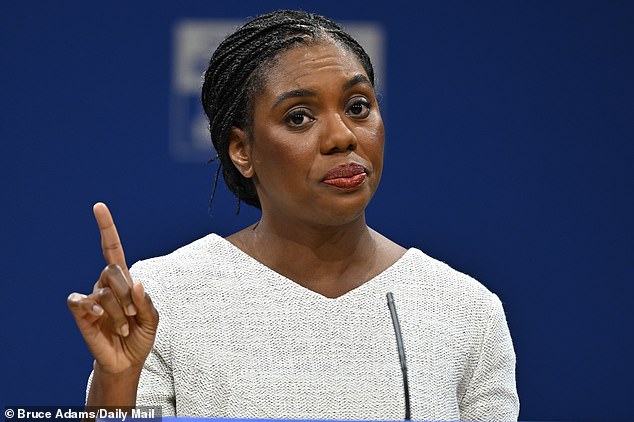
The Tory leader lashed out amid claims that the Prime Minister’s light touch with the Communist regime had handed it a free pass to commit espionage in the UK.

Sir Keir today insisted the previous Tory government policy on China needed to be the focus of scrutiny, as they were charged in April 2024, when the Tories were in power.
Speaking in Mumbai, the Prime Minister said: ‘Well, as you know, we were disappointed that the trial didn’t proceed, but the position is very clear that the trial would have had to take place on the basis of the situation as it was at the time under the previous Tory government.
‘So whatever their position was, was the only position that could be presented at trial.’
So it wasn’t, as it were, this Government’s position. It was the Tory government before’s position.
‘Now that’s not a political to and fro, that’s a matter of law.
Earlier a Labour minister refused to label China as ‘an enemy’ of Britain.
Emma Hardy admitted dealing with the communist regime was ‘a challenge’, the day after the director of public prosecutions launched an astonishing attack on the government.
And she told Sky News there was no plan to brand China an ‘enemy’.
‘China is a challenge and China is a country which we have a large trading relationship with,’ she said.
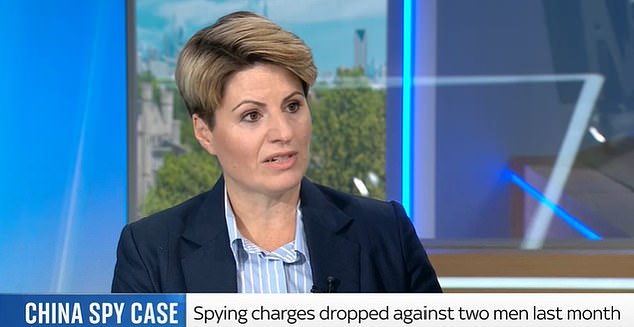
Emma Hardy admitted dealing with the communist regime was ‘a challenge’, the day after the director of public prosecutions launched an astonishing attack on the government
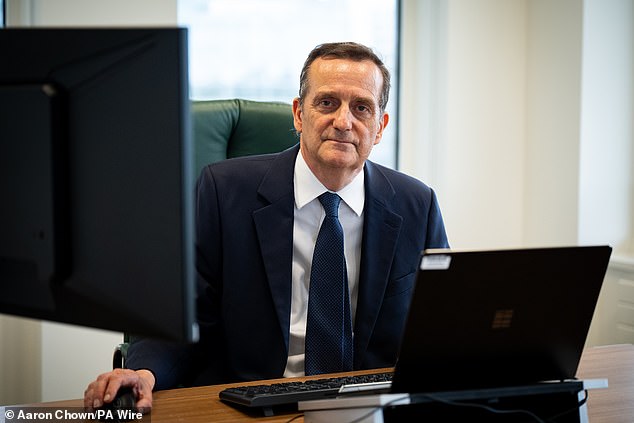
CPS chief Stephen Parkinson has sensationally revealed that the China spy case collapsed after the Government’s national security adviser refused to provide crucial evidence that China represented an ‘active threat’
‘Sometimes we will be competing with China and sometimes we will be collaborating with China and sometimes we need to challenge China when it makes decisions that we don’t think are in our interests.
‘But ultimately this government acts in the national interest.’
However, former DPP Ken MacDonald told the BBC that the Lord Hermer needed to reveal what happened.
‘Everybody’s saying, you know, ”I knew nothing about this. The decision was made by somebody else. No one consulted me. None of its my fault and I can’t explain it”’, he said.
‘The reality is, you simply cannot have a serious national security case collapsing without some proper explanation being given to the public.
‘The Attorney General Lord Hermer has to attend Parliament when Parliament returns from its recess to explain what has happened here.’
Last night, Shadow Security Minister Alicia Kearns, who has been told by the CPS that she was ‘targeted’ by China as part of the case – and with whom Mr Cash previously worked – said: ‘It looks like this Labour Government is so desperate to appease China to get some sort of deal across the line that they refused to provide vital evidence to the CPS that China represented a threat to the UK’s national security.
‘It’s effectively handing carte blanche to China to spy on Britain without fear of repercussions, because it shows that no one in Government was willing to say that China poses a threat – not even that China is an enemy state, just that it poses a threat of any sort.’
When they were charged under the Official Secrets Act 1911, Mr Cash and Mr Berry were accused of collecting and passing information that would be ‘directly or indirectly useful to an enemy’.
Just weeks later, a High Court ruling on a similar Bulgarian spy case effectively set the bar for prosecution when judges ruled that spying must constitute an active threat to national security.
Following that judgement, Mr Parkinson sought additional evidence from national security advisers in Whitehall to fortify the case against Mr Cash and Mr Berry.
But he had to pull the plug last month after prosecutors were strung along for months with the promise of further witness statements to resolve the issue, only for them to never materialise.
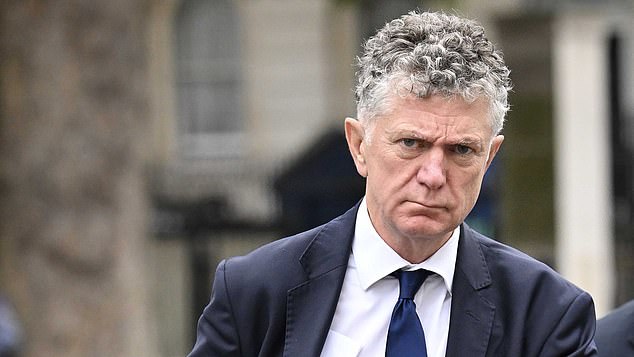
Downing Street has confirmed that National Security Adviser Jonathan Powell will appear before senior MPs and peers to answer questions about the scandal
When the case was dropped at the Old Bailey last month, Henry Blaxland KC, representing Mr Cash, said his client was ‘entirely innocent’.
Mr Berry had also denied the allegations and said he did not understand why the case was brought.
It can now be revealed that Matthew Collins, the Executive Deputy National Security Adviser, made the decision that China was not a national security threat to Britain.
Last night it was claimed that he provided evidence to the CPS that the Government did not consider China a threat even before the suspects were charged.
Government sources hit back at Mr Parkinson by claiming Mr Collins had consistently maintained the same position when asked for clarity by the CPS. The clash will pile yet more pressure on Keir Starmer’s National Security Adviser, Jonathan Powell, to explain why taxpayers’ cash was wasted on a two-year case which may have been doomed from the outset due to the Labour Government’s efforts to build ties with the Communist state.
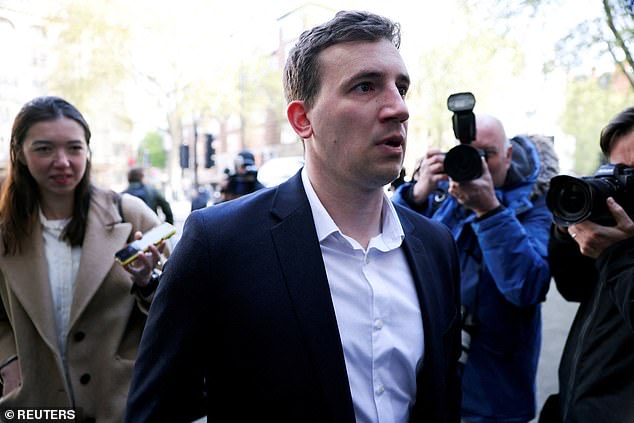
Former parliamentary aide Christopher Cash, 30, was charged with passing secrets to Beijing
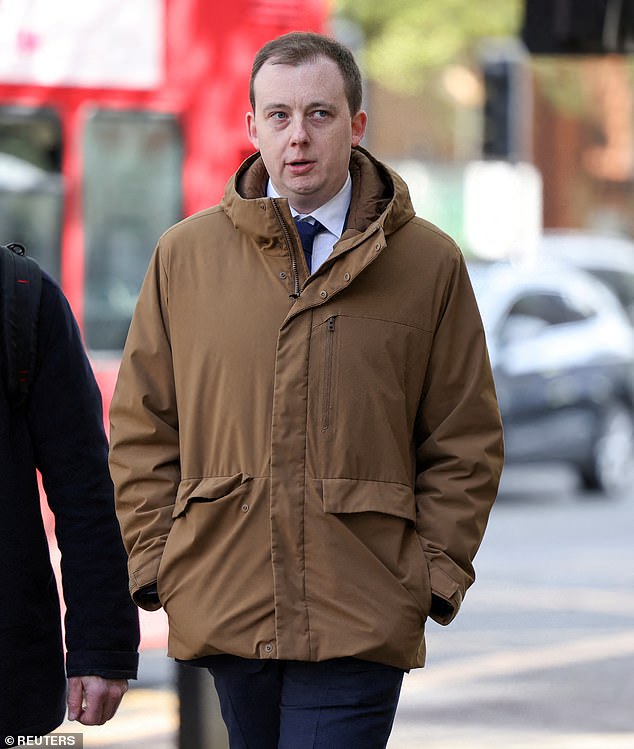
Also charged was teacher Christopher Berry, 33. The charges against both men were dropped
Downing Street has confirmed Mr Powell will appear before senior MPs and peers to answer questions about the scandal. But his appearance before the Joint Committee on the National Security Strategy will be in private.
Ms Kearns, a former chairman of the Foreign Affairs Committee and a long-standing critic of China’s human rights record, added: ‘If you look at the [Bulgarian case] High Court judgement, it was pretty reasonable, there is plenty of evidence in the previous speeches of MI5 chief Ken McCallum that China poses a threat.
‘Keir Starmer has questions to answer here, this judgement effectively lowered the bar for prosecution, yet no one in Government was willing to help the CPS.’
It was after mounting calls for an inquiry into the episode that Mr Parkinson wrote to the chairmen of the Home Affairs and Justice Committees last night saying he had decided to provide ‘further information’ due to ‘Government briefings’ on the case.
He wrote: ‘I am satisfied the decision to charge this case in April 2024 was correct.’
Speaking about the case for the first time, Sir Keir, himself a former DPP, insisted that witness statements were prepared on the basis of the Tory administration’s stance on China in 2023, which described the country as merely an ‘an epoch-defining challenge’ rather than an enemy.
He said: ‘What matters is what the designation was in 2023, because that’s when the offence was committed and that’s when the relevant period was.’