‘Pathological Demand Avoidance (PDA)? What exactly is that?’, I remember saying to the UK clinical psychologist when we had my now 13-year-old son, Eddie, assessed for autism in 2019.
The ‘A’ word was first mentioned when Eddie was a toddler, and had speech and learning delays, but we didn’t join the NHS waiting list for an assessment until after a disastrous first year at school.
He struggled to follow instructions, understand what was meant by an ‘inside voice’ – and although he had a perfectly normal IQ, he couldn’t hold a pencil, write his name or cope with the hustle and bustle of a busy playground.
He is also visually impaired and wore an eye patch but didn’t want to sit at the front of the classroom. This meant he couldn’t read what was on the blackboard and got very sore from using his one good eye, he would also sometimes fall asleep in class.
I would frequently be called in to come and get him.
Having grown up in the ’80s and ’90s, when autism and ADHD wasn’t really ‘a thing,’ I was initially quite reluctant to seek a diagnosis for Eddie – but I could see from early on that he was quite different from our other two children, Charlie, now 16, and Jemima, 11.
I had to help him get dressed in the morning, brush his teeth and lay out his breakfast things separately.
He couldn’t stand to hear the other two chewing or slurping, even with his noise cancelling earphones, or tolerate the texture of milk on his cereal – so he had that in a glass instead.
Alongside his autism diagnosis, Eddie was diagnosed with PDA, which is characterised by an extreme anxiety-driven need to avoid everyday demands, and Sensory Processing Disorder (SPD), a condition which impacts how you process sensory information.
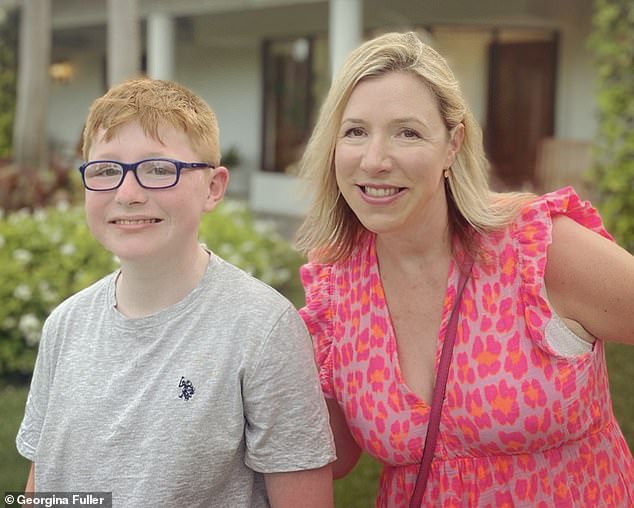
Georgina Fuller’s son Eddie was diagnosed with Pathological Demand Avoidance and autism in 2019 (pictured together)
I’d heard of SPD and understood that Eddie was very sensitive to clothing labels, noise and different textures, but I didn’t have a clue what PDA meant.
I should think it was much the same for Izzy Judd, a violinist and mother-of-three who married McFly drummer, Harry, in 2012.
Izzy said last week, while speaking on Dr Alex George’s Stompcast podcast, that she also had a child with PDA and that she’d had to rethink her entire approach to parenting to avoid ‘overwhelming’ them with ‘rigid routines’.
‘Pathological Demand Avoidance is linked with autism,’ Izzy explained. ‘It’s basically about demands that are put on a child who underneath the demand has a lot of anxiety.’
Izzy said everyday instructions – such as getting dressed or brushing teeth – can trigger upset, so she had ‘given up’ making direct commands or even asking too many questions.
She acknowledged that it might look like poor parenting to the unknowing observer: ‘To the outsider looking in, they might see that as a sort of lazy parenting or a lack of discipline or whatever it is they want to say,’ she said.
I know just what she means. I’ve often thought it must make me look like a bad mother when Eddie comes down in his pyjamas on a Saturday while the other two are heading off to play football or go horse riding. Or when I let him spend most of the day on his tablet.
Yet I know, after a full week at school, trying to force Eddie to come out and do things will only result in a meltdown or a big argument when he refuses. So I have mostly given up asking.
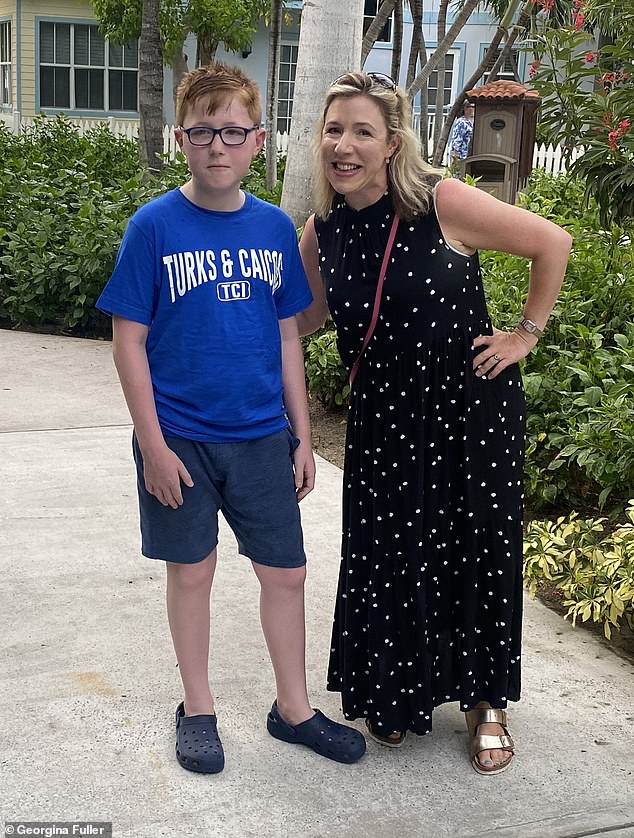
Georgina said she has largely given up on asking Eddie to do things because it can result in him having a ‘meltdown’

Eddie’s mother said autonomy is important for her son because he needs to feel in control of his day
The one thing he does like to do is come out and walk the dogs with me. He likes to have plenty of notice so I usually try and ask him an hour or so beforehand to put the idea into his head and get him on board.
Then I tentatively ask if now would be a good time and if that fails, suggest a walk to the cafe at the top of the hill which serves his favourite, carrot cake.
I have learned over time that autonomy is really important with PDA kids and that Eddie needs to feel in control of his day.
I was reminded of this on our last holiday when we went on a last-minute island tour without giving Eddie enough time to prepare.
He hated the noise on the ferry and shouted loudly over the top of it, and then refused to get out of the car when we got to the beach. We took turns in watching him while the other two swam in the sea.
The usual rules, setting boundaries and explaining the consequences, which might work with neurotypical children, don’t usually work with Eddie.
Neurodiversity consultant and expert Natalie Long says that it’s a big misconception that PDA kids are just being defiant or manipulative when they refuse to do simple tasks, though.
‘In reality, their avoidance of everyday demands isn’t about control or wilfulness; it’s rooted in anxiety,’ she said. ‘When a child with PDA feels pressured, even by something as simple as “put your shoes on”, their nervous system can go into fight-or-flight mode.
‘Understanding that this behaviour comes from genuine distress, not naughtiness, is key to supporting them effectively.’
Ms Long says parents of PDA kids need to make the shift from a ‘control and compliance’ mindset to one of collaboration and connection.
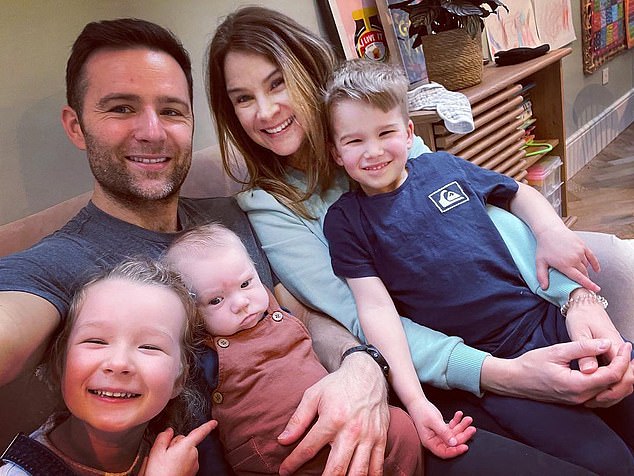
McFly’s Harry Judd and wife Izzy have daughter Lola, eight and sons Kit, seven, and Lockie, three (pictured in 2022)
‘Traditional parenting strategies such as rewards, consequences and firm boundaries often increase anxiety for children with PDA and can backfire.
‘Instead, focus on building trust, offering choices, and creating a sense of safety. Celebrate small wins and reduce unnecessary demands where possible,’ she advises.
The key is to reduce perceived pressure by making tasks feel less like demands.
As Eddie is autistic he is also very routine led, so now that he has a very set schedule in the morning – wash, breakfast, teeth and so on – it’s made daily life a little easier so it’s usually the weekends and holidays which can be the most challenging.
Lego has been a saving grace for him and he’s also a keen swimmer, so we try and play to his strengths and focus on the activities that he enjoys doing.
Although in the past when he has kicked off or complained loudly or refused to do something – such as join in a game at a friend’s party – it might look like he’s being rude and difficult, it’s actually more of a PDA thing.
Ms Long said that, in actual fact, children with a PDA profile often have incredible creativity, empathy and insight.
One thing I have learned in the six years since my son’s diagnosis is that PDA is a real thing and something which impacts almost every aspect of his life. It’s a self-limiting condition which sits alongside his autism.
It’s part of him and something we have learned to navigate but one thing it’s not is an excuse for poor parenting.