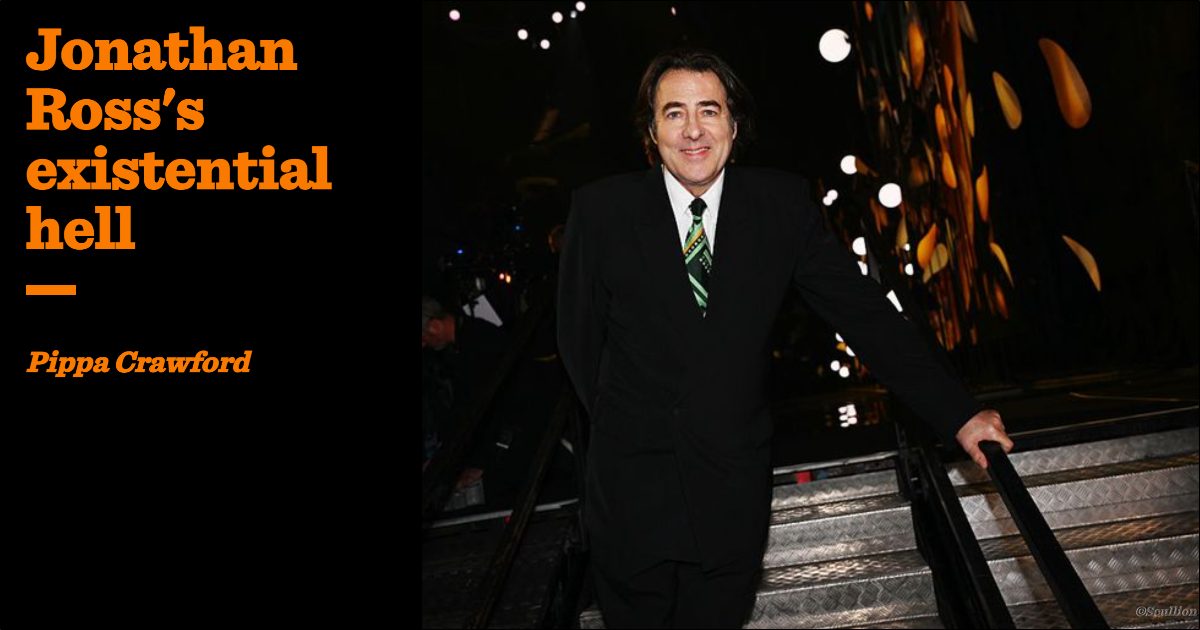
“Hell is other people,” wrote Jean-Paul Sartre. Surely the author of No Exit would have enjoyed Channel 4’s new reality show, Handcuffed, in which pairs of strangers are chained together, forced to eat, sleep, and shower side by side whilst competing for a cash prize. Naturally, the producers have chosen the kinds of partners who make begging for the bolt-cutters feel more urgent than winning a hundred thousand pounds. A problematic politician is tied to a black youth activist, a porn star to a housewife, a millionaire to a cleaner, and so on. You sense they struggled to narrow down the shortlist.
True to its promise to heal society’s greatest divides, Handcuffed has united the Guardian and the Daily Mail, with the respective verdicts being “nasty, crass; completely abysmal,” and “sadistic”. I loved it.
It’s a long time since anything on TV has so perfectly encapsulated the horror of being with another person, all of the time. Any introvert who has ever struggled to make a new relationship work might relate to short-fused hairdresser Nina, wrist-to-wrist with Sara, a lonely mum-of-seven who never, ever stops talking. “You’re like a petulant child!” laments Nina. “Yeah, I am!” her partner agrees.
Despite its “low” credentials, Handcuffed is true to the high dramatic spirit of the classic twentieth century existential philosophers, who used exaggerated thought experiments to make audiences consider the dilemmas of everyday existence. It’s pure theatre.
In Being and Nothingness, Sartre explains the difficulty of bridging the divide between the Self and the Other through the idea of shame. We experience shame only when we become aware of ourselves as seen from the outside: when spying through a key hole, we hear the creak of a floorboard behind us, and feel the sudden jolt of self-knowledge. Handcuffed’s Rob, a tattooed gay porn star with a winning smile, has a suspicion his sweet homemaker partner, Charlie, may have some reservations about how he earns his living. But it is not until he is confronted with the full weight of judgement of herself and her husband that his smile falters, and we watch as he hears the metaphorical floorboard creak.
“It’s disgusting,” the husband tells him, pacing his perfectly manicured lawn. “Bringing this lifestyle into our home, into our family.” It’s undeniably a cruel bit of television. And yet Charlie and Rob manage to push through their confrontation, sharing moments where they get their nails done, bond over their difficult childhoods, and go camping together. A warm friendship forms against the odds. These breakthroughs transcend the tawdryness of the format, and were missed by critics who dismissed the show. How else would these two strangers cross paths? They would not meet in reality — yet here, in the hyper-reality of Channel 4, all things are possible.
To create art that truly challenges people to confront how they live their lives … it is sometimes necessary to go too far
Yes, Handcuffed is voyeuristic — but so was Jean Genet’s brilliant and ugly play, The Maids, in which two servants role-play the murder of their mistress to exorcise their anger over their subjugated role in society. Or more recently, the extraordinary documentary The Act of Killing which moved real-life killers to feel the pain of their victims after many years. To create art that truly challenges people to confront how they live their lives and why they believe the things they do, it is sometimes necessary to go too far. And Jonathan Ross, who has built, lost, and rebuilt his career in the shadow of a joke taken too far, has at last found a home for this queasiest of talents. There is a kind of redemption here.
There are some sly moments. Horse trainer Claire expresses her distaste for the youth of today, who don’t know how to work, only to “go on their phones.” As soon as she is paired with a laid-back influencer called Bambi, we sense there may be some fun. At the risk of spoilers, it is Claire who comes dangerously close to upending the experiment over her unwillingness to be prized away from her phone.
Phone use is a theme, with multiple contestants struggling visibly with the show’s ban. Sartre was writing in the mid-twentieth century, but we can imagine how No Exit would have looked had his three protagonists, forced to suffer each other’s company for all eternity, been able to placate themselves with a game of Candy Crush, or put their headphones in. The drip-feed of external stimulation is something most of us take for granted, yet we remove it at our peril. For many of Handcuffed’s players, drawn from all walks of life and all political stripes, the sheer weight of loneliness and the loudness of their own thoughts are harder to bear than the constant companionship.
The experiment ends on a surprisingly hopeful note. Whilst some couples crash out with their prejudices reaffirmed, others survive and appear to have formed lasting bonds. To paraphrase the twenty-first century philosopher Jonathan Ross: other people may be hell — but how boring life would be without them.