I’m looking forward to celebrating New Year at the De Vere Wokefield Estate in Berkshire with my partner, Leonie, and friends Melanie and Tim.
Based on previous experience, it should be fun. I’ll dance the light fandango, although I’m sure my three sons would cringe at the sight if present. More dad-dancing than emulating John Travolta in his prime, would be their verdict.
When the clock strikes 12, I’ll say a little prayer to departed Mum and Dad, text the boys and selfishly pray that my home purchase will go through in early 2026. A homeowner again. Yippee!
Although money resolutions will not be to the fore on New Year’s Eve, I do have a number of personal finance ‘wishes’ for the year ahead that I would like to share…
We deserve resolution to the Woodford saga
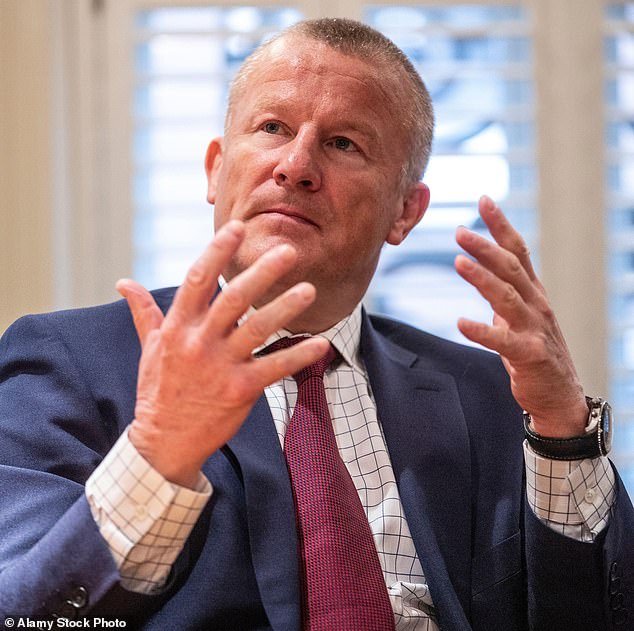
Six-and-a-half years have passed since the beginning of the end for Neil Woodford’s career
It’s a travesty we are still waiting to find out whether former fund manager Neil Woodford will be punished for the part he played in the demolition of his own investment empire, resulting in 300,000 investors being left out of pocket to the tune of £1billion.
Surely, six-and-a-half years on from the beginning of the end for Woodford as an investment manager, 2026 will be the year when justice is finally served.
He was one of the most revered fund managers in the early 2000s for his successful riding out of the dotcom bubble. Some – not me – said he was the UK’s answer to legendary US investor Warren Buffett. But Woodford came horribly unstuck when he struck out on his own in 2014 and set up Woodford Investment Management (WIM). Money poured in through the door, most of it into his flagship fund Woodford Equity Income (WEI).
It all rather went to his head. He believed he was some kind of investment god who could do no wrong. He ventured into new investment territories – most notably unquoted companies, thinking he could conquer all before him.
It was fine for a while, but when the performance numbers on WEI started to go awry, many investors jumped ship.
In June 2019, after a big institutional investor (Kent County Council) wasn’t able to get its money out because of the fund’s illiquid portfolio, the £3.6billion WEI was suspended. This was followed by its break-up, and the end of Woodford’s business.
Since its collapse, WEI investors have received £235million in redress plus a drip feed of payments as the fund’s assets have been sold off – but they have not recouped their losses.
To make matters worse, many of those who joined ‘no win, no fee’ class action claims launched by dispute resolution firms have been forced to pay bills even though the claims quickly fell through.
Five months ago, it seemed that a line in the sand in this investment debacle would be drawn when the Financial Conduct Authority (FCA) announced its sanctions against Woodford: a fine of £5.9million and a ban preventing him from running retail investment funds in the future.
It also issued a £40million fine against WIM, even though latest accounts show the business has net liabilities in excess of £230,000 (the accounts for the year to the end of March 2025 are due by the turn of the year).
Yet Woodford, who somehow believes he did no wrong, appealed the regulator’s decision. It is now up to the tax and chancery chamber of the Upper Tribunal to determine whether Neil ‘I’ve done no wrong’ Woodford should pay up.
Although a search five days ago for Woodford on the chamber’s website proved fruitless, let’s hope that 2026 is the year when this lingering investment sore is lanced – one way or the other.
We need justice to prevail.
Honour victims of safe hands fiasco

Some 46,000 who bought cover from funeral plan provider Safe Hands have been let down
Unpicking the 2022 collapse of pre-paid funeral plan provider Safe Hands has been a tortuous, expensive process involving the Serious Fraud Office.
Yet those 46,000 people who bought cover through the company have been well and truly let down. As things stand, they are unlikely to get much beyond 10p back for every £1 they spent on a pre-paid funeral.
Nobody – be it the Government or the City regulator – is interested in helping those who were legged over by a company which assured them their money was protected in a trust fund. Yes, in safe hands.
And, so far, no one at Safe Hands has been found guilty of any wrongdoing. Unbelievable.
Surely it’s not beyond the wit of the regulator or the Government to come up with a scheme which ensures that when Safe Hands customers die, they get the funeral they paid for.
These people shouldn’t simply be allowed to pass.
Banking hub criteria must be relaxed
It’s five years since banking hubs were piloted as a solution to the widespread desertion of the High Street by lenders. Today, 201 of these ‘community’ banks – offering basic banking services plus weekly access to personnel from the major players – are up and running, the latest being Coulsdon in Surrey.
A further 46 have been announced, but are yet to open.
With hubs here to stay, and only Nationwide and HSBC committed to maintaining their branch networks at current levels (until 2030 and 2027, respectively), it’s surely time for a rethink on the rules governing when a town is eligible for one. They are currently too narrowly defined.
For a town to be eligible for a hub, it must have lost its last bank branch – and also have poor access to cash as a result of a dearth of free-to-use ATMs or a fit-for- purpose Post Office.
Yet there are some towns, especially those which have a thriving independent business sector, that desperately need a hub but are denied one owing to widespread access to cash. They require banking services which only a hub can provide. Totnes in South Devon is a case in point.
The FCA has this issue on its radar, so let’s hope it loosens its criteria next year so towns such as Totnes – and plenty more besides – get the hubs they deserve.
Keep those u-turns coming, keir…
LABOUR’S pre-Christmas announcement increasing the amount that farmers and family business owners can pass on to loved ones without being clobbered for inheritance tax (IHT) is a welcome U-turn.
Given the Government’s propensity to reverse policies, wouldn’t it be wonderful if it carried on doing so into 2026 and beyond?
Axing IHT on unused pension funds (to be introduced in 2027) and not going ahead with restrictions on salary sacrifice pensions (from 2029) would do for starters.
It should also do a U-turn on briefing about possible cuts to the tax-free cash that people can take from their pensions. Even better, the party should announce there will be no changes to pensions until it is voted out of office in 2029.
And, finally, a bountiful 2026 for all
My biggest personal finance wish is that you all enjoy good money health in the year ahead.
Do shop around for insurances, invest well and regularly, save into competitive savings accounts, and use tax-efficient vehicles such as Isas and pensions.
And keep reading Wealth & Personal Finance and Money Mail on a Wednesday – they’re full of good advice.
I’m off to find my dancing shoes. Happy New Year.