I receive post every day for someone who used to live at my address.
I’ve tried returning it to sender unopened, but I still get a few letters a week, and it’s been going on for months. What can I do next? Can I just chuck them out?
D. H., by email.
Let’s start with the legal position. You are under no obligation to act as an unpaid postal service for someone who no longer lives at your address.
Marking items with ‘not known at this address’ or ‘return to sender’ and putting them back in the post is the correct first step, and you have already done that.
However, if the letters continue despite this, you are entitled to dispose of them.
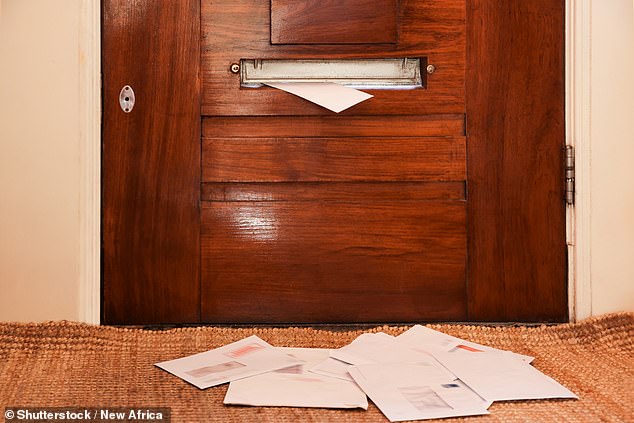
Mail misery: A reader is fed up about receiving daily post addressed to a person who used to live at their home
It’s important to understand that opening someone else’s post can be a criminal offence under the Postal Services Act 2000, unless you have a reasonable excuse.
However, discarding unopened mail addressed to a previous occupier, after making reasonable efforts to return it, is perfectly lawful.
If you want to stop the problem altogether rather than just manage it, there are more effective options.
Contact Royal Mail and ask it to note that the named individual no longer resides at your address. It has processes in place which can help reduce or intercept misdirected mail at source.
If any of the correspondence appears to relate to debt, which is not uncommon in these situations, you should not ignore it.
In those circumstances, you may open the mail to identify the sender. You can rely on the ‘reasonable excuse’ exception, because you are protecting yourself from the risk of enforcement action being taken at your address.
If you do receive letters from bailiffs or debt collection agencies, contact them promptly and provide proof that the individual does not live at your address.
Documents such as utility bills, mortgage statements, tenancy documents or official ID will usually suffice.
This step is important, as enforcement agents have no legal authority to seize goods from a property that does not belong to the debtor.
Rain stopped play – so why am I paying court fees?
The local tennis courts can be booked online in advance. However, if it rains on the day and play is not possible there is no refund system.
I pay with my credit card, so could I use chargeback?
M. B., London.
Dean Dunham replies: Chargeback is a process whereby your bank may reverse a card transaction on your behalf.
It is designed to offer protection if something goes wrong with a purchase – for example, if a trader ceases trading, goods fail to arrive or a service is not provided as expected, often because it has not been carried out with reasonable care and skill.
It is important to distinguish this from Section 75 of the Consumer Credit Act, which is a statutory right.
Chargeback, by contrast, operates under Visa and Mastercard scheme rules, meaning your bank retains discretion as to whether to pursue your claim.
The key issue in any chargeback claim is whether there has been a breach of contract by the trader.
In that context, it is essential to review the trader’s terms and conditions, particularly those relating to cancellations and whether any right to a refund exists in the event of adverse weather.
In this instance, it appears no such right is provided, and that this was made clear to you prior to booking.
The fact that weather conditions ultimately affected the experience does not, in itself, mean the service was not delivered.
In those circumstances, a chargeback claim would be unlikely to succeed. The bank would most likely consider the contractual terms, note the absence of any refund entitlement and decline the claim.
That said, there may still be alternative avenues worth pursuing. If the courts are operated or managed by your local council, submitting a formal complaint may yield a more favourable outcome.
Public bodies are often more open to offering goodwill gestures, and the added element of reputational accountability can sometimes work to your advantage.