More than one hundred academics have written to the Prime Minister calling for universal anti-SLAPP protections in the forthcoming King’s Speech, warning that the growing use of aggressive legal threats by wealthy and powerful individuals is beginning to deter — and in some cases distort — academic research in Britain.
The letter argues that, without protections extending beyond the current focus on economic crime, clearer safeguards for non-peer-reviewed academic work, and stronger early filtering of vexatious claims, critical research on matters of public interest will increasingly be chilled, with serious implications for academic freedom.
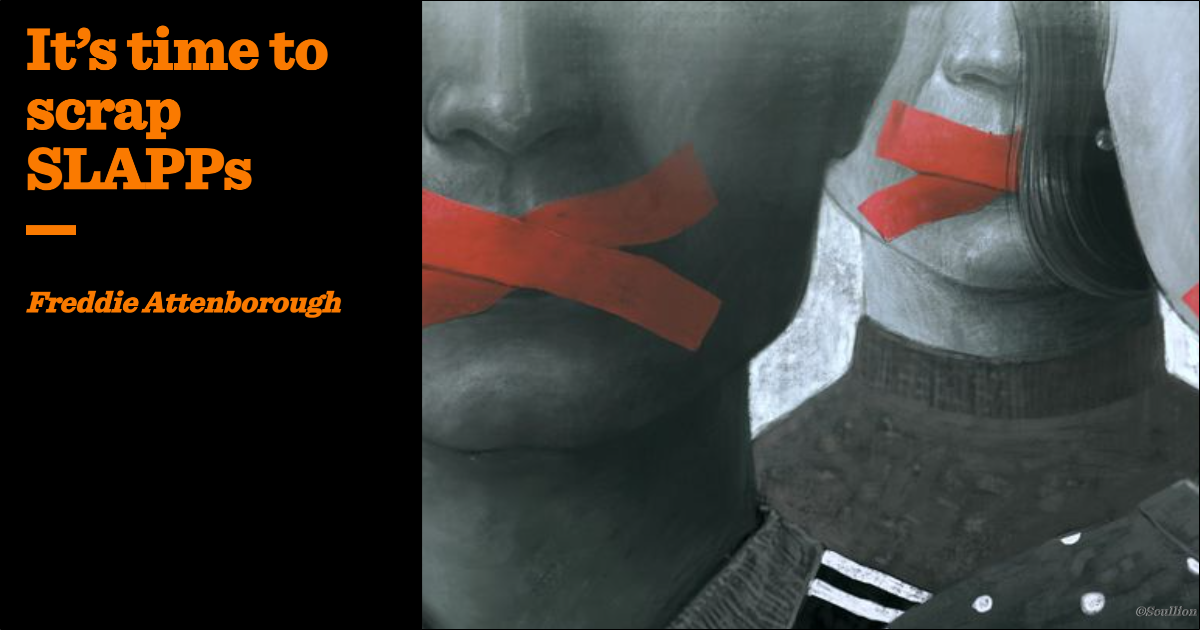
Strategic Lawsuits Against Public Participation — or SLAPPs — are legal actions or threats of litigation intended less to succeed in court than to silence critics by imposing the financial and psychological burden of defending a claim. In recent years, this tactic has become notorious following a series of high-profile legal actions against journalists in the UK courts that seek to stifle free speech and suppress legitimate reporting.
Mining company ENRC, for instance, launched legal action against journalist Tom Burgis over his investigation into the company’s business dealings. The defence cost nearly £340,000 — and, had a High Court judge not dismissed the case prior to trial, total costs would have exceeded £1 million.
Similarly, Washington Post journalist Catherine Belton fell victim to a “legal pile-on” in the London High Court from four oligarchs — including Roman Abramovich, the former owner of Chelsea FC, and a Russian state oil company — over her book Putin’s People. Despite winning the case, Belton was left facing legal costs of £1.5 million.
In one of the most notorious cases to date, Yevgeny Prigozhin, the now-deceased head of the Russian mercenary organisation the Wagner Group, sued Eliot Higgins, founder of the website Bellingcat, in the High Court in London over reports the site published uncovering Wagner’s operations in Africa and the Middle East and revealing Prigozhin’s links to the Kremlin. According to Higgins’s lawyers, the fact that the claim was brought against Higgins personally, rather than Bellingcat, was prima facie evidence of a SLAPP. The case collapsed in the wake of Russia’s invasion of Ukraine and was later struck out for repeated non-compliance with court orders, leaving Higgins around £70,000 out of pocket and unable to recover his costs.
While such tactics are most commonly associated with attempts to intimidate journalists, academic researchers have increasingly found themselves on the receiving end of similar threats from companies and wealthy individuals unhappy with critical scholarship.
For example, in Scotland in 2020, the former academic and then Green MSP Andy Wightman defended himself against a £750,000 defamation action brought by Dr Paul O’Donoghue of Wildcat Haven Enterprises over blogposts questioning a Highlands “souvenir plot” land scheme. Lord Clark in Edinburgh ultimately threw out the claim, ruling that Wightman’s comments were defensible as fair comment on matters of public interest.
Those episodes matter, the signatories argue, not only because of the immediate strain imposed on the individuals targeted but because of the wider incentives they create. The threat of costly litigation can, as the letter puts it, “encourage self-censorship, deter scholars from investigating powerful interests, raise the cost of undertaking sensitive research because of the legal advice required, and make it harder for academics to disseminate their findings to the public and policymakers”.
The letter also highlights a second, more institutional effect: litigation threats can foster risk-aversion among universities. In practice, an academic’s ability to pursue critical research into powerful actors often turns on whether their institution is willing to stand behind them. Yet many universities offer little in the way of insurance, legal review, or other safeguards capable of mitigating these risks, leaving scholars to shoulder the costs themselves.
In a climate in which scholars are encouraged to pursue public engagement and demonstrable “impact” beyond the academy, the signatories warn, those scrutinising powerful interests may find themselves increasingly vulnerable to costly and stressful legal pressure.
Publishers, too, have been known to shift legal exposure to authors or editors, or simply decline to publish research likely to provoke legal action. A cautionary example is the Russia scholar Professor Karen Dawisha, who was dropped by her long-time publisher Cambridge University Press — which had initially agreed to publish her book — after concluding that the libel risk under English law was too high. The manuscript later appeared in the United States as Putin’s Kleptocracy: Who Owns Russia?
Indeed, Dawisha’s experience — publishing a “very academic book” deemed too legally perilous for a prestigious British press but readily taken up by a US publisher — serves as a reminder that while SLAPPs are a global problem, England has long been identified as a premier destination for “libel tourism”, owing to the decidedly claimant-friendly character of its defamation laws.
Data cited by the Coalition Against Slapps in Europe in 2022 suggested that the UK had become the leading jurisdiction for cross-border SLAPPs. The sheer cost of legal action in the UK makes it a particularly effective venue for “lawfare” of this kind, where the aim is to intimidate critics into shutting down debate rather than to win a case on the merits. As The Times put it in a leader in 2022, “the current system is stacked in favour of those with the deepest pockets, allowing the super-rich to bully and intimidate journalists and media organisations into submission”.
In July that year, the then Justice Secretary, Dominic Raab, announced reforms that he said would “uphold freedom of speech, end the abuse of our justice system, and defend those who bravely shine a light on corruption”. Those reforms ultimately took shape as amendments to the Economic Crime and Corporate Transparency Act 2023, introducing an early dismissal mechanism in the courts based on two tests: whether a case is a SLAPP, and whether the claim has a reasonable chance of being successful.
Campaigners nonetheless described the outcome as only a “partial victory”, not least because the protections are confined to public-interest material linked to economic crime, which accounts for 70 per cent of UK SLAPPS but fails to protect public interest speech more generally. And in an academic context, as the signatories note, these reforms are insufficient — not just because research on corruption, illicit finance and other forms of economic wrongdoing extends beyond the narrow category of “economic crime”, but because monographs and other outputs published outside peer-reviewed journals remain unprotected. As a result, the practical challenge of proving that a claimant’s aim is intimidation rather than vindication remains, meaning academic defendants may still need deep pockets simply to see the argument through.
That’s why, as the letter stresses, stronger pre-court safeguards are needed before proceedings become ruinously expensive. In the last Parliament, the Conservative government tacitly acknowledged this problem, signalling support for Wayne David’s Strategic Litigation Against Public Participation Bill — a Private Member’s Bill intended to widen early-dismissal and costs protections beyond the narrow economic-crime category — but the legislation fell with the 2024 general election.
The King’s Speech, expected in May 2026, will set out the Government’s legislative priorities for the coming session, creating a rare opportunity to address a problem successive governments have acknowledged but only partially tackled.
Reform in this area already commands cross-party support. By bringing forward universal anti-SLAPP provisions, Parliament would have the chance to close the remaining gaps in the law and ensure that the threat of ruinous litigation doesn’t silence academics engaged in the quiet, fine-grained research on which the long-term health of a liberal democracy marked by widening disparities of wealth, status and access to power ultimately depends: exposing corruption, illicit finance and the hidden workings of power.