THIS grim week of war in the Middle East has shown just how dangerously exposed Britain is to the threat posed by Iran and others who would destroy our way of life.
Our country looks weak on multiple levels. Politically weak, as our leaders wring their hands and prevaricate when our allies ask for support to take pre-emptive action against the disastrous prospect of a nuclear-armed Ayatollah.
Some may try to claim Sir Keir Starmer projects strength when he says no to the American president.
Like a latter-day Hugh Grant in Love Actually, who denied the fictional president’s request for military aid and then danced jubilantly round No10 (sorry for that mental image — I’m sure that’s not Keir’s thing).
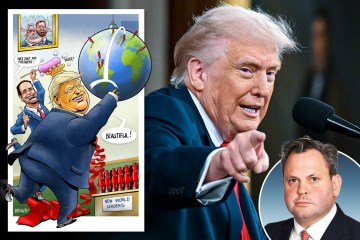
But Donald Trump’s retort that, “He’s no Churchill!” will have stung in Downing Street — or it should have.
More worryingly, even when we do agree to lend military support, we look weak abroad.

The delay in getting HMS Dragon to the region has highlighted Britain’s dire lack of war readiness after decades of underfunding.
The squeeze on spending on the Armed Forces is biting and is not being reversed nearly fast enough.
But perhaps the greatest vulnerability — certainly the one that British citizens will never forgive if things go wrong — may prove to be weakness in defending the home front.
Because the threat caused by the mad mullahs who butcher thousands of their own citizens and lash out at their neighbours is not confined to the Middle East alone.
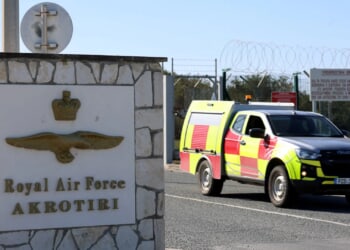
It is not even just a threat to British citizens in the region or to personnel at bases overseas such as RAF Akrotiri in Cyprus, which was hit by a Shahed-style drone last week.
It is a threat on British streets, too.
The Iranian regime has a long and brutal track record when it comes to exporting violence beyond its borders.
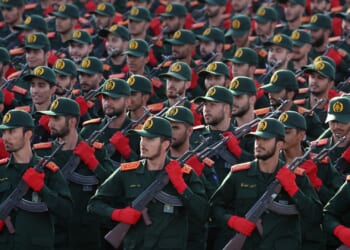
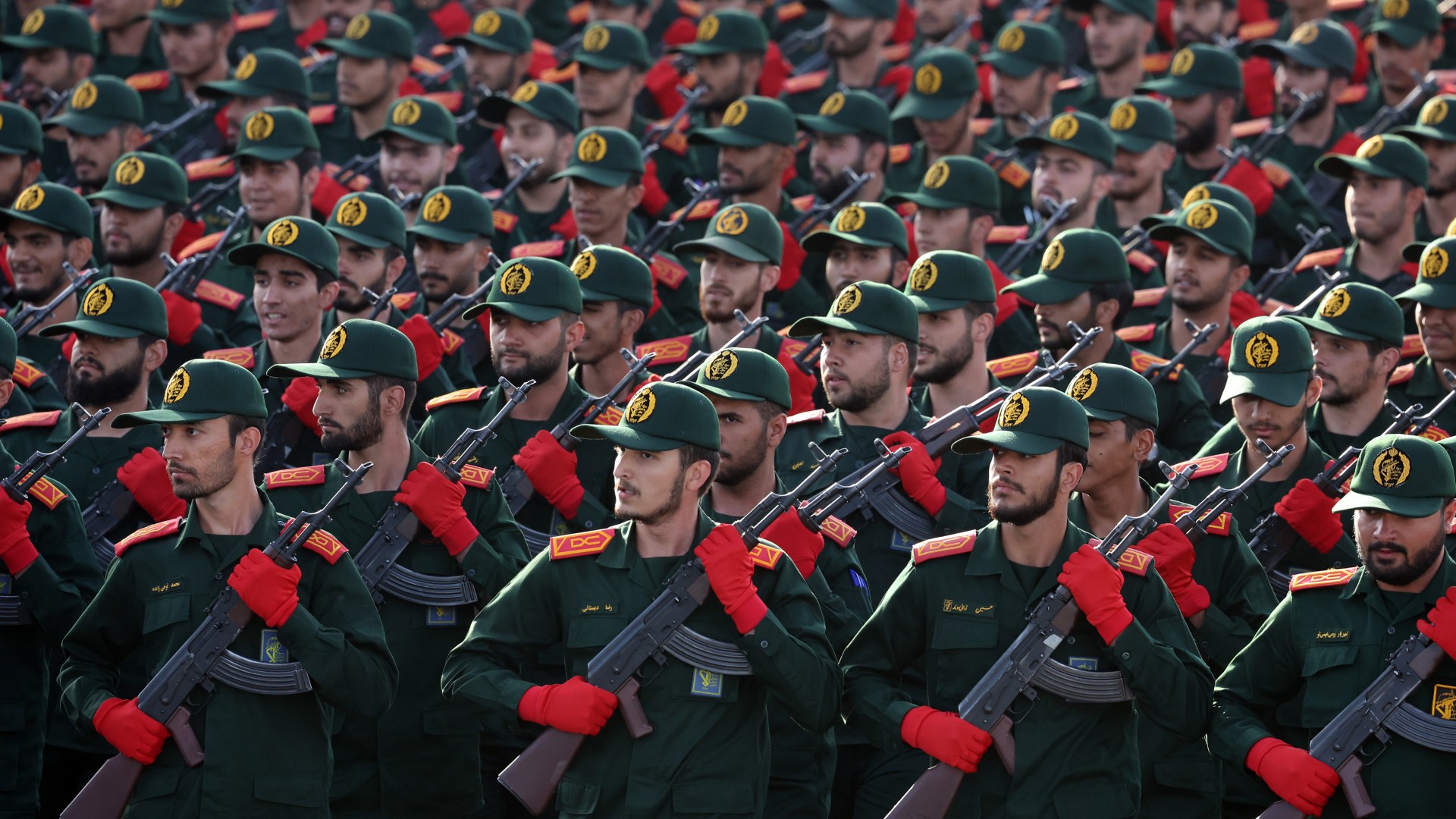
Its Islamic Revolutionary Guard Corps — the IRGC — runs a global network of militias and proxies responsible for bombings, assassinations and kidnappings across the Middle East and beyond.
Its operatives have been linked to attempts to murder dissidents in Europe.
Its proxies fire missiles at civilian shipping in the Red Sea.
Its intelligence services routinely use criminal gangs as hired muscle to intimidate and attack targets abroad.
And increasingly, those tools are being directed at Britain.
Over the past year alone, Iran has backed more than 20 potentially lethal attacks on UK soil, each one foiled by our intelligence services before lives were lost.
The IRGC attempts to kidnap, harass or even kill Iranian dissidents who have the audacity to speak up for Western freedoms. Its goons target Israelis and British Jews.
It forms links with established crime syndicates to add muscle to its espionage.
Just this week, police arrested four men suspected of spying for Iran and targeting Jewish individuals and locations in London — a chilling reminder that the arm of this deeply hostile state is operating right here in our communities.
And Iran underpins this hard power terror network with a web of soft power influence and propaganda.
Next week, for example, I will publish a report into the way Iran’s cheerleaders have become deeply embedded in the British charity sector.
They build networks, spread regime narratives and embed sympathetic organisations inside British civil society.
This soft power push is not separate from the violent threat. It systematically excuses and normalises it.
And it helps create the environment in which hostile activity can flourish.
So we need to tackle both the violent terror threat and the network of extremist Islamist influence in British society that surrounds it.
Ministers should beef up the new foreign influence registration scheme, which is designed to make it an offence to serve a foreign power.
Iran has been placed on the highest tier of the scheme — but the public still cannot see which organisations or individuals are operating under it.
They should put a rocket up the sluggish, complacent Charity Commission, who are failing to act against Iranian-linked charities and give the regulator whatever anti-extremist tools it needs to do a proper job.
We need a more proactive approach to sanctioning the shell companies that finance the Iranian terror network through the shadow oil trade.
And the National Security Act should be strengthened to give greater powers to prevent the farce of Iranian regime supporters parading extremism and terrorist support down London streets at the Al Quds Day march next weekend, as our cops stand and watch.
It is questionable whether that carnival of Jew hatred should ever have been permitted. It is inexcusable at this time of crisis and threat.
But most pressingly, for God’s sake, let’s finally ban the terrorist IRGC. No more teeth sucking and foot dragging.
We should not care a fig about the argument emanating from the Foreign Office, who say we must not ban an organisation that is part of the Iranian government.
Wake up, guys — that is precisely what makes them so dangerous and why they need to be persona non grata.
Once the IRGC master agitators have the official terror label they deserve, it will be much easier to deal with the soft power network to which they are linked.
So, please. No more weakness.
This is the moment for Britain to defend its citizens and the freedom which is so loathed by Iran’s hardline theocratic leaders.
Well, those who have survived the American and Israeli strikes.