The Manchester synagogue attacker, like other Islamist terrorists before him, was an immigrant, who came originally from Syria. Jihad Al-Shamie arrived in the UK as a young child and gained British citizenship in 2006. His father, Faraj Al-Shamie, a trauma surgeon, expressed support on social media for Hamas’s October 7 attacks on Israel, which killed 1200 people and resulted in 250 being taken hostage, describing the perpetrators as “Allah’s men on earth”. This chilling fact suggested that Jihad might have been surrounded by antisemitic hatred and Islamist attitudes at home.
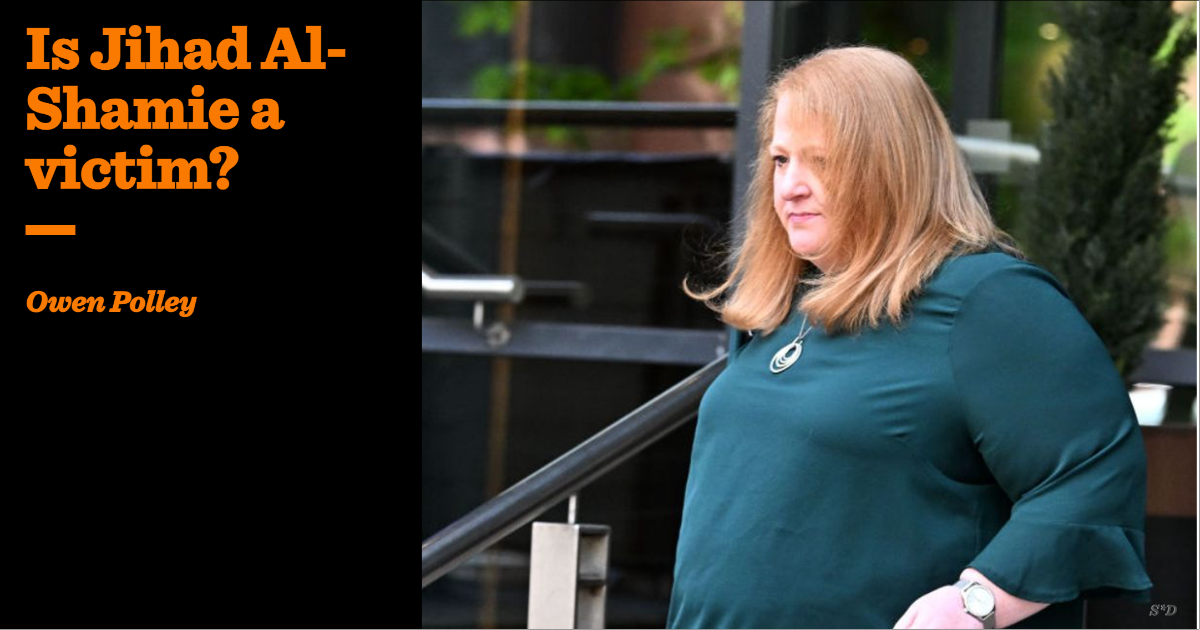
His upbringing as a migrant may also have been difficult or even traumatic at times. And for some progressives, like the Northern Ireland justice minister, Naomi Long, this could perhaps be enough to make him a victim, just like Adrian Daulby and Melvin Cravitz, the two innocent people whose deaths he caused. The leader of the Alliance party, Northern Ireland’s “centre ground” woke cult, claimed recently that, in the case of terrorists, “really bad things have also been done to those people … that radicalised (them) into doing something that otherwise (they) might not have done.” This comment attempted to explain away historical atrocities in Ulster and excuse Alliance’s refusal, during a debate at the Stormont Assembly, to distinguish between innocent victims of terrorism and its perpetrators. She was referring mainly to murders and maimings that happened decades ago, but the passage of time does not affect the logic of her argument.
In Northern Ireland, the government’s recent agreement with Dublin on the legacy of the Troubles appalled many unionists and victims’ groups. It effectively restored a system for dealing with historical incidents that provided immunity for paramilitaries, while directing investigations and prosecutions at a small number of well-documented deaths caused by the army and police. This process, as well as being deeply unfair and unjust, allowed republican activists in Ulster to sanitise the IRA’s campaign of violence. According to one poll, 70 per cent of Irish nationalists in Northern Ireland now believe that it was necessary for republican terrorists, who were the biggest perpetrators during the Troubles by far, to murder and maim their neighbours.
The good news is that Naomi Long and other ministers in this progressive bloc are beginning to be found out
The Republic of Ireland has effectively supported northern nationalists’ distortion of the past and refused to examine its own role in arming and sheltering paramilitaries. At Stormont, the legacy agreement prompted unionist politicians to introduce a motion deploring Dublin’s “abject failure” to investigate “suspected Irish state involvement” in some murders. The motion included the term “innocent victims”, and this was opposed, unsurprisingly, by Sinn Fein, which is linked inextricably to the IRA, and is still believed by the security services, to be directed by its “army council”. More shockingly, republicans were supported in their argument by Alliance. For all its other faults, that party was clear, until relatively recently, about where blame and innocence lay for terrorist atrocities.
The SDLP, the supposedly moderate nationalist party, which also has a history of condemning terrorism, supported rewording the motion too.
The purpose of this wordplay, of course, is to equate innocent victims of terrorist groups with members of paramilitary organisations who died or incurred injuries, often while they tried to attack people or property. The trick was devised by Irish separatists, but now Alliance is complicit. And, if you apply the logic to terrorism outside Northern Ireland, as many “progressives” like to do with Palestine, it means that Jihad Al-Shamie is potentially a victim, just like the two innocent Jewish people killed because of his murderous actions.
This moral obscenity is not surprising from any of the “progressive” parties in Northern Ireland. Alliance claims to be “constitutionally neutral”, and it previously saw its role as bringing people together, even if it was ineffective at doing even that. Now, thanks to a new generation of activists, it has adopted every divisive and stupid “woke” cause. It supports everything from extreme trans ideology, to votes at 16, to forcing Irish language signs into areas of Belfast where they are opposed by the vast majority of residents.
This agenda has been pushed gleefully by many media outlets, including the BBC. The Corporation’s discussion programmes regularly feature unbalanced “progressive” panels, agreeing heartily against the protests of one token unionist, or sometimes none at all. Meanwhile, some critics would suggest that the Northern Ireland Office, an outpost of government that, like the Borg from Star Trek, seems to assimilate every secretary of state that arrives in Ulster, has regarded Alliance almost like its political wing.
The good news is that Naomi Long and other ministers in this progressive bloc are beginning to be found out, simply because, behind the woke rhetoric, they are bereft of political content. There are grumbles, even on the left, that she and her party colleague, Andrew Muir, have achieved nothing since taking up their portfolios in the power-sharing executive. Mr Muir, the environment minister, likes to flaunt his eco-credentials, but he has failed to come up with an effective plan to clean up Lough Neagh, the UK’s largest lake, which is also shockingly polluted. Mrs Long likes to evade tricky questions about policing and justice, by claiming that she cannot discuss “operational” matters.
Most of all, Alliance’s effective rejection of innocent victims will have repelled many middle-ground voters, who previously seemed oblivious to its lurch toward nationalism. In Northern Ireland, a reaction to rampant progressivism is finally emerging, perhaps later than in other parts of the west. The nationalist parties, but particularly Alliance, may soon find that their increasingly radical views result in voters turning against them.