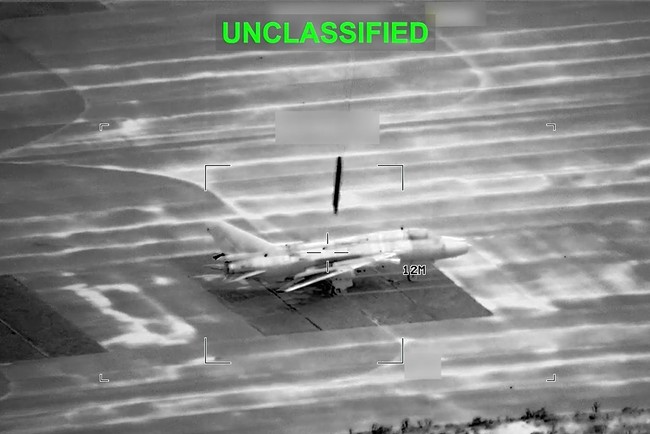
In the Twelve Day War, the Israelis understood that Iran’s missile production had allowed the mullahs to conduct nearly unlimited ballistic warfare against them. Launchers were Tehran’s vulnerability at that time – at least the one that the IDF could exploit with its own resources. Israel destroyed enough of them in June to slow down the massive barrages, although toward the end, more of the missiles leaked through their defenses.
This time, however, Israel has an ally with much more firepower. Launchers became a point of vulnerability again, with the US and Israel focusing on the mobile launchers in the first waves of attack. However, the boost in offensive capability has exposed an even more valuable vulnerability, as the Wall Street Journal reports, and it has had a more serious impact:
Iran spent decades constructing underground bunkers to shield its vast missile arsenal from destruction. Less than a week into the war with its two most powerful adversaries, the strategy is beginning to look like a blunder.
U.S. and Israeli war planes and armed drones are circling over the dozens of cavernous bases, striking missile-carrying launchers when they emerge to fire. Meanwhile, waves of heavy bombers have dropped munitions on the sites, apparently entombing the Iranian weapons below ground in some locations.
Satellite imagery taken in recent days shows the smoldering remains of several Iranian missiles and launchers destroyed in U.S. and Israeli airstrikes near entrances to the “missile cities,” as Iranian officials call the subterranean sites.
Essentially, the IRGC created ballistic-missile cemeteries. Bunkers made some sense during that period, but only if Iran wanted to defend itself from Israel alone. It paid off to some extent in the Twelve Day War, as the IDF did not have the resources to commit to these kinds of sorties, nor to track all of these potential sites with real-time surveillance by satellites and drones. The Israelis targeted the launchers instead, but that left the ballistic inventory largely unscathed.
The US and Israel did not make the mistake of fighting the last war, or at least not only fighting the last war. Launchers are still a weak link in Iran’s ballistic-missile system; they can make missiles quickly, but launchers cannot be replaced nearly as fast. Now that we have identified the missile storage facilities, the US and Israel have more than enough resources to target both vulnerabilities. Iran’s failure of imagination has created yet another military catastrophe in the making.
And also: Looks like bunker-busters are back on the menu, boys. With access to Diego Garcia restored, the US can equip its stealth bombers with the heavy munitions and their precision targeting system to turn these “missile cities” into tombs. The WSJ reports that these missions have already begun:
A photo of the same site the following day revealed evidence of later heavy bombing of several entrances to the underground facility. Debris “from bunker buster munitions can be seen around both sets of tunnel entrances,” Lair said in a social-media post. “Whether the entrances collapsed is unclear.”
The entrance and nearby roads to an Iranian base near Kermanshah appeared to have been struck by heavy U.S. bombs, according to Lair, citing a March 3 photo by Planet, a commercial satellite imagery company.
With air supremacy fully established, the US can run these sorties at will for as long as it takes. The GBU-57 bunker buster that shut down Fordow was specifically designed for that redoubt, but it’s just one option in a class of bunker-busting options the US possesses. These won’t necessarily destroy the missiles themselves, although certainly the US and Israel hope to see very big bada-booms from these sorties.
Even without the Leeloo outcome, though, making the missile inventories inaccessible is a win.
Has it worked? As we enter day five of Operation Epic Fury, the pace of Iranian missile launches has dropped 86%, according to CENTCOM. The Israelis have noticed it too, allowing them to conserve the effective but expensive anti-ballistic defense munitions necessary to protect their cities from the largely untargeted missiles. Drones are still a bigger problem for American and Israeli defenses, but the combined offensives on Iran have targeted those storage facilities and production lines as well.
Nevertheless, the Israelis don’t think that they can cut off the missile attacks entirely:
The rate of Iran’s ballistic missile fire on Israel continues to slow, according to the Israeli military, with all projectiles fired overnight being successfully intercepted by air defenses.
Iran fired at central Israel three times overnight, lobbing a handful of ballistic missiles in total. The IDF says that all of the missiles were shot down.
While the rate of fire has dropped significantly over the course of the war, the IDF believes it may soon stabilize, meaning missile fire is not expected to stop entirely.
The IRGC may take some comfort in that, but only for a moment. Their ballistic-missile and drone systems were designed for deterrence, not victory. Their strategy was akin to a porcupine’s: make attacking painful enough to keep enemies from even considering it. Once you get past the finite number of quills, however, there’s not much left except teeth and snarls. That’s where the IRGC is at the moment, which is why they keep trying to expand the war as a means to increase political pressure on the US and Israel to back off. Their latest attempt involved drone attacks on neighboring Azerbaijan, which prompted an angry diplomatic response today:
BREAKING: Iran have attacked Azerbaijan, explosion seen near Nakhchivan Airport. pic.twitter.com/BKBL3becYo
— Open Source Intel (@Osint613) March 5, 2026
Azerbaijan accuses Iran of firing two drones at its territory, injuring two civilians, and says it has summoned the Iranian ambassador in order to issue a strong protest.
The Azerbaijani Foreign Ministry says one drone fell on an airport in Nakhchivan, near the border with Iran, and another landed near a school.
In a statement, it condemns the attacks, demands an explanation from Iran, and says Azerbaijan reserves the right to take “appropriate response measures.”
The IRGC must be getting desperate. Unlike most of the emirates that they have attacked, Azerbaijan has both an army and a shared land border with Iran. The government in Baku is aligned with the US, thanks to the successful mediation and full settlement of the war between Azerbaijan and Armenia. They might be inclined to send their army across the border if provoked, complicating the IRGC’s security. They are already not on friendly terms with the mullahs, and nearly went to war five years ago when tensions peaked.
The IRGC is playing with fire. It may not be too much longer before more rational elements in Iran’s security forces decide that the regime is finished and that it’s time to end the extremist IRGC leadership as well.
Editor’s Note: For decades, former presidents have been all talk and no action. Now, Donald Trump is eliminating the threat from Iran once and for all.
Help us report the truth about the Trump administration’s decisive actions to keep Americans safe and bring peace to the world. Join Hot Air VIP and use promo code FIGHT to get 60% off your membership!