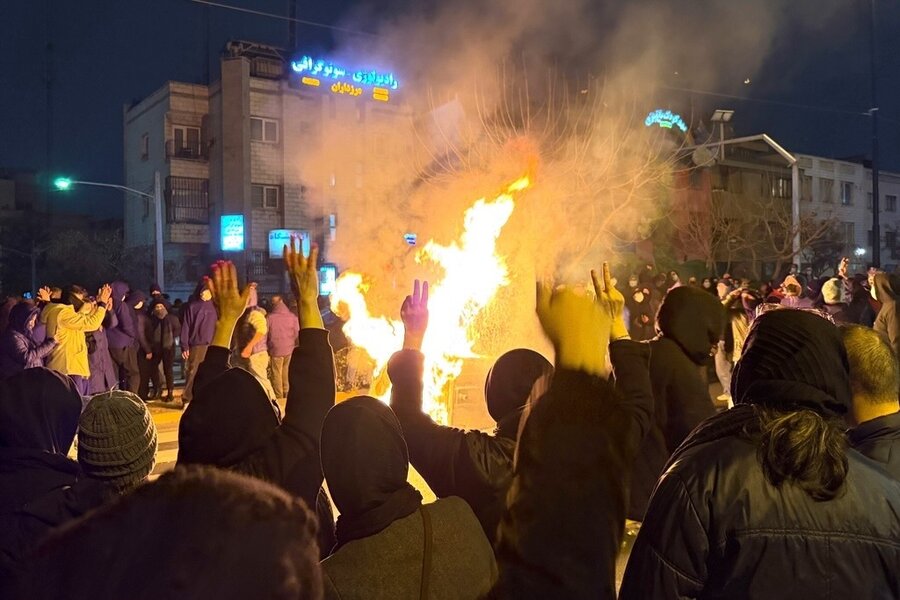
Dozens of viral videos coming out of Iran in recent days reveal a marked shift in what Iranians think of the regime in Tehran, especially after its brutal killing of thousands of protesters on Jan. 8 and 9.
The videos of funerals in homes and cemeteries for those killed last month show family and friends dancing instead of wailing, singing instead of lamenting, cheering with political slogans instead of trembling in fear of further repression.
Many wear clothes that are vibrant, as if at a wedding, rather than traditional black. In Iran, memorials for loved ones are often held several times, until 40 days have passed.
An Iranian who posted one video wrote on the social platform X that when the regime trivializes the killing of so many people, “we dance to welcome eternity.” Death, in other words, is not being given the last word.
For the Islamic Republic, these images are very worrying, Holly Dagres, a senior fellow at The Washington Institute for Near East Policy, told Iran International. “Instead of these people mourning and being traumatized by what has happened, which they are to an extent, they’re celebrating. And that … signifies that this is a people that’s no longer afraid of the Islamic Republic.”
To a degree, the regime admits this point. “Our society is wounded, and if it is not treated, it will engulf the entire society,” President Masoud Pezeshkian said of the protests.
Dancing in public, which is banned in Iran, has become a common tactic for protesters since an uprising in 2022. People were inspired by one Iranian man, Majidreza Rahnavard, who was executed for taking part in those protests. Before his execution, he stated, “I don’t want anyone to mourn upon my grave. I don’t want them to read Quran or pray. Just celebrate and play celebrating music.”
The new types of funerals offer a contrast to the Islamic Republic’s meaning of death. In the new rituals, Shahla Shafiq, a sociologist living in France, told the BBC, “that concept of sacrifice and martyrdom disappears and becomes giving one’s life for the sake of life.”