IRAN has vowed to “completely” block the Strait of Hormuz – one of four ways it plans to taunt the US if Donald Trump makes good on his threat to bomb the regime’s power plants.
The US President issued a 48-hour ultimatum to the Islamic Republic to fully reopen the oil passageway or face having its energy infrastructure destroyed.
With the deadline set to expire just after midnight on Tuesday UK time, the Iranian armed forces detailed the “punitive measure” that would be “implemented immediately”.
First, Iran’s military warned that the strait will be completely closed – and will not be reopened until all destroyed power plants are rebuilt.
It also said that all Israeli energy and communications infrastructure will be targeted.
“Similar” companies in the region with US shareholders will also be entirely destroyed, the warning continued.


Lastly, power plants all across the Middle East that host US bases – that is Qatar, Bahrain, Kuwait, UAE, Saudi Arabia, Jordan, Iraq, Syria and Turkey – will become “legitimate targets.”
“Everything is ready for a major jihad aimed at the total destruction of US economic interests in West Asia,” said Lieutenant Colonel Ebrahim Zolfaqari, spokesperson for the Khatam Al-Anbiya Central Headquarters.
“We did not start this war and will not initiate it now, but if the enemy harms our power plants, we will do whatever is necessary to defend our country and national interests.
“The uninterrupted process of destroying the mentioned targets will begin, and nothing will stop the continuation of our operations against US and allied energy, oil, and industrial infrastructure in the region.”
Zolfaqari further stated that the strait is only restricted to “hostile” states, adding that it remains under Iran’s control.
“Harmless passage continues under specific regulations that ensure our security and interests,” he stressed.
Under international law, power plants that benefit civilians can be hit only if the military advantage outweighs the suffering it causes them, legal scholars say.
Iranian parliament speaker Mohammad Bagher Qalibaf responded said on X that if the country’s power plants and infrastructure are targeted, then vital infrastructure across the region – including energy and desalination sites critical for drinking water in Gulf nations – would be “irreversibly destroyed”.
He later added that “entities that finance the US military budget are legitimate targets”.
Attacks on power plants would be “inherently indiscriminate and clearly disproportionate”, Iran’s UN ambassador also wrote to the security council, according to the state-run IRNA news agency.
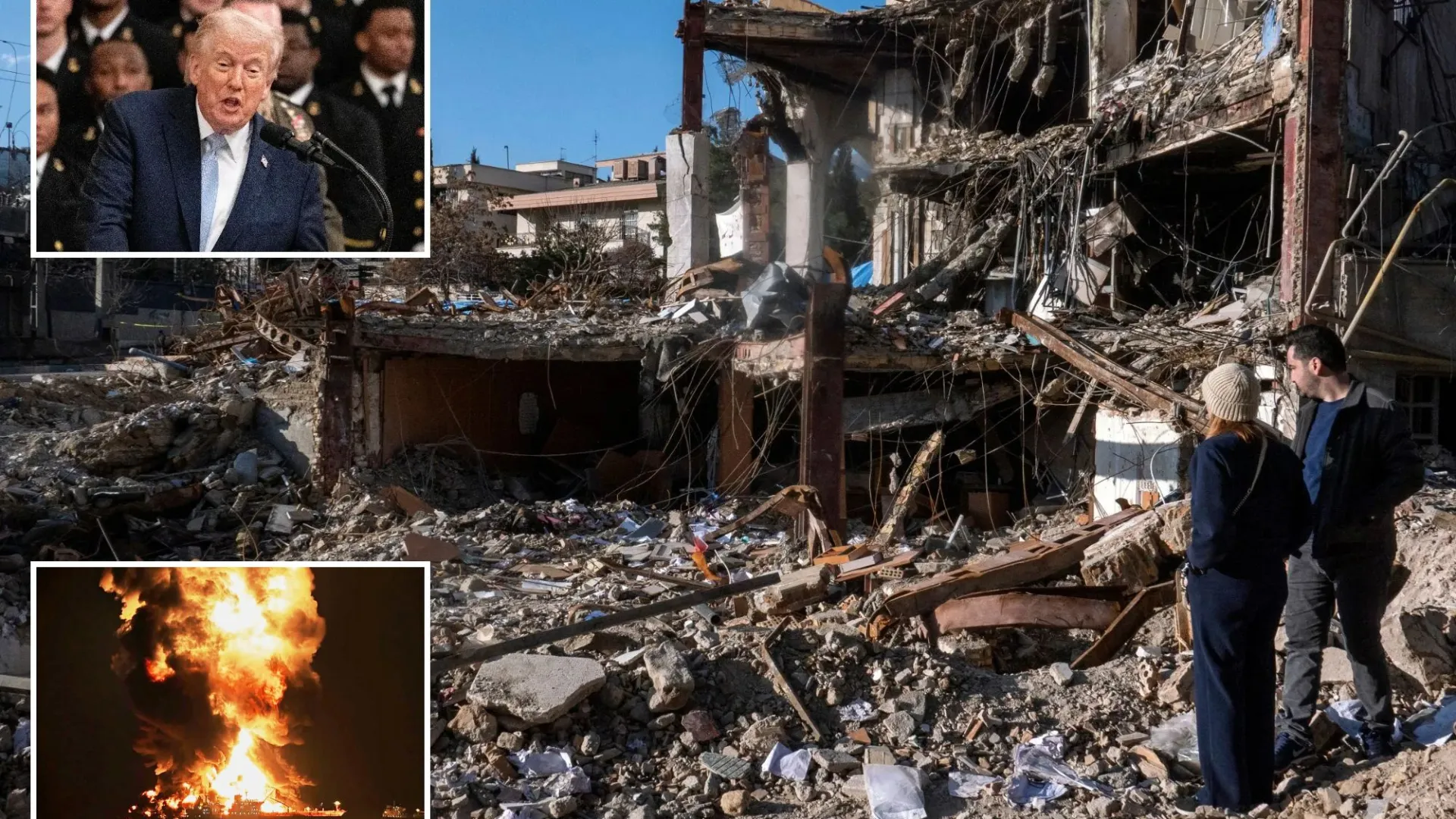
Trump’s ultimatum to the regime followed devastating tit-for-tat attacks between Israel and Iran.
In the early hour of Saturday, both the US and Israel struck Iran’s Natanz nuclear facility, according to its atomic energy organisation.
Iranian missiles followed several hours later, smashing into two towns in southern Israel, near the country’s secretive nuclear arsenal.
Mediation efforts to stop the raging war – now in its fourth week – continue behind the scenes.
European Union foreign policy chief Kaja Kallas held a phone call with Iran’s Foreign Minister, Abbas Araqchi, earlier today, it is understood.
She also held separate calls with counterparts from Turkey, Qatar and South Korea “on the war in the Middle East, attacks on energy infrastructure, and the urgent need to reopen the Strait of Hormuz,” an official said.
“These engagements were part of the EU’s ongoing efforts to explore diplomatic avenues forward,” the official said, adding that “fresh threats to attack critical civilian infrastructure risk impacting millions of people across the Middle East and beyond”.