
International Women’s Day gives me the same icky feeling as a vaginal yeast infection — it’s embarrassing, I wish it would go away, yet it’s so deeply irritating it’s impossible to ignore.
Over the past decade, a creeping sense of obligation has spread across public institutions and corporations that they must do something to show us lovely ladies that we’re appreciated. This has all the sincerity and depth of the now mandatory celebrations for the holy month of Pride. And almost invariably, the organisations that make a fuss about IWD are those that penalise self-respecting women who dare to suggest that sex matters.
The implication of these celebrations of feminine compliance is that despite debilitating cravings for chocolate and red wine, us plucky menstruators, ovary-owners and mooncup wearers can do stuff just like men. Some even become plumbers while maintaining great hair, like that nice lady in the Denton and Gorton by-election. And nowadays we really are everywhere, womanning all over the place from Tesco to the Garrick Club. Never one to miss an opportunity, even Pornhub is keen to mark the day and smash that ass ceiling. Indeed, for several years now, despite being sued for allegedly monetising rape and child abuse, its communications team has carefully produced reports showing what women on the site consume. Girl power!
There’s so much to choose from. If tech is your thing this year you can head to SheSays in Brighton, which advertises itself as being “mainly for women and anyone who identifies as a woman. Trans women are women. Non-binary, gender-queer people are very welcome at all our events. Men too.”
Alternatively, there are events organised by the Women of the World (WOW) Foundation, funded by Bloomberg, which describes itself with all the flair of a town council meeting on Microsoft Teams as “a global alliance, driving an equal and inclusive future for women, girls and non-binary people.”
Meanwhile Bristol City Council is offering a day of workshops featuring a “Shamanic Drum Journey with Goddess Brigid”, alongside improv theatre, play therapy, intuitive movement and sound healing, all designed to “empower women and femme folk to express themselves fully”. This, organised by a council which has attempted to silence feminist campaigners for the impertinence of asking it to uphold the law on single-sex spaces.
There is something about these vomit-inducing fanny fests that recalls the spectacle of a domestic abuser turning up with a bunch of flowers. Who needs single-sex spaces when you have a council funded mindfulness session?
The reason these campaigns are so bloody irritating is not simply that they now include men. It is that they are far too frightened to point out that men are the problem. Apparently it is considered frightfully gauche to observe that, from sexual violence to misogynistic theocrats, across the world the threats to women’s freedom and liberty are overwhelmingly manmade. Naming this remains a dangerous taboo.
It is far easier to chirp about periods and perimenopause as if they were achievements. No one gets offended that way. Safer still to spew platitudes about “healing from trauma”, without ever mentioning who tends to do the wounding. This year as ever a plethora of women’s self-defence classes will be delivered, though there will be no mention of who might need to defend themselves from.
Even when sexual violence is discussed, we prefer to dwell on the victims rather than the perpetrators. Around one in four British women has experienced sexual assault since the age of 16, yet we shy away from the obvious corollary: that a substantial number of men commit it. Similarly, last year alone around 2.2 million women in England and Wales suffered domestic abuse by a current or former partner, but it is somehow easier to imagine that many of them must have provoked it than to confront what those numbers actually imply.
Women’s liberation was once bold, confrontational and very clear about what it was for
This doublethink is frighteningly common among women themselves. After all, who wants to feel permanently vulnerable? Who wants to entertain the possibility that the danger might come not from some shadowy stranger, but from the men they live with, love, and trust: a boyfriend, a husband, a colleague, a friend. So the urge to smile, to silence the disruptive and disagreeable women who speak out, and to instead focus on appropriately feminine things like being kind and inclusive is perhaps understandable. But it is unforgivable to do this in the name of the women’s movement.
To strip women’s events of sexual politics is to spay them. It is like attending a conference for a party that is too scared to agree to any policies, just in case someone might disagree and get upset.
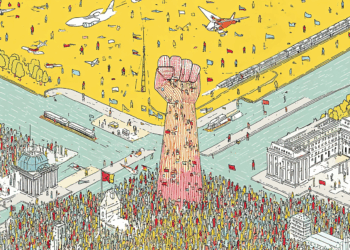
It was not always like this. Women’s liberation was once bold, confrontational and very clear about what it was for. It did not need drum circles, improv theatre or HR-approved slogans because it possessed something far more threatening: a willingness to name male behaviour as the problem. Until that returns, International Women’s Day will remain what it has become — a celebration of women that manages, with impressive efficiency, to ignore our needs entirely.