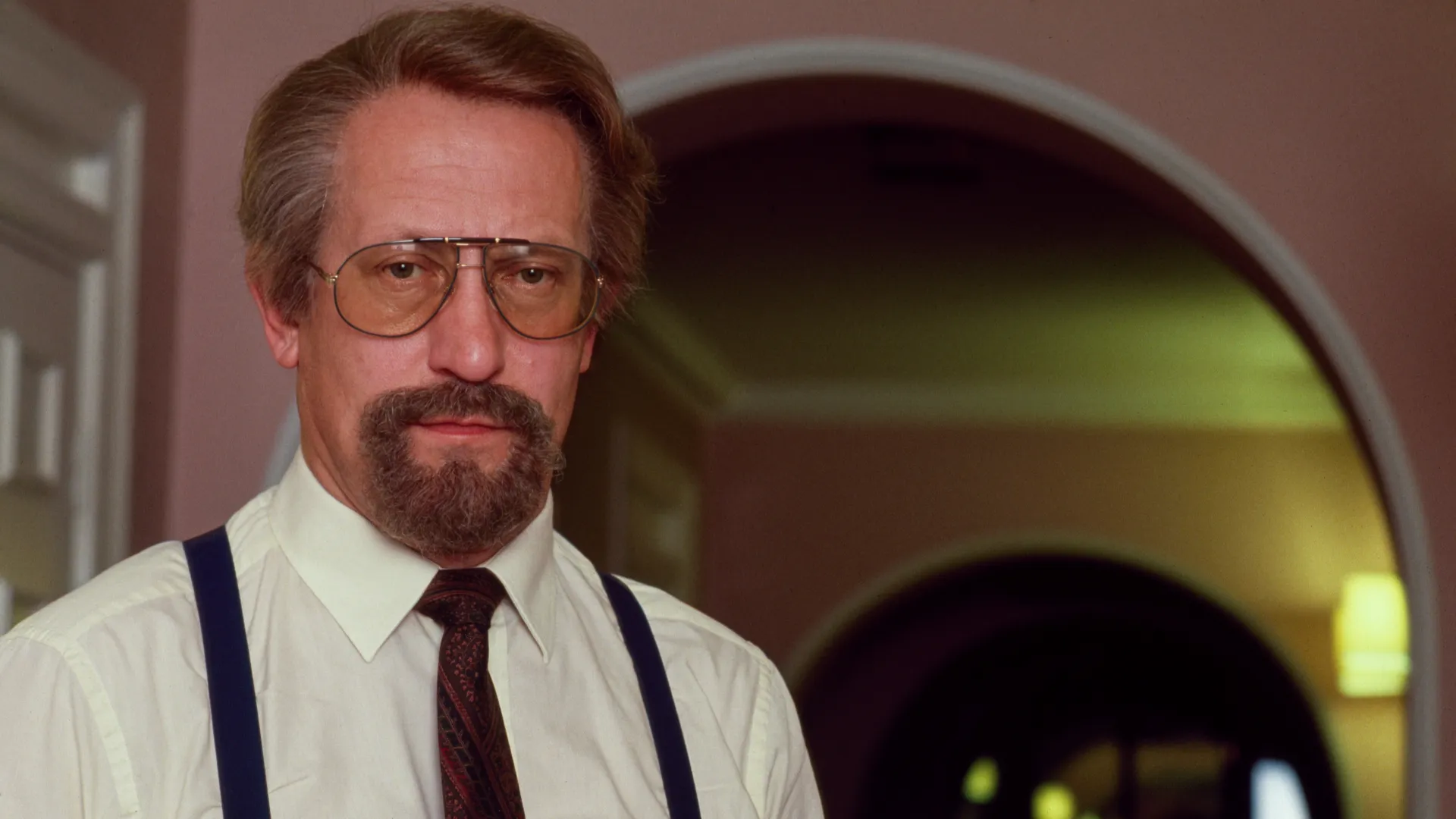
AS soon as he sipped his glass of Armenian brandy, Oleg Gordievsky knew he was in a fight for his life.
If he could only keep his story straight, he stood an agonisingly slim chance at making it out alive.
Served to him by stony faced butlers as he sat across from two hardened Russian mole hunters, 46-year-old Gordievsky had just drank liquor laced with a potent truth serum.
It was May 1985, and the star KGB officer had just been summoned back to Moscow from London – assured he was about to be confirmed as the feared Soviet intelligence agency’s new chief spymaster in Britain.
Instead, his bosses had just learned from a CIA traitor that Gordievsky may in reality be an MI6 double agent working hand in hand with the loathed British government.
The allegation was a gut-punch to the already paranoid Russian establishment, who had seen Gordievsky enjoy a largely unblemished 26-year career rising up the ranks of Soviet espionage to become a Colonel.

They were asking themselves, who really is this man now in a frantic battle to save himself?
AGENT SUNBEAM
Born in 1938 under Stalin’s brutal rule, Gordievsky had followed in his father and brother’s footsteps to join the Komitet Gosudarstvennoy Bezopasnosti, the intelligence behemoth known as the KGB.
But when he was posted to Copenhagen, he viewed the freedoms of the West like a beacon of truth after years in the cold shadows of strict communist doctrine.
It was in the Danish capital that he had bravely defected to the United Kingdom, making contact with an agent of the famed British Secret Intelligence Service, MI6.
Under their direction, he maneuvered his way to a plum posting in the secret KGB Rezidentura at the Russian embassy in London, bringing his wife and two beloved daughters with him.
A goldrush of intelligence then followed, with Gordievsky becoming a pivotal figure in the Cold War – while his true identity remained shrouded in utmost secrecy.
His bombshell reports revealed the innermost thoughts of the fitful Russian elite who were becoming increasingly – and wrongly – convinced that the West was about to launch a preemptive nuclear strike.
This startling revelation – spelled out in meticulous briefings that landed directly on the desks of British PM Margaret Thatcher and US President Ronald Reagan – proved hugely consequential in thawing East-West relations.
Gordievsky even orchestrated historic meetings between modernising Russian leader Mikael Gorbachev and Mrs Thatcher – who affectionately nicknamed her mysterious informant ‘Mr Collins’.
But as ‘Mr Collins’ – or Agent Sunbeam as Gordievsky was officially known to MI6 – inadvertently downed his laced booze, he felt the overwhelming urge to admit it all.
In an eerie dacha outside Moscow, Gordievsky found himself slumped, sweating, and on the verge of spilling everything.
He desperately stifled the impulse to own up to working for British intelligence for 11 years, turning over details of the paranoid Soviet state’s most closely held secrets.
He had helped dismantle Russian spy networks across the West, even revealing to the British authorities that former Labour leader Michael Foot had been a paid-up KGB source.
But miraculously, Gordievsky fought through the chemically induced fog to keep his cool and deny it all.
His performance just about satisfied his doubtful Soviet superiors – but only enough for them to place him under close surveillance, fully expecting he would soon slip up or come clean.
If he did, he faced the bloody certainty that awaited all known traitors of the Soviet motherland – excruciating torture and ruthless execution.
But iron-willed Gordievsky was not planning to give up.
He had to alert his British MI6 handlers that he needed to get the hell out of Russia.
Oleg knew it was time to roll the dice and begin one of the most audacious and unlikely escape plans in the history of espionage.
He needed to activate Operation Pimlico.
MISSION IMPOSSIBLE
Since the moment of Gordievsky’s astounding recruitment, his MI6 handlers knew their ace new double agent was in mortal danger.
Agent Sunbeam’s astounding act of bravery – betraying his Soviet masters in the fight for freedom and democracy – needed to be matched with an ironclad moral duty to protect him at all costs.
So while MI6 mined every piece of information Gordievsky could glean, their dual priority was to ensure his safety – even masking or withholding some of his revelations so as not to run the risk of exposing him.
But their chief concern was extricating him out of harm’s way should he be rumbled – a difficult enough task if he were forced to defect in a Western or neutral country.
But what if Gordievsky was found out while in the heart of what Reagan infamously dubbed the “evil empire” – inside the Soviet Union itself?
After all, it was all too well known to MI6 that no Soviet agent found to be working in cahoots with the West had ever been successfully exfiltrated from inside Russia.
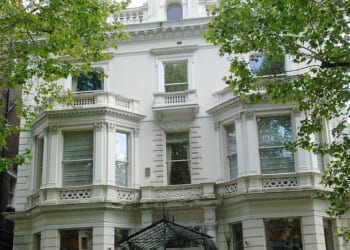
So when Gordievsky’s handlers in Century House – then the MI6 London HQ that officially didn’t even exist – first formulated the audacious Operation Pimlico, they hoped it would never need to be used.
On the evening of July 16, 1985, that hope was dashed.
That day was MI6 operative Arthur Gee’s turn to monitor the ‘signal site’ – a bread shop near the Hotel Ukraine in Moscow where, every Tuesday night for the last seven years, MI6 had kept watch for a telltale signal.
In accordance with the meticulously rehearsed plan, Gordievsky stood with a bright plastic Safeway supermarket bag at exactly 7:30pm – the SOS signal that told MI6 he had to be exfiltrated.
To confirm the signal had been received, Gee needed Gordievsky to see him scoffing a Mars bar while holding a bright green Harrods bag.
It was neither of those curious signals that first caught Gordievsky’s attention – but what he would later describe as Gee’s “unmistakably British” demeanour.
Regardless – the signal had been flown and received and acknowledged.
Mrs Thatcher, who was visiting the Queen in Balmoral, was visited by her private secretary who rushed to Scotland from London. She gave the greenlight.
Operation Pimlico was on.
A MARS BAR AND SOME DRY CLEANING
According to the plan, Gordievsky now needed to make his dash from Moscow to a nondescript rendezvous point near the Finnish border, some 700 miles away and while under intense KGB surveillance.
Simultaneously, the MI6 Moscow team – themselves heavily bugged and followed round the clock – flew into action, beginning with concocting a cleverly and utterly ridiculous ruse to trick their KGB listeners.
Gee, MI6 station chief Roy Ascot and their wives Rachel and Caroline were going to take an impromptu trip to Finland – on the pretence of taking in a bit of shopping and Rachel seeing a specialist Helsinki doctor for her apparently agonising (but actually wholly invented) back pain.
And the Ascots’ 15-month-old baby daughter Florence was coming along for the overnight trip, beginning late on Friday, July 19th.
Each prong of the exfiltration mission – the MI6 cars on one hand and Gordievsky on the other – had until exactly 2.30pm on Saturday, July 20th, to get to the wooded layby about 36 miles short of the border.
Just a couple of hours before the MI6 cars set off, Gordievsky reached to the back of his wardrobe for a nondescript outfit that he’d hoped hadn’t been sprayed with the KGB’s radioactive tracking dust.
Having sent his wife Leila and two beloved daughters away to see relatives, the defector was about to embark on his terrifying journey alone.
Leaving his apartment in the Leninsky Prospekt in Moscow, Gordievsky was turning his back “not only on my home and my possessions, but on my family and my life”.
He also knew full well that in a matter of hours KGB hunters were going to kick down the door and turn the place upside down.
Oleg now needed to be “dry cleaned” – the espionage term for throwing off surveillance without appearing suspicious.
Using the KGB’s expert training against them, Gordievsky ran the full gamut of dry cleaning tricks – ducking in and out of shops, dashing up and down apartment buildings and on and off metro trains for the next 90 minutes.
He wound up at Leningrad Station, boarding an overnight train to the Russian second-city bearing the same name,
Crucially, he boarded without a KGB tail on him. They had lost him – and were too scared to report it.
There could be no doubt now. Oleg was on his way.
BORDER DASH
At a remote town called Zelenogorsk, 30 miles from Leningrad, Gordievsky disembarked the train in a panic.
He had badly startled his fellow passengers by falling out of his bunk in a sedative-induced stupor, bashing his face and covering himself in blood.
He boarded a bus for the next leg of his journey hoping his careless actions had not rumbled him.
The border town of Vyborg was his destination; more specifically, road marker 836, 16 miles short of the settlement where his rendezvous was due to take place.
He reached the spot with four hours to spare. Then did something utterly insane.
There are some dachas in the woods. I’ve got a nice lady waiting for me in one of them
Oleg Gordievsky,
Nerve-wracked, sleep deprived and starving – Oleg fancied a drink and something to eat.
He hitched a lift to Vyborg and treated himself to two bottles of beer and some fried chicken.
His appetite sated, a sudden realisation jolted Gordievsky back to reality. It was 1pm and he had to get back to the rendezvous site – 16 miles away – by 2:30pm.
With no cars in sight, Oleg ran like his life depended on it – because it did.
Sprinting for an hour, a sweat-drenched Gordievsky was finally picked up by a lorry driver who was puzzled when his new passenger asked to be left off at the remote marker 836.
“There are some dachas in the woods. I’ve got a nice lady waiting for me in one of them”, Oleg lied convincingly.
He made it back in time and burrowed himself into the undergrowth, his eyes trained on the layby and wholly unbothered by the swarms of summer mosquitos now feasting on him.
The 2:30pm meeting time came and went.
A few miles down the road, his would-be MI6 saviours were locked in a bizarre high-speed dance with the KGB minders who had followed them all the way from Moscow.
The MI6 vehicles, a Saab and a Ford Sierra, were tailed by two KGB Ladas while in front of them was a police car.
Roy Ascot – a blue-blooded Viscount straight from a Bond film – was driving the Saab and knew that time was running out to shake off the convoy and make the pick up.
Otherwise, they would be forced to drive right past the layby and leave Gordievsky hung out to dry.
He decided to slow down to a crawling pace, much to the annoyance of the police car in front who sped off, swerved to the side and then joined the KGB cars behind the British pair.
When the convoy came to a halt to allow a procession of military vehicles cross the road, there was nothing else but to let them pass, then put the boot down and pray.
The Saab and Gee’s Ford sped off while the Russians were left in the dust.
Minutes later, marker 836 came into view and the MI6 team swung into the layby – evading the bungling KGB and police who sped on down the road.
Emerging from the undergrowth, bleary eyed, unshaven and dishevelled, Gordievsky struck his stunned MI6 rescuers as less of a titan of espionage, and more of a tramp.
Nonetheless, they worked with extreme efficiency – bundling him into the boot of the Sierra with water and medication, while simultaneously laying down a picnic blanket should authorities spring out and ask why they stopped.
No one appeared, so the rescue team now sped back onto the road to catch up with their stunned KGB trackers.
Incredibly, instead of stopping and interrogating the British diplomats, the KGB goons slotted back into position to continue their tail – seemingly relieved that they would not be reprimanded for losing track of their targets.
As the British cars reached the border, back in Moscow it had finally become clear that Gordievsky had gone AWOL. But instead of his disappearance raising alarm, it had simply been assumed that he had killed himself.
The British cars – bearing diplomatic plates and thus subject to diplomatic immunity from search – were waved through the first barrier checkpoint.
At the next, guards scanned the vehicles but again they were ushered to proceed to the main border, where customs documents would be checked – and where the team faced the biggest risk of being rumbled.
The smell of sweat, beer and stale tobacco emanating from the boot of the Sierra would undoubtedly set the well trained guard dogs into a frenzy.
With Ascot and Gee sorting out the paperwork inside, the wives were left with the duty of minding the cars – and their precious cargo – without raising suspicion.
As a border dog handler sidled up to the parked Sierra, it was the turn of the youngest member of the exfiltration squad to do her bit.
The Ascots’ baby daughter Florence had just filled her nappy – prompting her mother to change her on the boot of the car, directly above their smelly stowaway.
Caroline duly dropped the offending nappy to the floor, and the Alsatian quickly backed away.
Minutes later and with paperwork complete, the two cars joined a slowly trundling queue of vehicles weaving though the final barbed wire barrier and past passport control.
Oleg Gordievsky and his fellow British spies were now out of the Soviet Union.
The fishing has been very good here. We have one extra guest.
MI6 code message
There was still the final hurdle of getting out of Finland – who had an agreement with their powerful Russian neighbours to turn over any KGB fugitive.
All it would take is a last-minute call from the Russians and the cars would be halted and the mission rumbled.
But both Finnish border checkpoints were cleared over the course of a nerve-jangling few minutes.
As the Russian frontier vanished in their rear view mirrors, the team stopped at a petrol station pay phone to make their coded call back to Century House.
“The fishing has been very good here. We have one extra guest.”
Gordievsky would go on to reach the Norwegian border the following morning, where he was flown to Oslo and on to London.
Agent Sunbeam was safe, and the biggest coup of the Cold War had been pulled off against all the odds.
Gordievsky would go on to be reunited with his family after the fall of the Soviet Union six years later, although his marriage would not last under the strain of the spotlight.
Alrich Ames, the CIA coward who turned Gordievsky over to the Russians in return for heaps of cash, was finally caught in 1993. He pleaded guilty to spying for the Soviet Union in 1994, and remains locked up without the possibility of parole in federal prison.
Gordievsky spent the rest of his life living under a new identity in Britain, writing books and making exceptionally rare TV appearances – in disguise.
At a discreet ceremony in 2007, Queen Elizabeth II made Gordievsky a Companion of the Most Distinguished Order of St Michael and St George (CMG).
After the Russian poisoning of the Skripals in 2018, security around Gordievsky was stepped up.
He died peacefully in his home in Surrey on March 21st, 2025, at the age of 86.