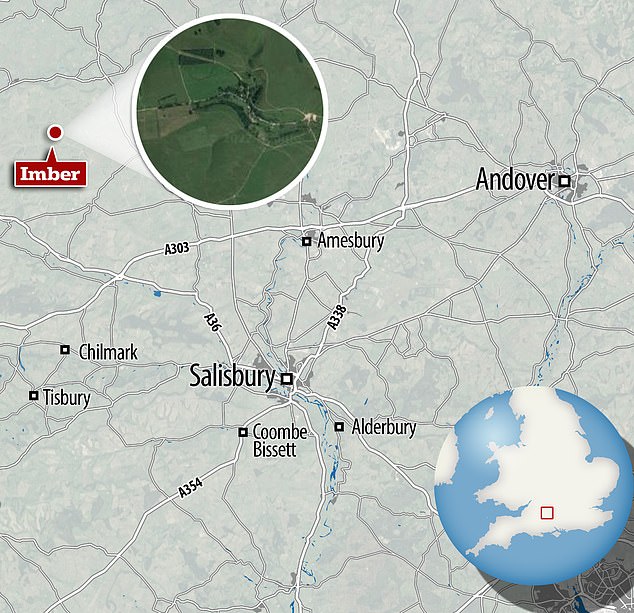
A ‘ghost’ village in the heart of the British countryside that was abandoned 82 years ago to help train troops to kill Nazis in World War II is open to the public for just 12 days a year.
History fans can explore a perfect time capsule in Imber, Wiltshire, which was evacuated and turned into a military training area in 1943, helping to prepare soldiers ahead of D-Day and the tide turning in the war.
Some 150 residents were forced out of their homes and given 47 days to evacuate under the promise that they would be able to return following World War Two.
But more than 80 years later, the village is still occupied by the Ministry of Defence (MoD), with the public only allowed in for 12 days each year.
Many of the original cottages have been destroyed by time, but the original structures of the Grade I-listed St Giles Church and the old pub still remain.
Other buildings that stood in the 1940s were demolished after being badly damaged during training exercises.
The village and its surrounding countryside still play a vital role in the military for the MoD, even being used to help train Ukrainian soldiers in their fight against Russia following Putin’s invasion.
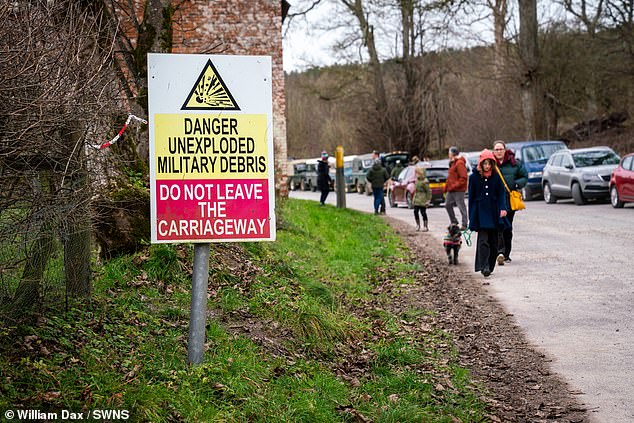
Despite its importance, members of the public can still soak up the history of the site on specially allocated occasions surrounded by rubble, signs warning of the danger of unexploded ordnances and other relics of past training exercises.
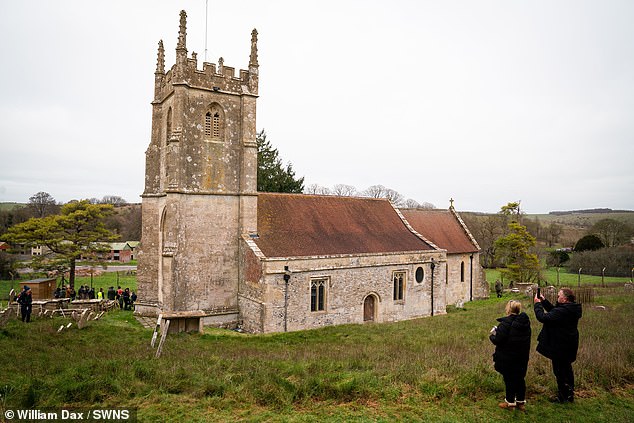
History fans can explore a perfect time capsule in Imber, Wiltshire, which was evacuated and turned into a military training area in 1943, helping to prepare soldiers ahead of D-Day and the tide turning in the war
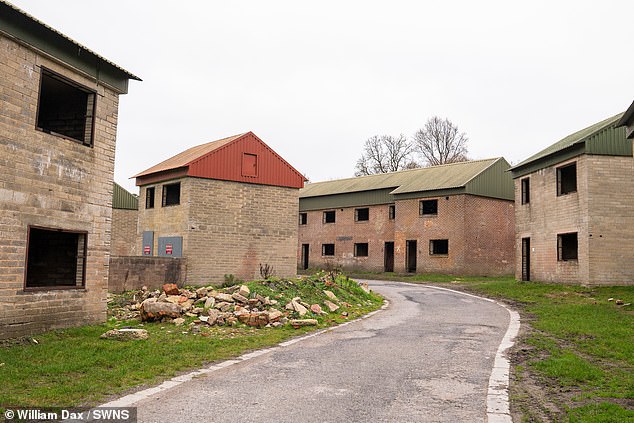
More than 80 years later, the village is still occupied by the Ministry of Defence (MoD), with the public only allowed in for 12 days each year
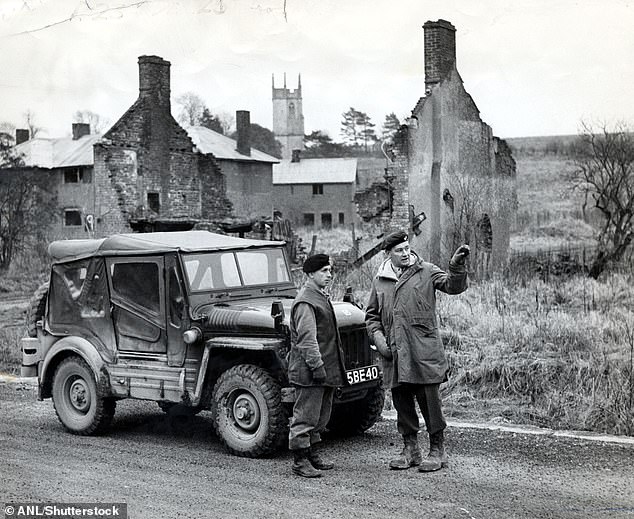
Imber was evacuated in 1943 to make way for vital military training exercises in the fight against the Nazis – but its residents were never allowed to return (Pictured: Soldiers in the village in 1962)
Custodian Neil Skelton, 77, from Wilton, Wiltshire says there is always a huge number of visitors to the church each year.
The building opens from 11:00am to 4pm daily on each of the 12 days granted by the MoD.
These include Easter, one day in summer, one day for a caroling festival just before Christmas, and this week, with the village accessible from 8am yesterday until the same time on January 2.
The village is free to visit, although the public can provide donations which all go toward the Churches Conservation Trust (CCT) for maintenance and restoration.
Mr Skelton said: ‘We do get a lot of visitors. In the summer on the bus day we had about 4,000 visitors and over the bank holiday we had 3,000.
‘Some people come every time it is open because they feel they should come. People come out of interest for the history.
‘It can get quite busy in the church, some days you can’t move because there are so many people there.
‘It is very important from the point of view of sites of special scientific interest and of course the wildlife here is quite extensive. No one has lived in Imber for 82 years now, so time has stood still.’
Mr Skelton worked for the CCT for 30 years until he retired in 2008, and has since volunteered for the job as custodian of the lost church.
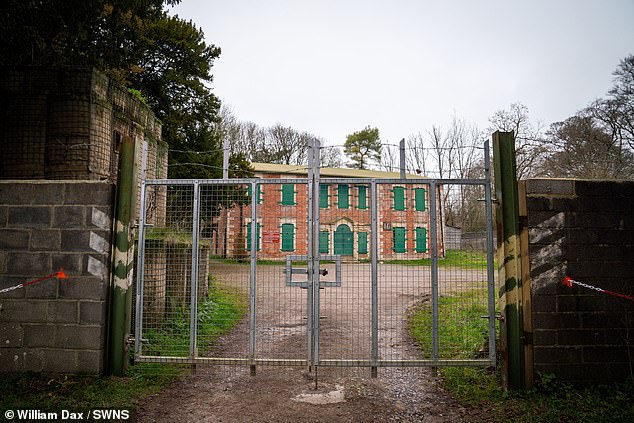
The village in Wiltshire now opens its gates to the public on just 12 days each year and is still owned by the MoD
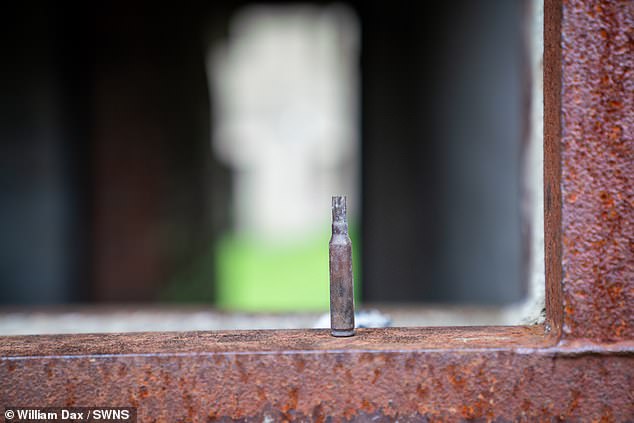
The village is free to visit, although the public can provide donations which all go toward the Churches Conservation Trust
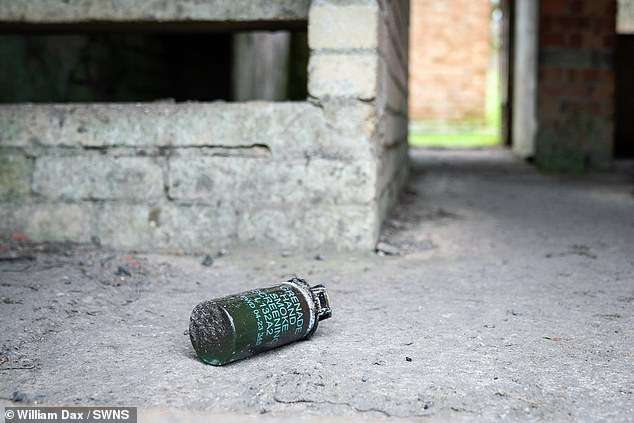
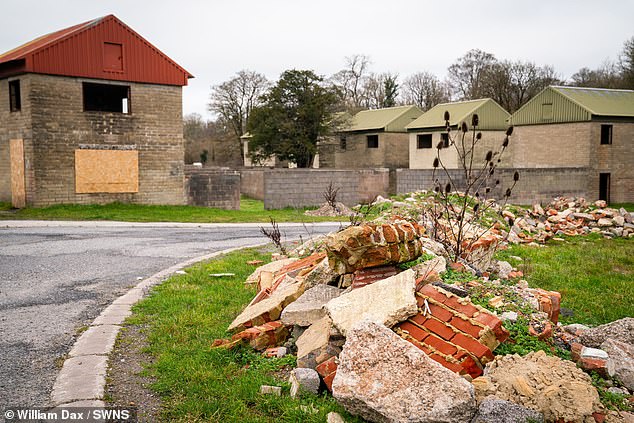
Debris from training exercises can be seen scattered around some of the buildings, although many of the original stone cottages have been destroyed
The village and its surrounding countryside still play a vital role in the military for the MoD, even being used to help train Ukrainian soldiers in their fight against Russia following Putin’s invasion
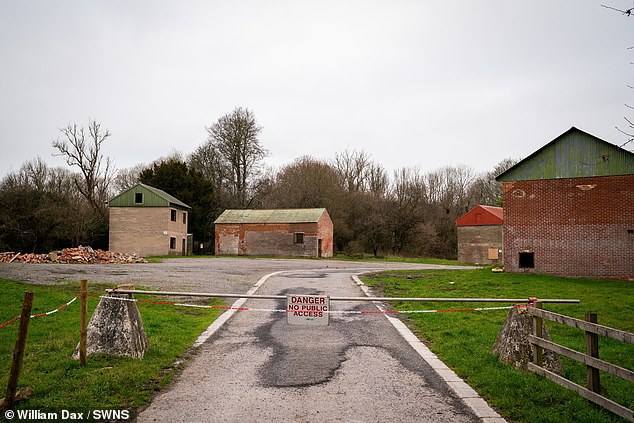
Even during open days, the areas of the village that are accessible to the public are tightly controlled
He says that he enjoys the peace and quiet within the abandoned village, and loves working the chaotic open days.
The church sells refreshments and merchandise, and they raise an incredible £15,000 to £20,000 every year.
Although no-one has lived in the village for more than 80 years, previously residents still have the right to be buried in the church yard.
Mr Skelton added: ‘When I offered to take it on as a volunteer they couldn’t believe their luck.
‘I just love the atmosphere and I have always had a soft spot for the little church. I just enjoy being there. It is a good church with a lot of history.
‘It all stems from back in 1964 when I was 16 years old and I cycled to Imber all the way from Salisbury and back in one day. It captured my imagination.
‘Being a bell ringer, I always thought this was one church I was never going to ring bells at, but we put bells back in in 2010 so I fulfilled that ambition.’
He says that most of the old cottages have been destroyed as they had thatched roofs and water got inside, while others were badly damaged during training events.
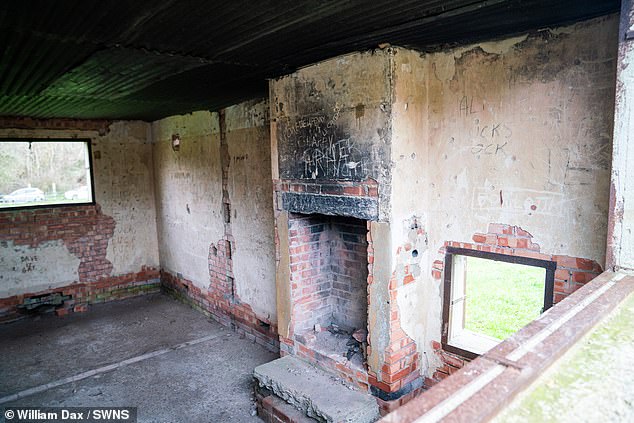
The village is now mostly made up of empty stone buildings, although the original church and pub still stand
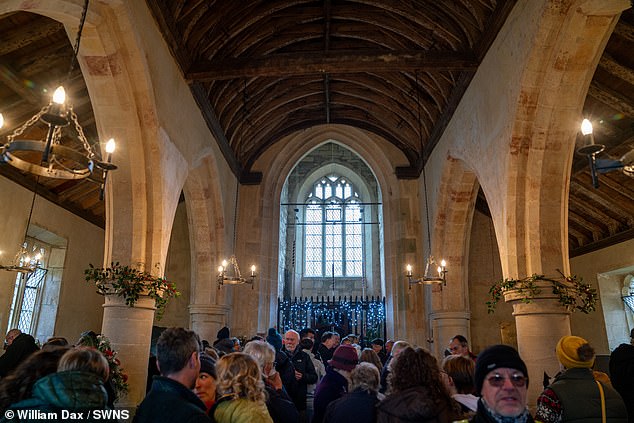
Custodian Neil Skelton, 77, from Wilton, Wiltshire says there is always a huge number of visitors to the church each year
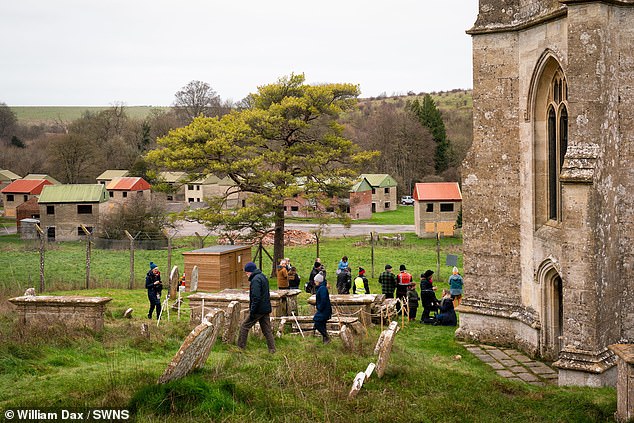
Although no-one has lived in the village for more than 80 years, previously residents still have the right to be buried in the church yard
Despite the ghost-town feel, Mr Skelton says that the village is actually a lovely and tranquil place to work
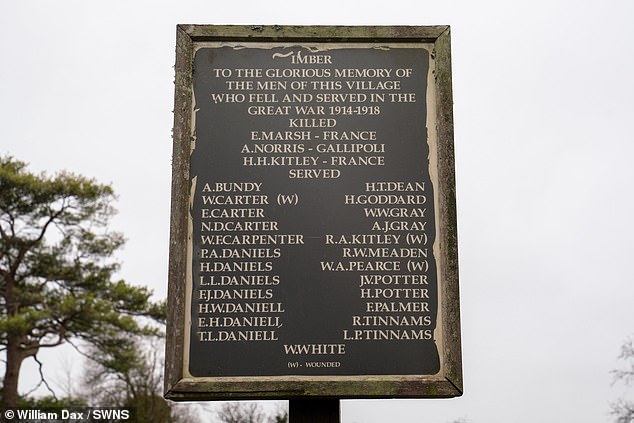
A war memorial commemorating residents of Imber who died or were wounded during the First World War still stands there today
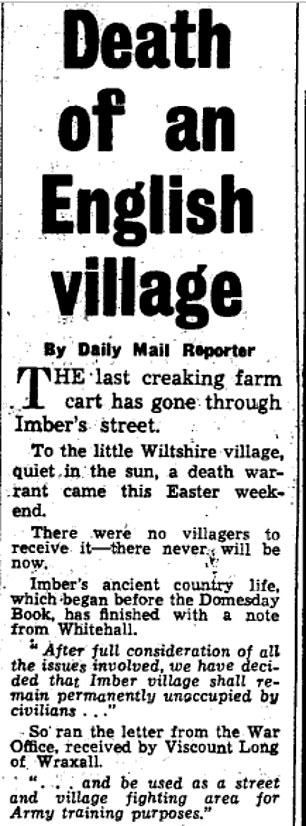
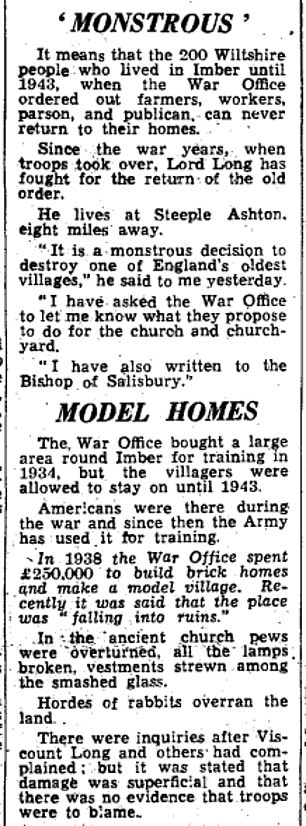
The Daily Mail reported on the ‘death’ of Imber in 1948, when officials decided that the village’s residents would not be allowed to return
Most other houses are either hollowed-out shells or modern, windowless buildings built as sets for military training.
Despite the ghost-town feel, Mr Skelton says that the village is actually a lovely and tranquil place to work.
He added: ‘When there is nobody about it is lovely. I often go on my own and I love it, it’s a lovely peaceful place to be. The training area is very big, it is about the size of the Isle of Wight.
‘I enjoy meeting people, I have a good team of volunteers and we all work together very well.
Mr Skelton was awarded the British Empire Medal in 2016 for services to the church.
The village last made headlines in 2023 after one of its previous residents, 87-year-old Ray Nash, died and was laid to rest in the church yard.
In the exceptionally rare ceremony, Mr Nash was buried alongside family members including his father.
His son Kelvin Nash, 63, says his dad Ray had always wanted to be buried with his father in the village – who died when Ray was just one.
Ray, a former mechanic for the Royal Electrical and Mechanical Engineers, left the village with his mum after his father’s death in 1936.
Despite barely remembering his time there, he always felt drawn to the place the father he had never known had lived – visiting the site every year that Kelvin can remember.
Around 110 mourners attended the service to pay their respects at what could be the last ever funeral to be held in Imber.