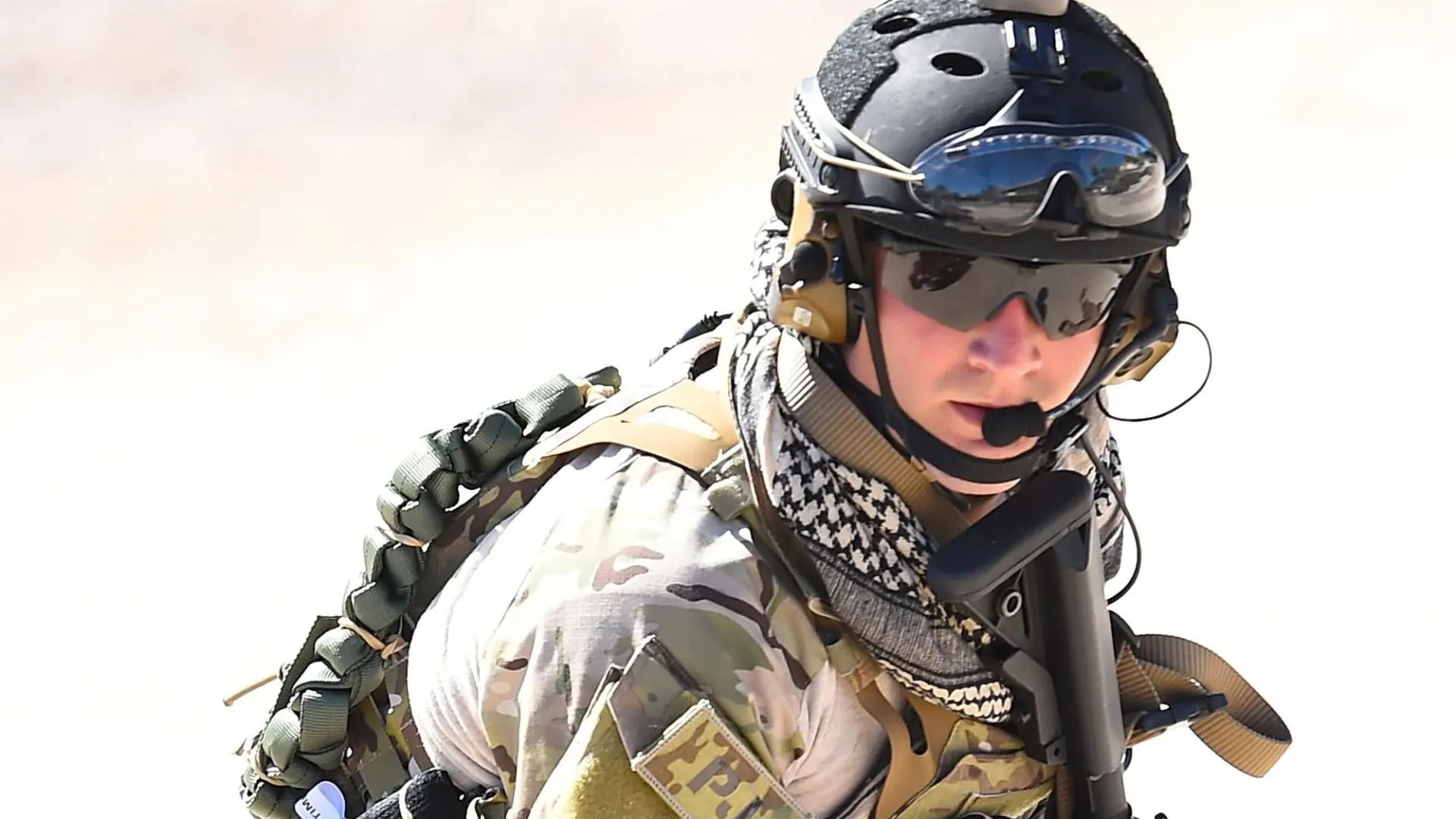
THE search for the missing American pilot is being spearheaded by one of the world’s most highly trained Special Forces units dubbed the PJs.
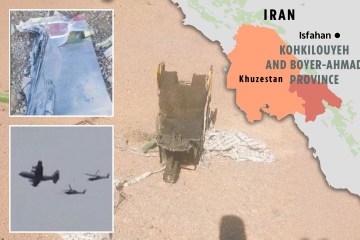
Iran shot down a US F-15 fighter jet over its airspace on Friday, triggering a frantic race between the warring nations to find the stricken airmen.
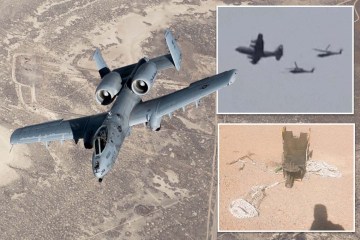
Two Black Hawks rescued one crew member, with tribesmen and rural villagers firing on the helicopters as they escaped to Iraqi territory.
Tehran’s bloodthirsty broadcasters have since upped the ante, offering a twisted $60,000 (£45,000) reward for the capture of the missing pilot, with the PJs now racing against the clock to find their man.
The pararescuemen – whose entire focus is Personnel Recovery (PR) – have an incredible range of skills including parachuting from 30,000ft, rescuing soldiers trapped underground and conducting life-saving medical procedures while under enemy fire.
These units are often preemptively deployed near war zones where aircraft could be taken out.
Security analyst Aaron MacLean, a Marine Corps veteran, said: “They are an extraordinary group of special operators.”
Top brass came to realise the need for a dedicated rescue force during the Second World War and the Pararescue Unit was established in 1946 with the motto “These Things We Do, That Others May Live”.
The nickname derives from early flight logs when they were entered as PJ, a combination of Parachutist and Jumper.
The unit comprises around 500 special operators who work as independent teams whenever an American or allied soldier needs rescuing.
These missions are often done from behind enemy lines – although they regularly work alongside other special forces units.
They can drop into hostile zones from as high as 30,000ft or as low as 800ft, using huge 470 square feet parachutes – around twice the size of a regular chute – which allows them to jump with a large amount of equipment.
As well as their weapons, body armour and personal rucksack, they jump with an 80-pound parachute pack carrying a vast array of kit to help them locate, medically treat if necessary and evacuate their target.
Their medical supplies even include blood packs in the case they need to conduct emergency transfusions.
They carry out 11 different checks of their kit before they jump to make sure everything is in order, with another check carried out by a colleague to ensure nothing has been overlooked.
“Harrowing and massively dangerous is an understatement,” a former squadron commander told CBS News of the missions.
“This is what they train to do, all over the world. They are known as the Swiss Army knives of the Air Force.”
The American Air Force website states: “Pararescue is the nation’s force of choice to execute the most perilous, demanding, and extreme rescue missions anytime, anywhere across the globe.
“Whether shot down or isolated behind enemy lines; surrounded, engaged, wounded, or captured by the enemy; PJs will do whatever required to deny the enemy a victory and bring our warriors home to fight another day.
“Leave no Airman, Marine, Soldier, or Sailor behind is our nation’s supreme promise and responsibility to our brave war fighters.
“The Air Force holds true to this moral imperative. The PJs are the elite ground forces that provide our nation with the capability to execute this noble responsibility.”
As the Pararescue teams approach their target they have three objectives in mind – to assault, secure, and dominate the “rescue objective area”.
To achieve this all PJs are qualified experts in using advanced weapons, fast roping and rescue swimming.
Although military operations are their primary focus they have also supported Nasa missions and have recovered astronauts after water landings, as well as helping civilian casualties in natural disasters around the world.
Since 9/11, they have executed more than 12,000 life-saving, combat rescue missions, often taking out enemy combatants in the process.
And they may well be the best hope that the downed American pilot who remains missing somewhere in Iran has of making it out alive.
A team of at least 24 of these elite pararescue jumpers would be involved in the Iran rescue mission, the former commander told CBS.
According to former US Marine Jonathan Hackett, rescue teams work backwards from a last known location, with their main focus being the search for signs of life.
“They’re trying to work backwards from the last point they knew that person was, and fan out based on the speed that person could move under different circumstances in this really difficult terrain,” Hackett told the BBC.
Former US naval officer Harlan Ullman, a senior adviser at the Atlantic Council, said the PJs are “by far, the best search and rescue capability in the world”.