Hundreds of thousands of protesters have taken to the streets in Iran – risking, and increasingly losing, their lives. U.S. President Donald Trump has urged them on, promising unspecified “help” and reportedly weighing a range of options.
Yet, if the picture on the ground remains deliberately shrouded by an internet shutdown, there can be little doubt what is driving the leader of Iran’s theocratic regime, Ayatollah Ali Khamenei.
Prominent in his mind are echoes of an earlier uprising: the Islamic revolution that forced Iran’s seemingly impregnable monarch, Shah Mohammad Reza Pahlavi, to flee 47 years ago this week, on Jan. 16, 1979.
Why We Wrote This
The historic protests in Iran have become increasingly deadly. They’re also showing more parallels with another uprising nearly 50 years ago that forced Iran’s seemingly untouchable leader at the time to flee.
The ayatollahs ruling the country ever since have violently suppressed periodic rebellions. In 2009, they faced down allegations that they had rigged a presidential election; in 2017, economic grievances spilled over into street protests; and three years ago, the death in detention of a young woman, Mahsa Amini, arrested for failing to cover her hair, sparked major unrest.
Never before, however, have the echoes of the shah’s demise been so striking.

And while the ruling clerics might yet succeed in crushing this latest challenge, the prospect that their rule could end as did the shah’s in 1979 has dramatically raised the stakes for them.
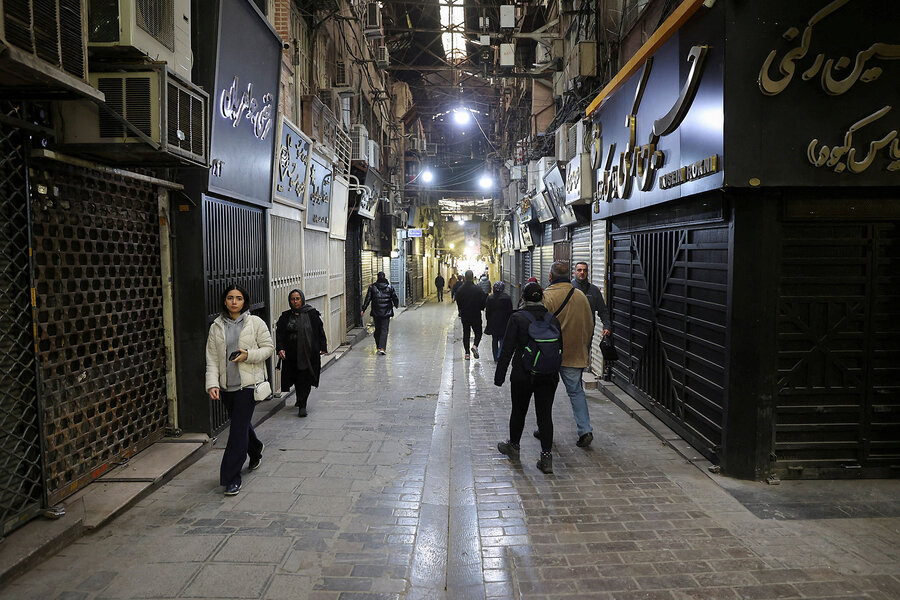
A key signal that the tide was turning against the shah came when the merchants and businessmen in Tehran’s sprawling Grand Bazaar – a conservative, prosperous group reluctant to get involved in politics – threw their weight behind the protests.
Since the Islamic revolution, they have broadly remained on side with the regime. This latest unrest, however, erupted after merchants in the Grand Bazaar shut their shops in anger over rising inflation and the plummeting value of Iran’s currency.
Within hours, protests had spread throughout Tehran, and then to the rest of Iran, carrying a far broader message of resistance.
During the uprising of 1978 and 1979, the crowds chanted “Marg bar Shah!” – “Death to the Shah!” Over the past two weeks, there have been reports of a new refrain: “Marg bar Khamenei!”
Late last week, the protests – and the echoes from half a century ago – grew stronger.
The dominant figure in the uprising against the shah – Ayatollah Ruhollah Khomeini – had been in exile since the 1960s, having opposed the monarch’s secular political reforms. Yet, he still exerted a huge influence inside Iran, in part through tens of thousands of smuggled audiotapes of his speeches and sermons.
Last Thursday, the uprising against the ayatollahs reached unprecedented scale as hundreds of thousands of people turned out in cities nationwide.
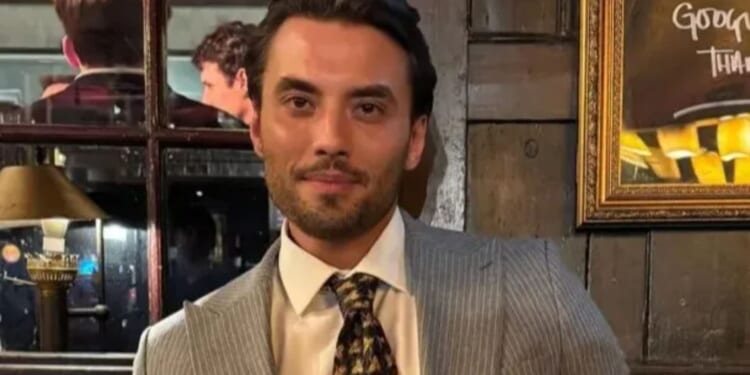
The surge was partly coordinated by social media and word of mouth. But it was also a response to a call from another exile – the most widely recognized Iranian political supporter of the unrest: Reza Pahlavi, the son of the late shah.

It is unclear what role he might play if the Islamic regime were to fall. His father remains a deeply divisive figure in Iranian politics, and Reza Pahlavi commands nothing like the breadth of popular support that Ayatollah Khomeini enjoyed on his return to Iran.
But the current supreme leader’s response to the protests has left little doubt that they have unsettled him.
Late Thursday, Iran shut down the internet.
Within hours, security forces began a more deadly phase in their crackdown. Human rights groups report that many hundreds of protesters have been killed since then.
On Friday, Ayatollah Khamenei declared that “the Islamic Republic will not back down.”
Whether he can make good on that pledge will depend on whether the protests subside, at least for a while, and on whether, and how, President Trump might decide to intervene.
But as they chart their options for the weeks ahead, the ayatollahs will be aware of two lessons that the shah learned in his final months.
The first: that force alone might not keep him in power. The elder Pahlavi ended up pledging political reforms and an early election. But Jordan’s King Hussein, a friend of the shah, told me and several other reporters a few months before the Iranian leader’s downfall that the olive branch appeared to have come “too late.”

Office of the Iranian Supreme Leader/WANA/Reuters
At the outset of the current protests, Iranian President Masoud Pezeshkian also acknowledged a need to “address people’s grievances” – evidently hoping that by meeting economic demands, he could calm the waters.
But the scale of the unrest, and its much broader political demands, suggest that this overture both came too late and offered too little.
At the same time, the shah attached great importance to military muscle, and to the loyalty of those he relied on to use it.
Ayatollah Khamenei’s key defense is the Islamic Revolutionary Guard Corps, or IRGC, which he briefly supervised in the early years of the post-shah regime, and a largely volunteer militia force, the Basij, which has been used to quell domestic unrest.
So far, at least, there has been no sign of disaffection in their ranks. The IRGC’s control of a sizable chunk of the Iranian economy should give it an incentive to protect the status quo.
But the shah’s army, too, remained loyal – until it wasn’t.
As the protests escalated in late 1978, cracks did appear. More and more soldiers were reluctant to open fire on fellow Iranians who were backing a cause that seemed increasingly likely to prevail.
Could that scenario repeat itself today? The future shape of the Middle East might depend on it.