CHRISTMAS is the most wonderful time of the year for some but the worst time of year for others.
Dr. Sophie Mort, a clinical psychologist with over 10 years of experience in supporting people with their mental health and their relationships, spoke exclusively to Fabulous about how you can survive Christmas with people you don’t like or struggle to get along with.


Dr. Sophie explained some of the reasons why family, friends or guests don’t get along at Christmas time.
She said: “Christmas can be a difficult time for families to connect and get along, and there’s loads of reasons for that.
“Firstly, high expectations and pressure.
“The holidays often come with the belief that everything must be perfect. Perfect gifts, perfect meals, perfect moments.
READ MORE RELATIONSHIP TIPS


“But when the reality doesn’t match those ideals, it can lead to disappointment, frustration and stress.”
“Then there’s unresolved family tension,” she continued.
“Long-standing issues or conflict that often get ignored during the year, resurface when everyone is forced together. This can lead to arguments and emotional distance.
“Which, if we then add financial strain on top of it, can make things even more challenging.”
Another reason Dr Sophie explained was: “Christmas spending can cause anxiety over gifts, travel and hosting, leading to more stress and even conflict over money.
“And for some, Christmas is a reminder of who isn’t there.
“Loss and loneliness can make it hard to connect with others who don’t share that same experience.
“Now, add to all of this, alcohol, which can lower inhibitions, meaning a simple disagreement can escalate quickly after a few drinks.
“Social media that makes people feel even more disconnected from each other.
“And can lead to envy when we’re looking at other people’s highlight reels and the fact that most of us have overscheduled.
“We try to meet everyone’s needs, attend too many gatherings, leaving us exhausted, making conflict even more likely.”
The expert remarked: “So, what do we do? How do we protect ourselves during the Christmas period?”
1. Think, then plan
Dr Sophie said: “Well, the first thing is plan ahead.
“Really think about what you want to do this Christmas, what you don’t want to do, who you want to spend time with and who you don’t want to spend time with.”
If it’s too late for this year, perhaps you could spend the Twixmas period thinking about your boundaries for 2026.
2. Set boundaries
“Choose to say no,” the expert added.
“For things you don’t want to do, choose to limit time with certain individuals and set boundaries around how long you spend in stressful environments.
“It’s okay to leave early or plan shorter visits to places you don’t really want to be.
“And you can decide to boundary conversations too. You can say, I’d rather not discuss that right now, I’m just happy we’re together, before you change the subject on a topic you don’t really want to talk about.
“The more you practice saying this on your own, the more likely that answer will come to you during tricky conversations when you need it to.
“[You can also] set alcohol boundaries,” Dr Sophie suggested.
“Decide how much you’ll drink, when you’ll want to say no, and whether you want to consider an alcohol-free time during gatherings.”
3. Manage your own expectations
“Be realistic about what you can contribute and don’t feel pressured to meet everyone else’s demands,” she explained. “Communicate your needs clearly.”
4. Take a social media break and prioritise self-care
“Now, this looks different for everyone,” she said.
“For some people, it means carving out time for themselves, going for a walk and meditating.
“For other people, it involves reminding yourself that when things get too much, you can lock yourself in the bathroom, take a few deep breaths, and decide when to re-emerge.”
5. Deepen the connections you care about
Dr Sophie explained: “Now, perhaps most importantly, work on deepening the connections with the people you want to spend time with – ask how they are, share your recaps of the year you’ve had, talk about what you hope for in the next year.
“Discuss your worries about the Christmas period, and maybe agree on a shared code word, one you can use to escape the crowds or the stresses and strains of the Christmas season.”
And one final note from Dr Sophie… “If you’re worried about being alone this Christmas, please address this proactively.
“Look up local events in your community, things that are already arranged, that you can drop in on, so you have options on the day.”
Conversations in bloom
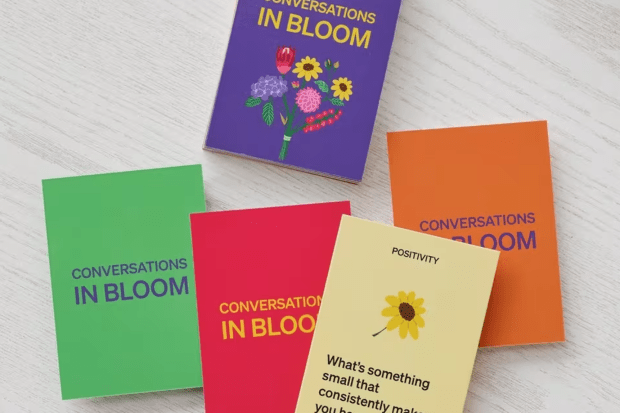
Interflora recently launched their Conversations in Bloom – a set of conversation starter cards, designed in collaboration with therapist Dr Sophie Mort, to help people navigate difficult discussions.
The card prompts cover everything from personal growth and letting go of the past, to discussing tough emotions and navigating support during hard times!
Available on the Interflora website for just £10 (free delivery), with all proceeds going to charity.