A defiant Rachel Reeves tonight insisted she will not quit even if, as it increasingly seems, she breaks her word on tax.
In a highly unusual move at an early morning Downing Street speech, the Chancellor hinted she is considering the first rise in the basic rate of income tax for half a century, saying ‘we will all have to contribute’ at the November 26 Budget.
Such a move would be a blatant breach of Labour‘s manifesto pledge to not raise income tax, National Insurance or VAT – and triggered Tory calls for her to be sacked.
But Ms Reeves said she was ‘not going to walk away because the situation is difficult’.
The Chancellor was branded ‘delusional’ after blaming everything from Covid to Donald Trump for her plan to raise taxes on millions of working people.
In an ominous address to the nation as most were tucking into breakfast or trying to get children out of the door to school, the Chancellor made the case for more tax rises in this month’s Budget – and repeatedly refused to rule out manifesto-busting rises in income tax, VAT or National Insurance.
But Ms Reeves, who imposed the biggest tax-raising Budget in history only last year, refused to accept any responsibility for Britain’s economic woes.
Instead she reeled off a lengthy list of factors, including Brexit, the Tories, Covid, the Ukraine war and President Trump’s tariffs to justify a fresh round of tax rises.
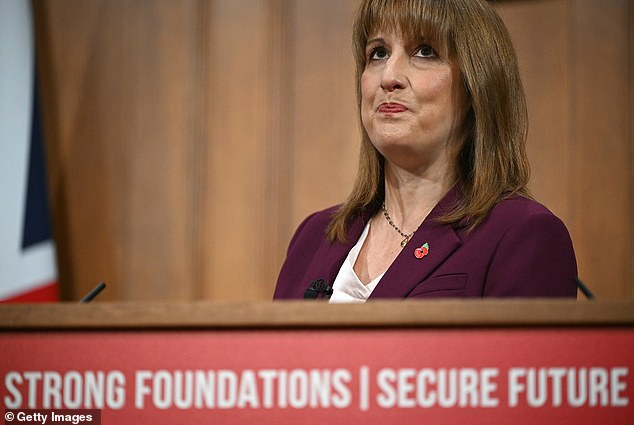
In a highly unusual move at an early morning Downing Street speech, the Chancellor hinted she is considering the first rise in the basic rate of income tax for half a century, saying ‘we will all have to contribute’ at the November 26 Budget
Speaking in the Downing Street media suite three weeks before the Budget, the Chancellor hinted at broad based tax rises affecting millions of people, saying ‘each of us must do our bit’.
She added: ‘If we are to build the future of Britain together, we will all have to contribute to that effort.’
Ms Reeves acknowledged there was a ‘different route through’ available by cutting spending instead of raising taxes. But she rejected the idea, saying: ‘The reason we have such low productivity is because governments have done that for the last 14 years.’
Asked whether she believed it was important to keep Labour’s manifesto promises on tax, she responded: ‘It’s important that people are honest. Everyone can see this year has thrown many more challenges our way.’
Tory frontbencher Alex Burghart described the Chancellor’s speech as ‘banal, delusional and dangerous in equal measure’.
Kemi Badenoch branded it ‘one long waffle bomb’.
The Conservative leader, who used her own speech on the economy to call for welfare cuts, accused the Chancellor of producing ‘a laundry list of excuses’ for Britain’s flagging economic performance under Labour. She said the government had ‘given up’ trying to live within its means.
Mrs Badenoch added: ‘She blamed absolutely everyone else for her own choices, her own decisions, her own failures. It’s clear she can’t get Britain working again.’
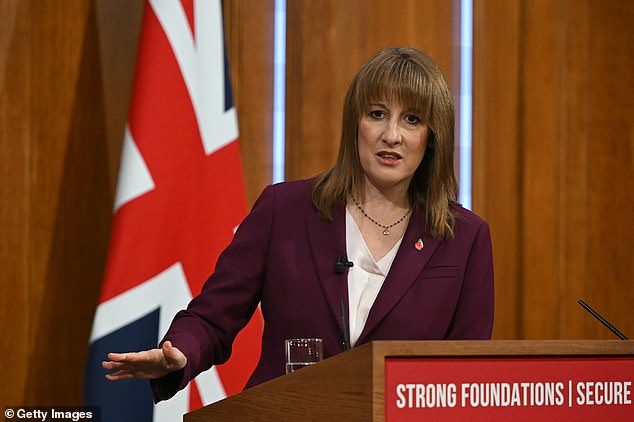
Asked whether she believed it was important to keep Labour’s manifesto promises on tax, she responded: ‘It’s important that people are honest. Everyone can see this year has thrown many more challenges our way’
Nigel Farage said the Chancellor’s willingness to contemplate breaking Labour’s manifesto tax pledges showed people ‘can’t trust a word Rachel Reeves says’.
Shadow Chancellor Sir Mel Stride said that if Ms Reeves ‘breaks her promise and puts up tax, she must get the axe’.
But the Chancellor tonight ruled out quitting. She told LBC’s Tonight with Andrew Marr show her departure would cause turmoil in financial markets as she was ‘trusted with the public finances’.
She added: ‘I am not going to walk away because the situation is difficult. I was appointed as Chancellor to turn our economy around, and I’m absolutely determined to finish that job.’
Sir Keir Starmer today warned the Cabinet that the Budget would be a ‘very significant moment’, with the high cost of government borrowing and ‘events across the world’ all making life more difficult.
The PM said ‘previous governments had gone down the road of austerity, which had made things worse, not better’. He said the government ‘would not be going down that path, nor the path of taking risks with more borrowing’.
The Chancellor said the Budget would prioritise cutting NHS waiting lists, reducing government debt and tackling the cost of living. She said stabilising the economy and boosting growth could eventually pave the way for future tax cuts.
The pound fell and the FTSE 100 index of leading shares dropped sharply in response to the Chancellor’s speech.
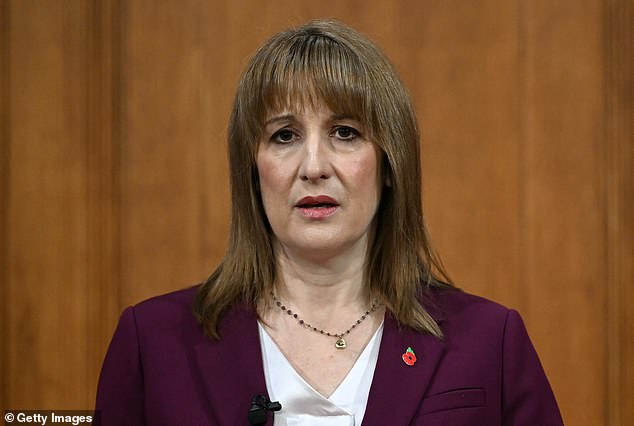
Rachel Reeves added: ‘I am not going to walk away because the situation is difficult. I was appointed as Chancellor to turn our economy around, and I’m absolutely determined to finish that job’
Ms Reeves said she wanted to dampen down ‘speculation’ about the Budget, which has already triggered some people to withdraw money from their pensions and dented confidence in the housing market.
But her decision to make the case for higher taxes without giving any indication of where they might fall last night risked triggering a fresh wave of speculation.
And experts questioned her claim that she bears no responsibility for Britain’s economic woes.
Andrew Sentance, a former member of the Bank of England’s monetary policy committee, said: ‘What Rachel Reeves won’t admit is that her decisions on public spending have caused the government’s financial problems. She has raised spending by £100billion a year relative to previous plans – hence the need for much bigger tax rises than the £40billion announced last October.’
Louise Jenkins, managing director at Alvarez & Marsal Tax, said a decision to raise the basic rate of income tax for the first time in 50 years ‘could end up as the defining move of this government’.
She accused Ms Reeves of ‘engineering a crisis’, adding: ‘Stop blaming everybody else. Breaking manifesto pledges isn’t forced upon you – it’s a cop out, a betrayal and a death knell for investment.’
Economist Paul Johnson, former director of the Institute for Fiscal Studies, said it was fair for Ms Reeves to blame some of the economy’s problems on the last government.
But he said it could not be used to justify Labour breaking its tax pledges as problems such as poor long term productivity could have been ‘predicted at the election or the Budget last year’.
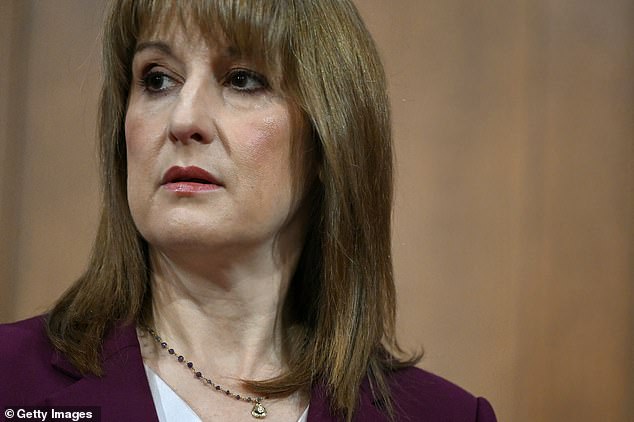
The Chancellor said the Budget would prioritise cutting NHS waiting lists, reducing government debt and tackling the cost of living. She said stabilising the economy and boosting growth could eventually pave the way for future tax cuts
He added: ‘We knew the risks when [Labour’s] tax promises were made. And so did she.’
Ms Reeves was also accused of driving inflation higher.
Official figures show inflation in the UK and the eurozone stood at 1.7 per cent in September last year – ahead of her first Budget as Chancellor the following month.
But while inflation in the UK has soared to 3.8 per cent since then, it has edged up to just 2.2 per cent in the single currency bloc.
Ms Reeves today admitted ‘inflation has been too slow to come down’ in the UK – seemingly ignoring the rise on her watch.
Economists laid the blame at her door, pointing to decisions that have driven up prices such as the Chancellor’s £25billion National Insurance tax raid on employers, a large increase in the minimum wage and bumper pay rises for public sector workers.
Simon French, chief economist at Panmure Liberum, said government policies may have added as much as 1.2 percentage points to inflation.
This suggests inflation could have been as low as 2.6 per cent now – paving the way for more interest rate cuts – rather than 3.8 per cent.
Julian Jessop, economics fellow at the Institute of Economic Affairs, said: ‘Rachel Reeves said that UK inflation has been too slow to come down. In fact, inflation has risen – largely because of policy choices made by the Labour government.’