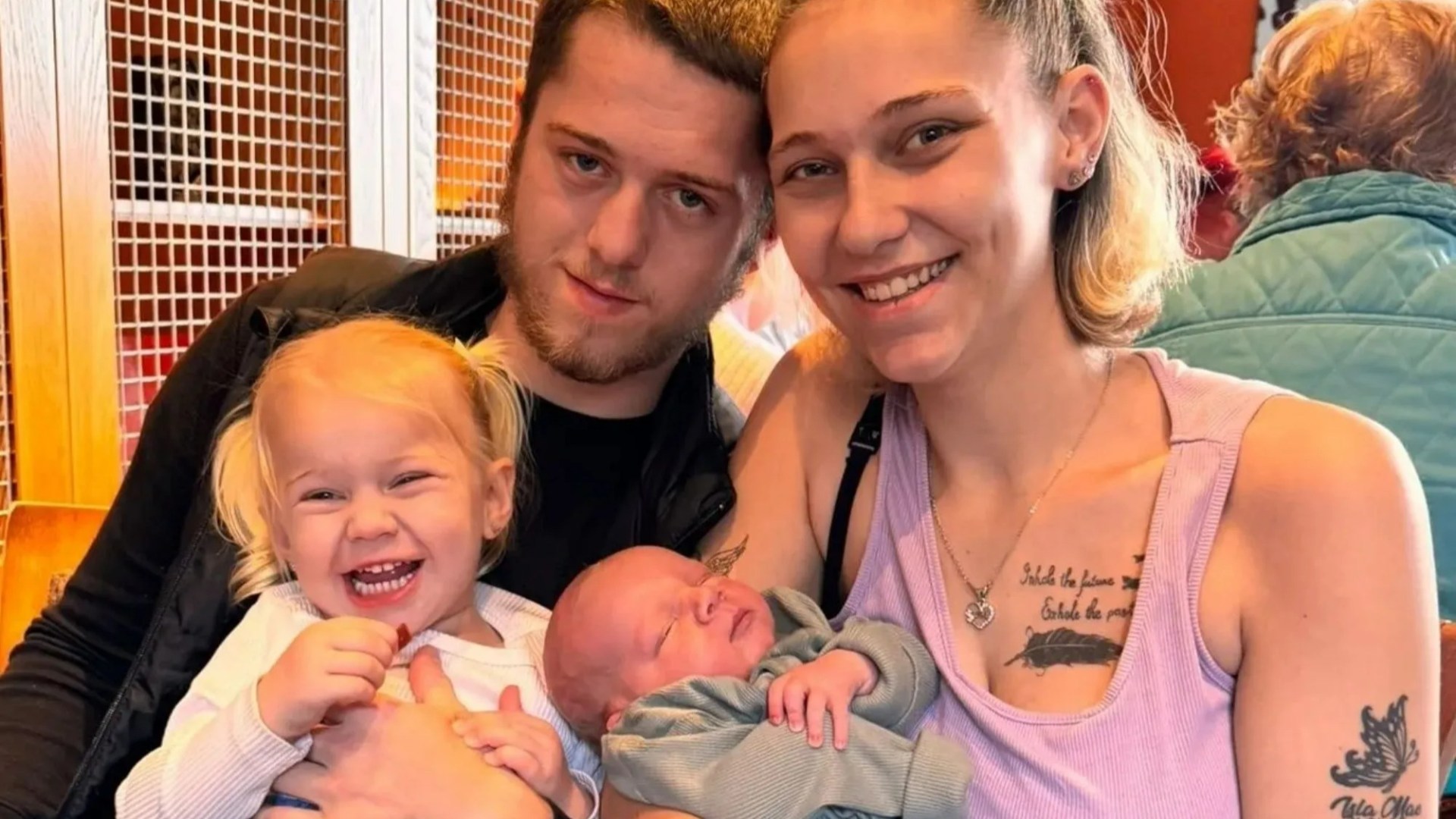
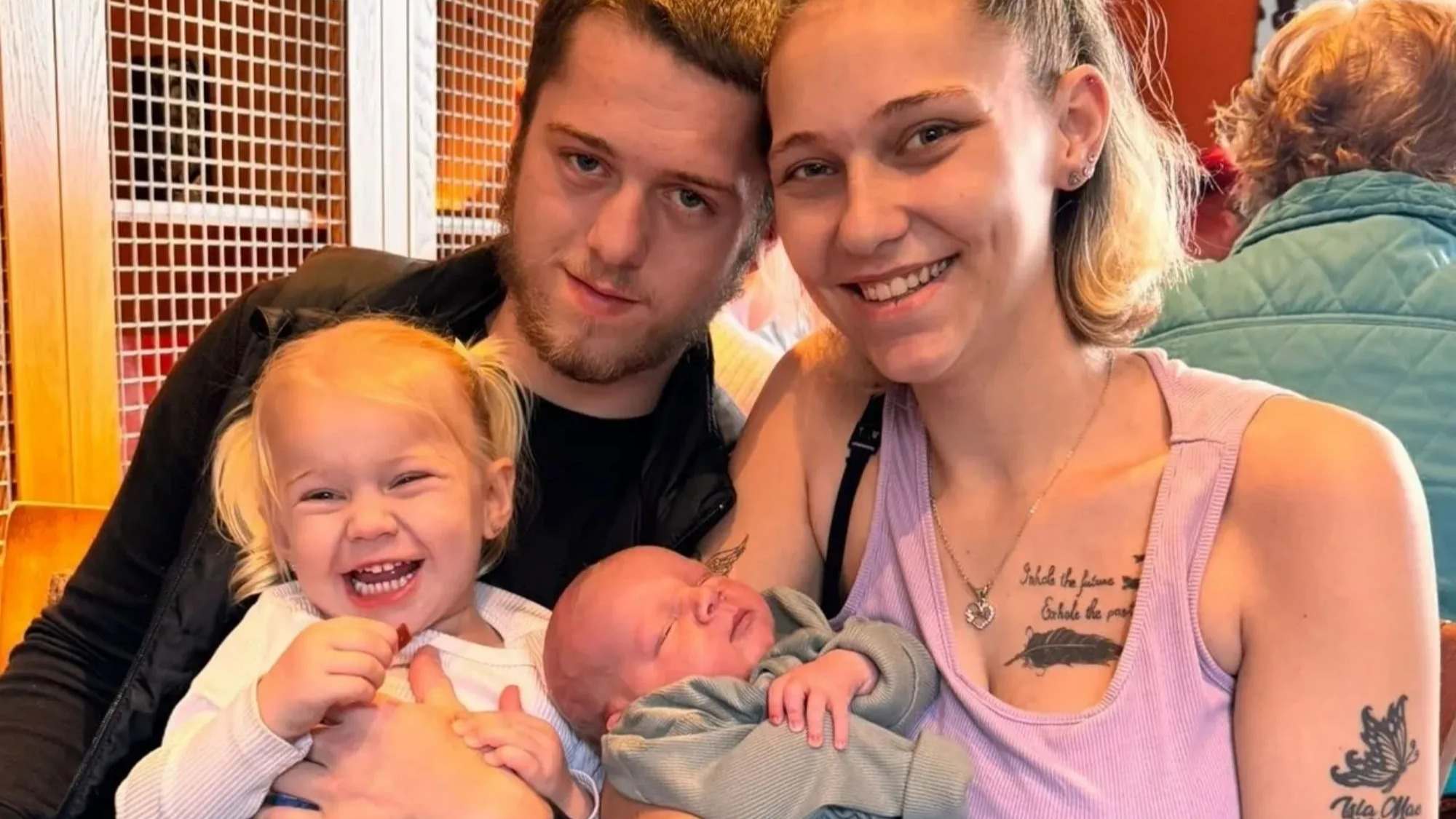
IT WAS a normal morning for Courtney Smith – movies in between naps with her two young children, Remy, two months old, and Isla-Mae, two.
“At 1pm I woke up from my nap and realised Remy hadn’t woken up for his next feed,” she tells Sun Health. “It just looked like he was sleeping.”
The next few moments would change Courtney’s life forever.
The 21-year-old had been home alone with the kids while her painter and decorator husband Harvey, 21, went to work in February 2024.
“We were cuddling in bed watching movies at around 10:30am,” Courtney, from Eastbourne, East Sussex, says.
“I was breastfeeding Remy and started to get a migraine, so decided we would all go for a nap once he was finished feeding.
“Isla-Mae fell asleep first, so I settled Remy down beside me and fell asleep.”
After realising Remy hadn’t woken for a feed, Courtney went to pick him up.
“I picked Remy up to try and wake him for his feed, but instead of waking up, he was limp and floppy,” she recalls.
Courtney called 999 and was instructed to perform CPR while husband Harvey rushed home from work.
Paramedics arrived and took over resuscitation attempts before rushing the tot to hospital.
At 4pm on February 11, doctors told the couple there was nothing more they could do.
They were brought back in to say goodbye to their son before he was pronounced dead.
Courtney, a part-time bar worker and cleaner, said: “I barely remember exactly what was said by the doctors, just that they’d tried to do all they could but Remy was still showing no signs of life and there was no more that they could do.
“I dropped to my knees and instantly broke down in Harvey’s arms.
“I couldn’t understand why this was happening to us or what I’d done wrong and instantly blamed myself for his passing.
“I remember them saying the situation was a lot like that of a SIDS passing but that we would know more after his autopsy.”
Sudden infant death syndrome, which used to be called ‘cot death’, is the rare passing of a baby with no explanation.
The NHS says it is not known why it happens, but some things can increase the risk, such as exposing them to cigarette smoke or sleeping with them on a sofa or chair.
The safest place for a baby to sleep is in their own separate sleep space, such as a cot or Moses basket, free from toys, blankets and pillows, the Lullaby Trust says.
“But many parents find themselves co-sleeping whether they mean to or they fall asleep together unintentionally,” the leading charity says.
It was confirmed two months later to be the cause of Remy’s death.
Courtney says: “The doctors assured me it wasn’t my fault and there was nothing I could’ve done to save him.
“I was devastated to get the conclusion of SIDS. I felt like it wasn’t a true answer and we still had a lot of unanswered questions as to why this happened to Remy.”
Harvey stopped working for several months as the couple spent most days in bed, barely eating and overwhelmed by grief.
“After losing Remy, our lives went downhill,” says Courtney.
Trying to get life back on track
“I couldn’t function on a day-to-day basis and had to send my daughter to her nanny’s as I felt I couldn’t look after her the way she deserved.
“Harvey left his work for the first few months that followed and we spent our days in bed not doing anything and barely eating.
“I just remember being an emotional wreck every day and trying to be strong every time I spoke to Isla-Mae but our phone calls and FaceTimes were always cut short as she’d ask where her brother was.
“And I physically couldn’t answer her so I’d just break down.
“After Remy’s funeral we started trying to get our lives back on track including getting our daughter back home where she belonged.
Before we lost Remy, I’d never even heard of SIDS… I’m sharing our story to raise awareness
Courtney
“I still have days where I can’t get out of bed or think about anything else but Remy and on those days I cuddle something of his and cry if I need to.”
Isla-Mae – now three – was just two years old when her brother died but Courtney says she still remembers details from that day.
Courtney said: “Isla-Mae was deeply impacted and she still remembers details from that day and I fear she will never forget them despite her only being two at the time.
“When an ambulance drives past she still asks if her brother is in the back of it and even tries to do CPR on her baby dolls.
“I struggle with what to do when she does this as she doesn’t understand.”
The couple had been thrilled when they discovered they were expecting Remy.
Courtney said: “I was instantly happy and knew he’d be so loved by all of his family especially his big sister.
What is sudden infant death syndrome and what can I do to avoid it?
Most sudden and unexplained deaths happen during the first six months of a baby’s life.
The exact cause is unknown, but a number of things are thought to be a factor.
- Infants born early or with a low birthweight are usually at greater risk of the syndrome.
- Baby boys are usually more commonly affected by sudden infant death syndrome.
- It usually happens when a baby is asleep, although it can happen when they are awake.
Experts think that it can occur at a particular stage in a baby’s development – therefore babies who are vulnerable to certain stresses can be more at risk.
This vulnerability could be due to being born prematurely or having a low birthweight, or for other reasons.
Getting tangled in bedding, tobacco smoke, a minor illness or a breathing obstruction can also be a factor.
How to sleep with a baby
The Lullaby Trust says:
- Sleep your baby on their back for all sleeps, day and night. This can reduce the risk of SIDS by six times compared to sleeping them on their front.
- Share a room with your baby for the first six months. This can halve the risk. The safest place for a baby to sleep is in their own clear, flat, separate sleep space, such as a cot or Moses basket, in the same room as you.
- Keep your baby smoke-free during pregnancy and after birth. Around six in every ten (60%) sudden infant deaths could be avoided if no baby was exposed to smoke during pregnancy or around the home.
- Never sleep on a sofa or armchair with your baby as this can increase the risk of SIDS by 50 times.
- Do not co-sleep with your baby if you or anyone in the bed has recently drunk any alcohol, smokes or the baby was exposed to smoking in pregnancy.
- Do not co-sleep if you or anyone in the bed has taken any drugs or medication that make you feel sleepy.
- Do not co-sleep if your baby was born prematurely (before 37 weeks of pregnancy) or weighed under 2.5kg or 5.5 pounds when they were born.
“She was so excited to have a little brother and couldn’t wait for him to arrive.
“Remy was a very happy, bubbly little boy with a smile that would make any pain disappear.
“He loved cuddles with his big sister who would always make him laugh and he loved listening to music with his daddy.
“He got to have one sleepover with his Nanny and Grandad before he passed which he absolutely loved.”
Courtney is now expecting another daughter, Bella-Rae, who is due in May.
Now she hopes sharing Remy’s story will raise awareness of SIDS, a condition she says she had never heard of before losing her son.
Courtney added: “I’m sharing our story to raise awareness on SIDS as it is not spoken about enough.
“Before we lost Remy, I’d never even heard of it despite him being my secondborn.”