Hannah Swan was doing everything right when it came to weight loss. She ate a clean diet consisting largely of fruit and veg, understood her macronutrients, took collagen and other supplements and was working out four times a week.
And yet every day, for years, the 45-year-old author and writer from Dorset faced the same problem: severe bloating that left her in agonising pain by the end of the day.
‘Sometimes I would wake up and I could see my abs and think I was fianlly making progress,’ she says. ‘But by the end of the day, I was extremely bloated and in so much pain. I can only describe the feeling as being suffocated inside my own body.’
The swelling was so extreme, friends and family assumed she was pregnant. ‘My boyfriend said: “Are you sure you’re not pregnant? You look like you could be six months along.“’
And appearances aside, Hannah’s social life was on hold. ‘I didn’t accept a dinner invitation for a good few years, because I understood I would be in pain. It’s just constant anxiety about feeling so awful.’
Looking for answers
Hannah’s confusion was largely down to the fact she was proactively living a ‘healthy’ life. She trained nearly every day, focused on healthy eating and had long left behind the party lifestyle of her younger years.
But when she started seeking answers, she was fobbed off with the same ‘diagnosis’ many women receive. ‘As soon as you hit 40, everything is put down to perimenopause,’ she says. ‘I went to the doctor and it was confirmed I was perimenopausal, and everyone said that would be the cause of my pain and bloating.’
‘I started to think: “Is this just what happens? Am I going to have to accept this is how I look and feel?” People were telling me it’s cortisol belly, related to your hormones, and you just need to get on with it.’
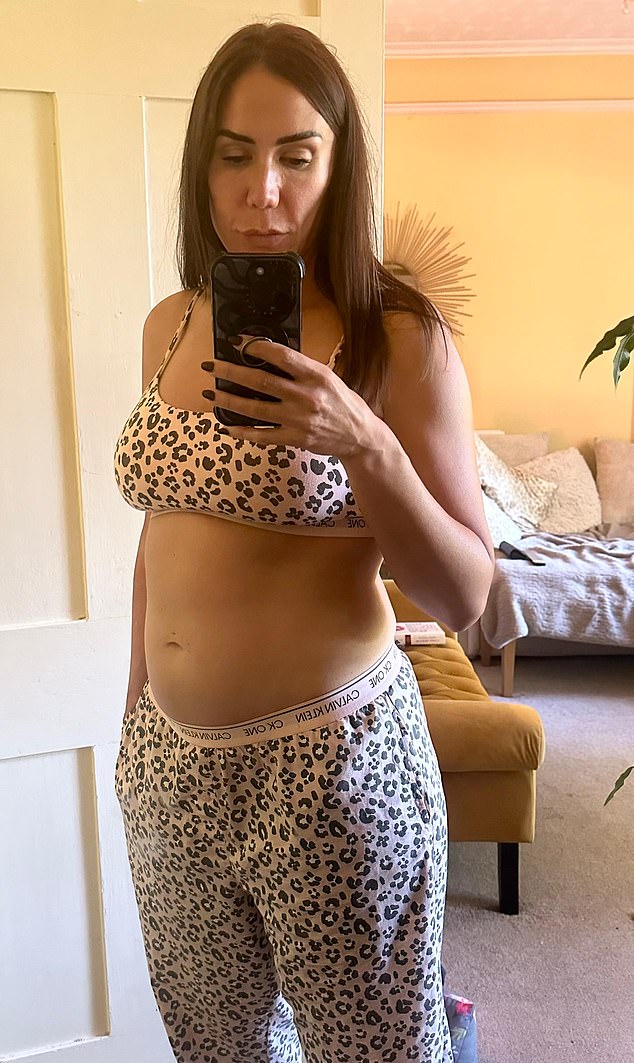
Hannah Swan suffered severe bloating, to the extent that her friends and family thought she was pregnant, which left her in agonising pain
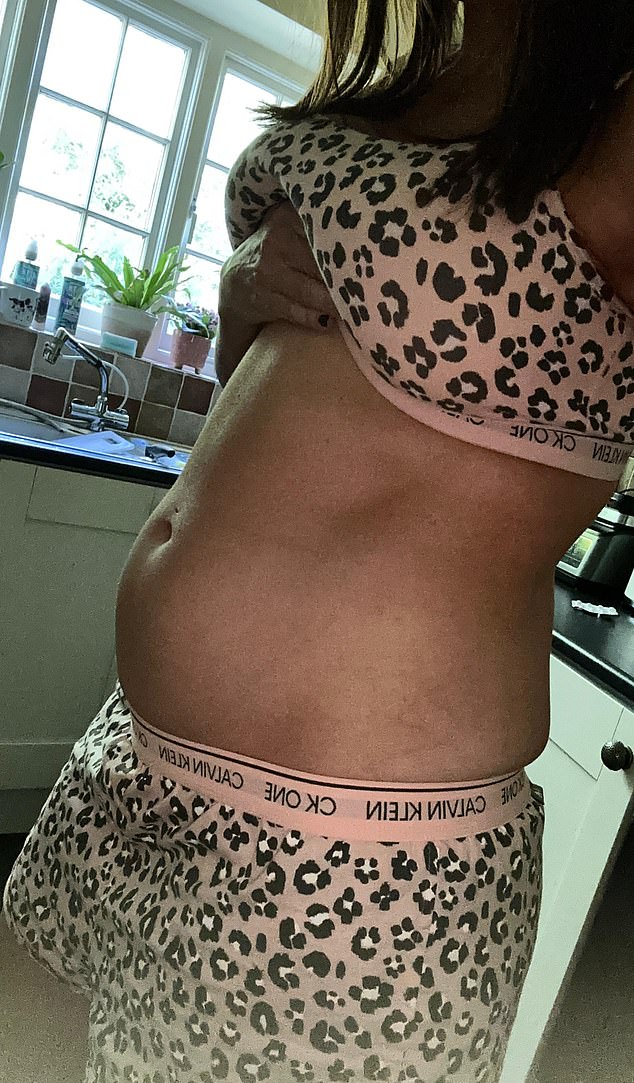
Hannah says she remembers thinking: ‘Is this just what happens? Am I going to have to accept this is how I look and feel?’
She tried calorie restriction, intermittent fasting, smoothies for breakfast instead of meals and a range of health supplements. At one point she even began questioning her workouts. ‘You get to the point where you’re like, should I switch out weight training for Pilates? Or should I just do my 10,000 steps instead?’
But nothing made a meaningful difference to the persistent pattern of swelling and pain around her stomach.
‘A lot of my friends who were struggling with perimenopausal weight gain started taking Ozempic, and they got amazing results. But then they were having side-effects such as hair loss, not to mention spending £200 a month.
‘I knew there must be another way, and kept thinking about my symptoms. When I woke up, I realised there were drastic differences in my bloating and pain depending on what I’d eaten the day before. And I started to think: “Maybe this is down to something I’m eating?“’
Identifying the issue
Eventually, searching for a clearer explanation for her symptoms, Hannah decided to try a YorkTest food intolerance test. She hoped it might reveal whether certain foods were triggering the bloating and discomfort she had been living with for years.
The results highlighted a number of specific foods her body appeared to react poorly to, including wheat, dairy, sugar and certain processed foods.
At first, she was sceptical. ‘I didn’t eat a lot of dairy anyway and wheat-wise it was really just sourdough.’ But when she looked more closely at the full list, the picture became more nuanced.
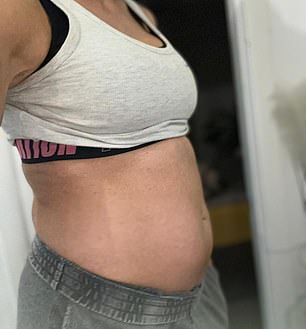

She says: ‘I realised there were drastic differences in my bloating and pain depending on what I’d eaten the day before’
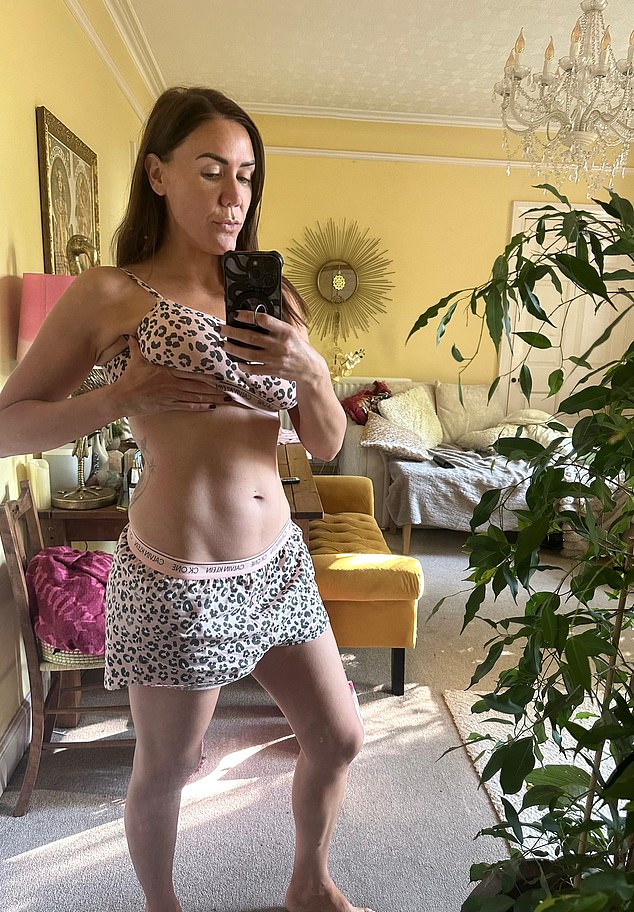
Hannah saw a huge improvement once she tweaked her diet to combat the bloating
It wasn’t simply about cutting out obvious culprits such as gluten or sugar. Instead, the results suggested that several smaller, more specific triggers might be contributing to her symptoms. ‘I can’t eat egg whites, but I can eat egg yolks,’ she explains. ‘I can’t eat tomatoes, because I struggle to digest them.
‘People will assume I’ll just cut out gluten, sugar and dairy. But it’s so much more nuanced than that.’
She also discovered that some cooking oils were causing problems. ‘I’m allergic to rapeseed oil and swapped it out for olive or avocado oil instead,’ she says.
Instant results
One of the most surprising aspects of the change was how quickly her body began to respond.
‘The moment that you take out anything nasty from the body, the body stops becoming inflamed,‘ she says. ‘So the moment that you take away anything that’s causing inflammation and pain, you’re going to start to feel relief.’
Within weeks, the difference was clear. ‘I lost 5kg, primarily from water weight and some fat,’ she says. ‘I also experienced significantly less bloating and noticed a marked improvement in my energy levels.’
For Hannah, the biggest lesson was how individual nutrition can be. Rather than following generic diet rules, she believes understanding your body’s specific triggers can make a significant difference.
‘You don’t imagine a tiny bit of sourdough or tomatoes can be doing this,’ she says. ‘But your body is a fine-tuned machine. It’s like driving a Ferrari: you need to know what fuel to put in it so it can perform.’
Instead of restricting food, she says she now focuses on nourishing her body properly. ‘It’s not about elimination; it’s about replacement,’ she explains. These days her diet includes more whole foods (especially fruits and vegetables) and far fewer processed ingredients.
The result? Hannah says she feels healthier and more energised than she has in years – and more confident in how her body looks.
Looking back, she only wishes she had discovered the cause of her symptoms sooner.
‘Knowledge is power,’ she says. ‘And now I’m just so relieved I have answers. And after all this time, I finally have the abs I’ve worked for and can show them off!’