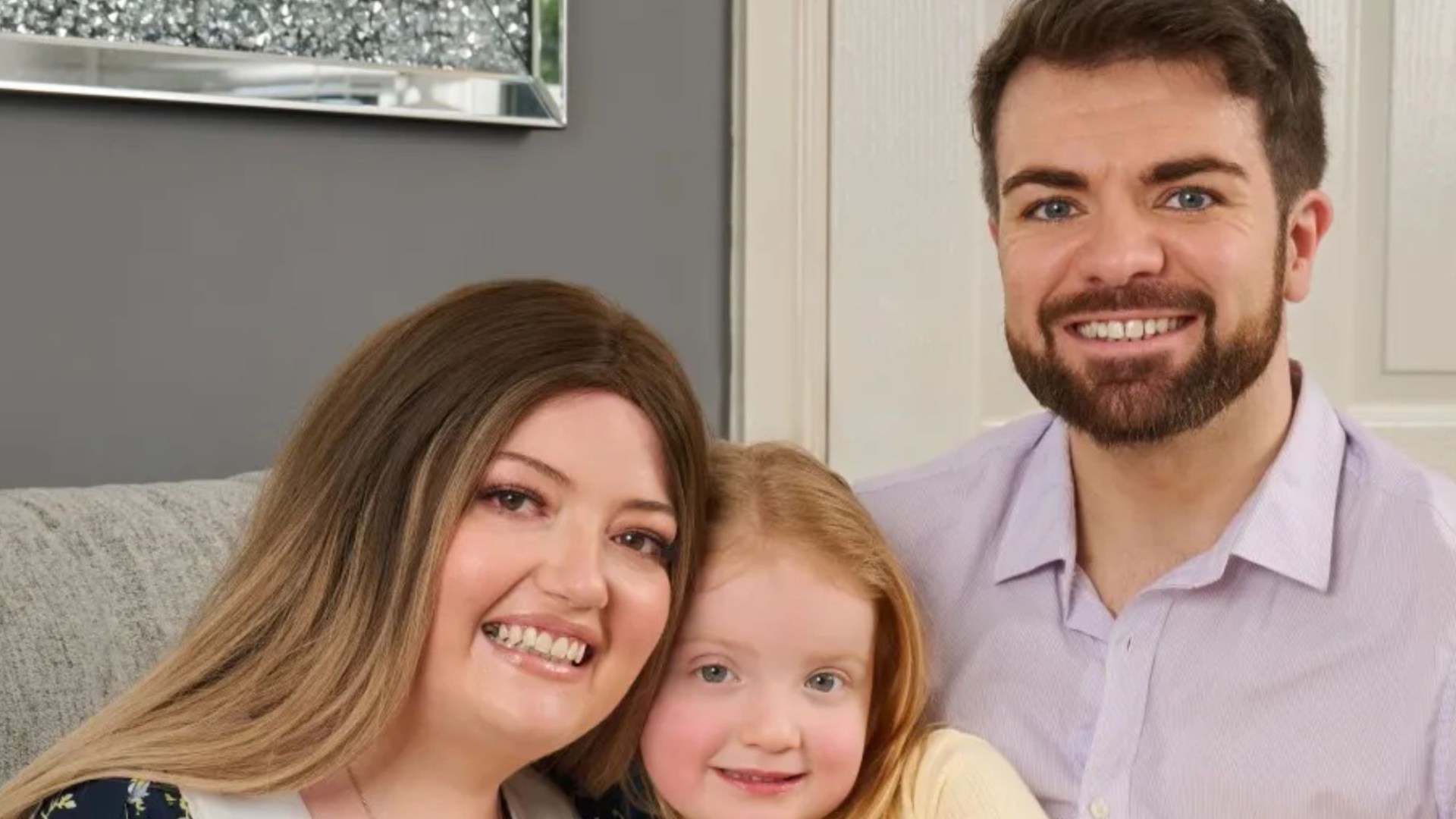
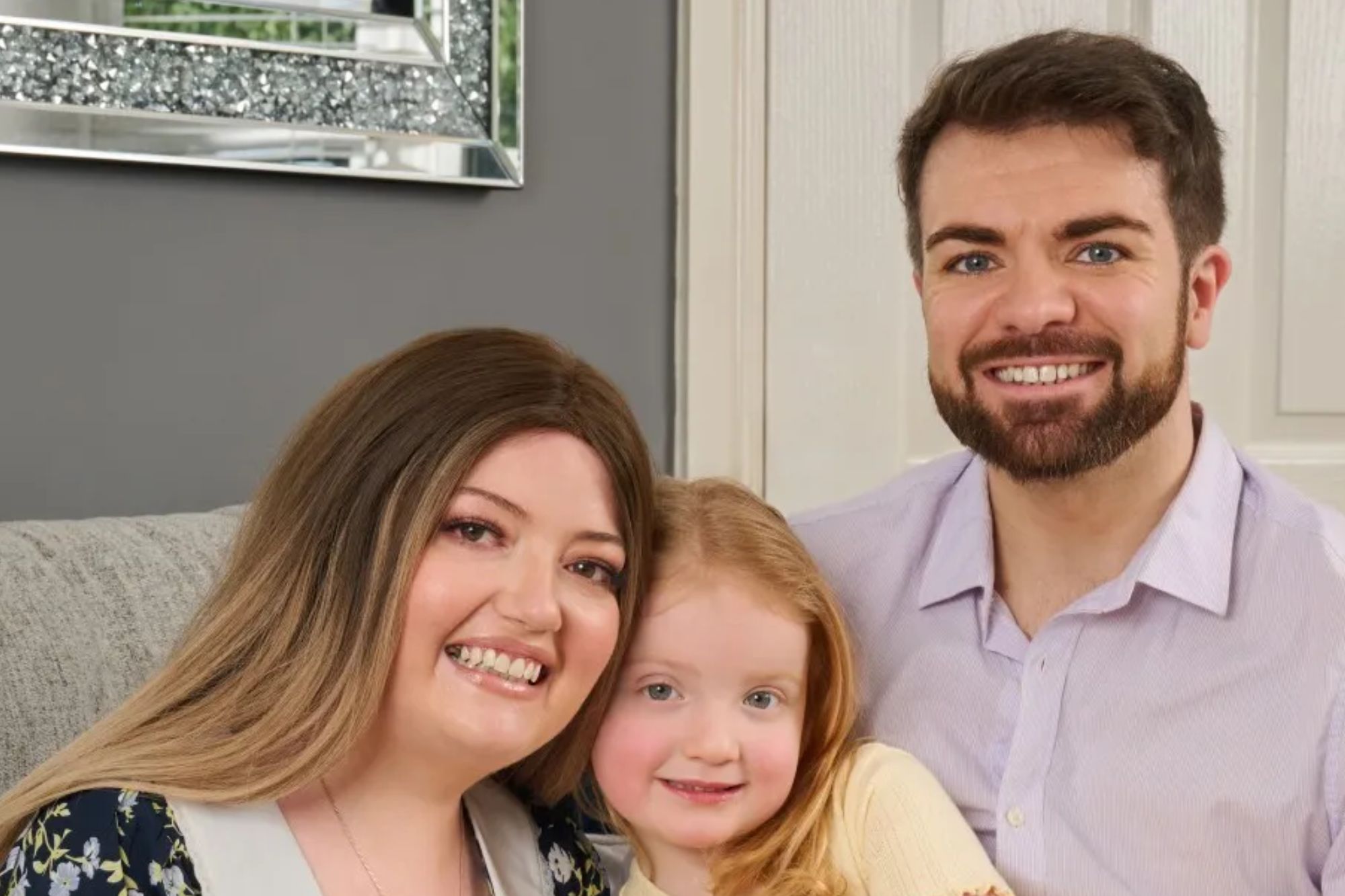
EVERY morning, once her daughter is at nursery and the house falls quiet, Laura Mahon sits at the kitchen table and writes.
Usually through tears, she fills page after page with words no young mum should ever have to think about.
Her hand trembles slightly as she grips the pen, but despite the pain and exhaustion, the 33-year-old is determined to finish the letter. Because one day, it may be the only way she can speak to her daughter.
The mum-of-one is living with glioblastoma – an aggressive form of brain cancer that claimed the life of late The Wanted singer Tom Parker aged 33 almost four years ago.
A glioblastoma is so deadly that most patients survive little more than a year, and fewer than 5 per cent live for five years or longer.
When Laura was diagnosed in December 2021, she was tragically given less than a year to live – odds she has thankfully beaten and then some.
While every day is precious, she hopes to still be here in September to see her daughter, Sienna, four, start primary school. It’s an important milestone because she knows there will be many she won’t live to see.
It’s a heartbreaking reality also facing Mel Schilling, 53, who revealed last week that her bowel cancer has spread to her brain and that her “light is starting to fade – and quickly.”
Married At First Sight star Mel is mum to Maddie, ten.
“It’s really brave that Mel’s sharing her story with the world,” Laura, from St Helens, Merseyside, says.
“It takes a lot to show yourself at your most vulnerable, and I admire her strength.
“As she’s voiced, there’s sadly nothing more that can be done, and that’s the harsh reality for people living with a terminal diagnosis. It’s absolutely heartbreaking.”
Laura only knows too well how life can change in an instant.
She was 20 weeks pregnant and working as a beautician when one morning she woke up and couldn’t feel her toes.
“I’d been falling over my feet and having headaches, but doctors initially said it was probably the baby pressing on a nerve,” she explains.
“I’d been having headaches and sickness, but I thought they were pregnancy symptoms.
“When I lost all feeling in my right leg, I knew something wasn’t right.”
Laura was sent to the Walton Centre in Liverpool, one of the UK’s leading specialist hospitals for neurology and neurosurgery, for an MRI scan.
It was there that doctors found a tumour embedded deep into her brain.
“My first thought was my baby,” she says.
“They told me they couldn’t perform a biopsy while I was pregnant, as it wasn’t safe.
“It meant I wouldn’t know the true diagnosis for months, but there was no way I was putting her at risk. She came first.
“Suddenly, the happiest time of my life became a time of fear and uncertainty.”
They told me it was stage four brain cancer and that my tumour had doubled in size since my first scan.
At 30 weeks pregnant and aged 29, Laura began losing movement in her arm and was struggling to walk, so she and partner Danny, 32, made “the toughest decision” to deliver her daughter six weeks earlier than planned.
“It was the scariest time of my life,” she says.
“I waited as long as possible to give Sienna the best chance at life, but every day I was losing a piece of myself.
“Each day, I couldn’t feel or move another part of me. It was torture. I was physically and mentally struggling to the point where the doctors agreed that delivering my baby at this time would bring the best outcome for both of us.”
Sienna was born on November 30, 2021, weighing just 3lb 4oz and received specialist care in NICU, while Laura remained in hospital having scans.
Then, just two days before Christmas, she received devastating news.
“They told me it was stage four brain cancer and that my tumour had doubled in size since my first scan,” says Laura.
“Because it was on my motor cortex – which controls movement – they couldn’t remove it entirely.
“I asked the consultant how long I had. He said it was unlikely I would see Sienna’s first birthday. My whole world just fell apart.
“It felt like I had been shot in the chest. I can’t even describe what hearing that does to a person.
“One million thoughts went through our heads: ‘How do we tell our parents? What about Sienna?’
“We both just cried.”
Despite the devastating prognosis, Laura was determined to stay alive for as long as possible.
She married Danny, a senior analyst at United Utilities, the following month before beginning an intense six-week course of chemotherapy and radiotherapy, , which would potentially extend her life expectancy from 12 months without treatment, to 18 months.
But the gruelling treatment pushed her already frail body to its limits.
What are the symptoms of glioblastoma and how soon do they show?
Glioblastomas are the most common brain tumour in adults, while also being very aggressive and deadly.
Brain Tumour Research says tumours increase pressure in the skull, causing headaches.
Symptoms to look for are:
- Headaches
- Loss of appetite
- Nausea and vomiting
- Loss of balance
- Mood swings
- Problems speaking
- Problems with memory or concentration
- Seizures
- Impaired vision
The symptoms can initially be quite non-specific, meaning they could be mistaken for lots of other conditions- even stress or a hangover.
The brain controls so many different functions that symptoms can vary greatly depending on where in the brain the tumour is.
Glioblastomas are very fast growing. Once found, experts can see them double within seven weeks.
But, according to Dr Stephen Bagley, assistant professor of medicine at Penn Medicine, the first spark of glioblastoma in the brain remains something of a mystery to medical experts.
One study concluded that a glioblastoma starts growing 330 days on average – almost a year – before a diagnosis.
Another found that there are changes in immune function up to five years before a diagnosis, with markers in blood samples – but symptoms only occur three months prior.
“I couldn’t walk and had to use a wheelchair – I felt sick all of the time,” she says.
“I was in a very bad place physically and mentally, but I was determined to continue with the treatment.
“You just spend all your time recovering. You’re so ill and drained that all you can do is stay in bed with your thoughts: ‘Is this working? Am I going to survive?’
“It’s torture, but when something like this happens to you, you can either accept it or not. I realised I couldn’t change anything, so I made the decision to enjoy the life I have left and make as many happy memories as possible for my family.”
HEARTBREAKING DECISIONS
That was when Laura made the heartbreaking decision to create a special memory box filled with letters, cards and gifts for her family.
“I’ve written letters to Danny and Sienna,” she says. “It’s the hardest thing to do, but I want them to have something from me and to remember all the lovely things we did together.
“I want Sienna to know how much I loved her on every birthday, so she has cards for every year until she’s 21 and a piece of my jewellery for each present.”
Sadly, controlling the progression of her illness is something Laura can’t do.
Even though I’m not ready to die yet, I suffer every day.
In 2023, she exhausted all available NHS treatment options and was told to “go home and make memories”. While she still has scans and medication aimed at reducing swelling around the tumour, there are no further life-extending treatments available.
Recent tests have shown the tumour has grown and is now stretching across several lobes of her brain, affecting her speech, memory and mobility.
Understandably, it’s devastating news for Laura to process.
“If I’m honest, I have more bad days than good,” she admits.
“A really bad day would be having seizures where your whole body convulses. It takes such a huge toll on the body. I have constant headaches and nerve pain that feels like my body’s burning.
“Some days I just cry and go to bed early, but I hate that because I feel like I should be with Sienna.
“I try my hardest to be positive, but I’ve been battling stage four cancer for nearly five years, and even now I still get upset when I get bad news or have a bad day.”
One of the most painful realities Laura faces is the difficult conversations she has with Sienna.
“She’s asking more questions now that she’s older,” Laura says. “She’s never known her mummy to be well, and that breaks my heart.”
Along with seeing Sienna start school, Laura hopes to fulfil another dream – taking her daughter to Disneyland.
“She’s obsessed with being a Disney princess,” Laura smiles.
“Danny actually took me there for our first holiday together, so it’s a place that holds special memories for us. I hope we can get back there for Sienna as a family.
“I just want to do as many nice things as possible. I want her to look back on this one day and see what we did for her, and for her to see I didn’t give up without a fight.”
Alongside making precious memories with her daughter, Laura has dedicated time to raising awareness about brain tumours.
She has won the Pride of St Helens Courage Award, and last year received a British Citizen Award for using her social media to raise global awareness of brain tumours.
Laura knows her future is limited, but when the time comes her priority will be to die with dignity, and she hopes the End of Life Bill passes in time.
“Even though I’m not ready to die yet, I suffer every day,” she says. “I want to die as peacefully and painlessly as possible, not just for my sake, but for Danny and my family’s. Without assisted dying, I’m at the mercy of end of life care.
“I don’t want to feel my body shutting down slowly, and there’s comfort in being able to die at home rather than travel abroad. Anyone who’s terminally ill and suffers daily should have that choice.”
- Follow Laura on Instagram @lauradowntherabbithole. To donate to her page, visit GoFundMe here