WHEN the trauma bell rang out, nurse Erica Hutchinson knew exactly what it meant… a child’s young life hung in the balance.
It was an all too familiar sound, but what followed was something eight years of nursing could not prepare her for. The patient fighting for his life was Erica’s son, Kason, seven, who had been rushed in with horrific injuries.
As the realisation dawned, the 37-year-old’s world came “crashing down” around her while on shift at the ICU.
“I gasped and burst into tears,” she tells Sun Health.
“I knew it was Kason, and I knew he would’ve been close to death for that kind of alarm call.
“I was hysterical.”
Kason was back at their family farm in rural Missouri, US, when the horror unfolded on a freezing cold day in January 2024.
He and his older brother Wyatt, 13, were left in the trusted hands of their good friend and neighbour, Mike Hill, 40, while their parents were working.
Erica had driven just over an hour to start her shift at Mercy Hospital in Missouri, while her husband, Nathan, 36, was a farmer and mechanic.
The mum-of-two adds: “It was -17 outside and with schools closed due to snow, the boys were home for the day.
“All the farm equipment had frozen, so Mike was also going to help Wyatt start the tractor and feed the cows. Usually, Kason would watch nearby.”
When Kason went to try and light a wood stove “like his Daddy did”, the dungarees he was wearing that day caught alight.
“Kason was only alone for a few minutes,” mum Erica says. “Our world changed in the blink of an eye.
“I want to urge parents reading this, if you have a wood stove or any fire, never leave your children unsupervised, not even for a second.
“And keep your kids away from polyester clothing, it’s highly flammable.”
Wyatt and Mike saw Kason running out of the garage, screaming.
Quick-thinking Kason had pulled his beanie up over his face, protecting it – as Mike rushed to extinguish the flames engulfing his body.
Just 45 minutes into her shift, Erica’s phone rang. It was Wyatt, the panic in his voice was palpable.
Erica says: “He said, ‘Mum, Kason was burned’.
“I thought maybe he’d touched the stove or spilled something hot.
“I asked how bad it was, but Wyatt went silent. Mike grabbed the phone and told me it was really bad. My heart sank.
“I told him to bring Kason to my hospital because we had a burns unit. I tried to stay calm, telling myself it’d be a small burn and that Kason was okay.”
Kason was blue-lighted to the hospital, where staff sounded the trauma alarm, to alert staff to the incoming, critical case.
“I heard the bells for a paediatric level one trauma,” Erica recalls.
“At that moment, I knew it was Kason. I begged the nurses to help me see him, but they wouldn’t show me him.
“They told me the photos from the ambulance were too distressing.”
As doctors fought to stabilise Erica’s son, she waited helplessly, comforted by her supervisors until Nathan arrived from work an hour later.
When the trauma team finally briefed her, the news was devastating.
Burns 101
Your skin has three layers.
The outer layer (epidermis), the dermis (which contains vessels, nerves, hair follicles) and the deeper layer of fat (subcutis).
A full thickness burn is when all layers of skin are damaged, while a superficial burn is when only the top layer has been affected.
The NHS says to treat a burn:
- Immediately get the person away from the heat source
- Remove any clothing or jewellery, including babies’ nappies, but do not move anything that’s stuck to the skin
- Cool the burn with cool or lukewarm running water for 20 to 30 minutes – do not use ice, iced water, or any creams or greasy substances like butter
- Make sure the person keeps warm by using a blanket, for example
- After cooling the burn, cover the burn by placing a layer of cling film over it – a clean plastic bag could also be used for burns on your hand
- Use painkillers such as paracetamol or ibuprofen
- Raise the affected area if possible to reduce swelling
- If it’s an acid or chemical burn, dial 999, carefully try to remove the chemical and any contaminated clothing, and rinse the affected area using as much clean water as possible
You should go to a hospital A&E department for:
- All chemical and electrical burns
- Large or deep burns – any burn bigger than the injured person’s hand
- Burns that cause white or charred skin – any size
- Burns on the face, neck, hands, feet, any joints or genitals
Source: NHS
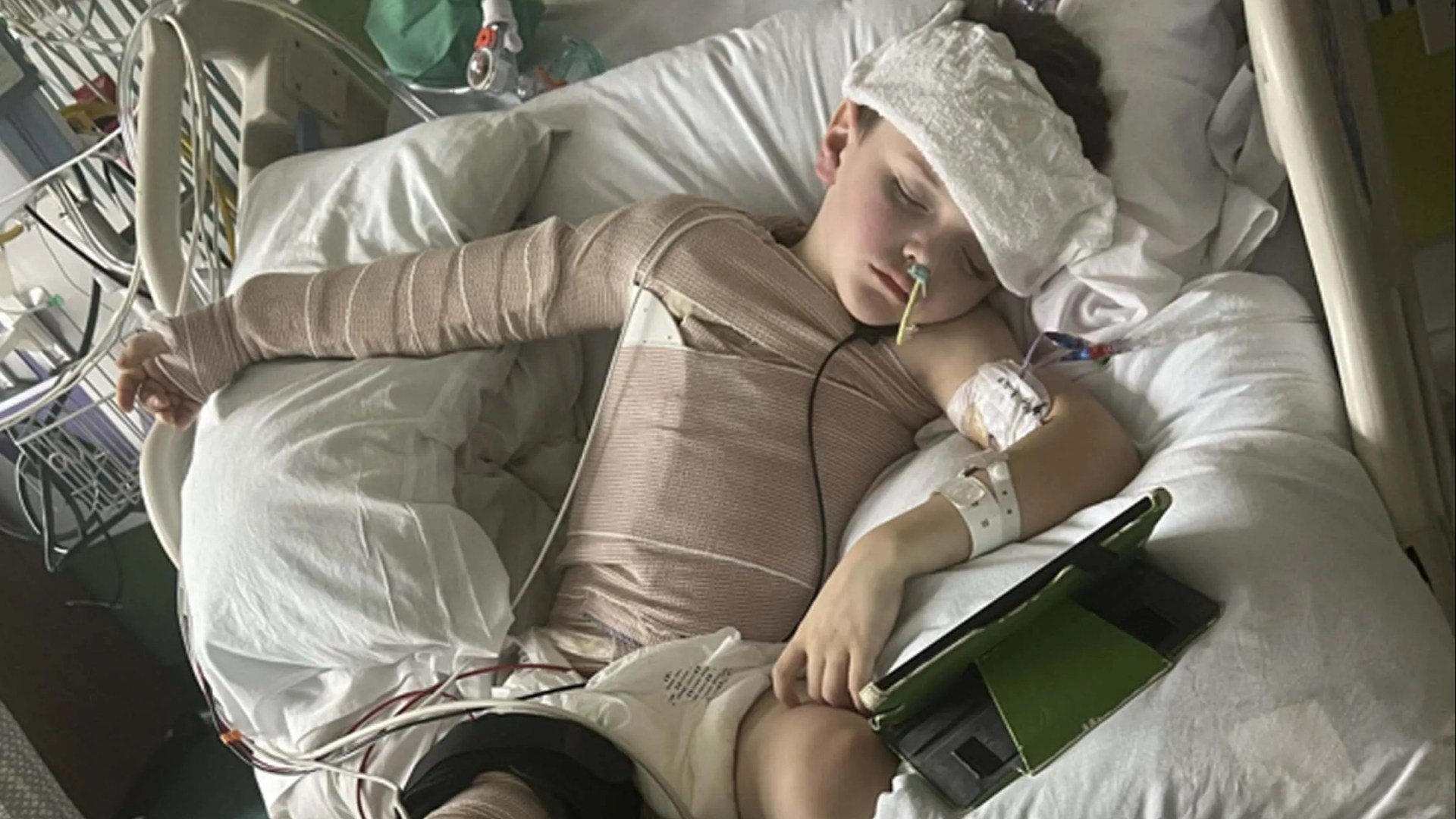
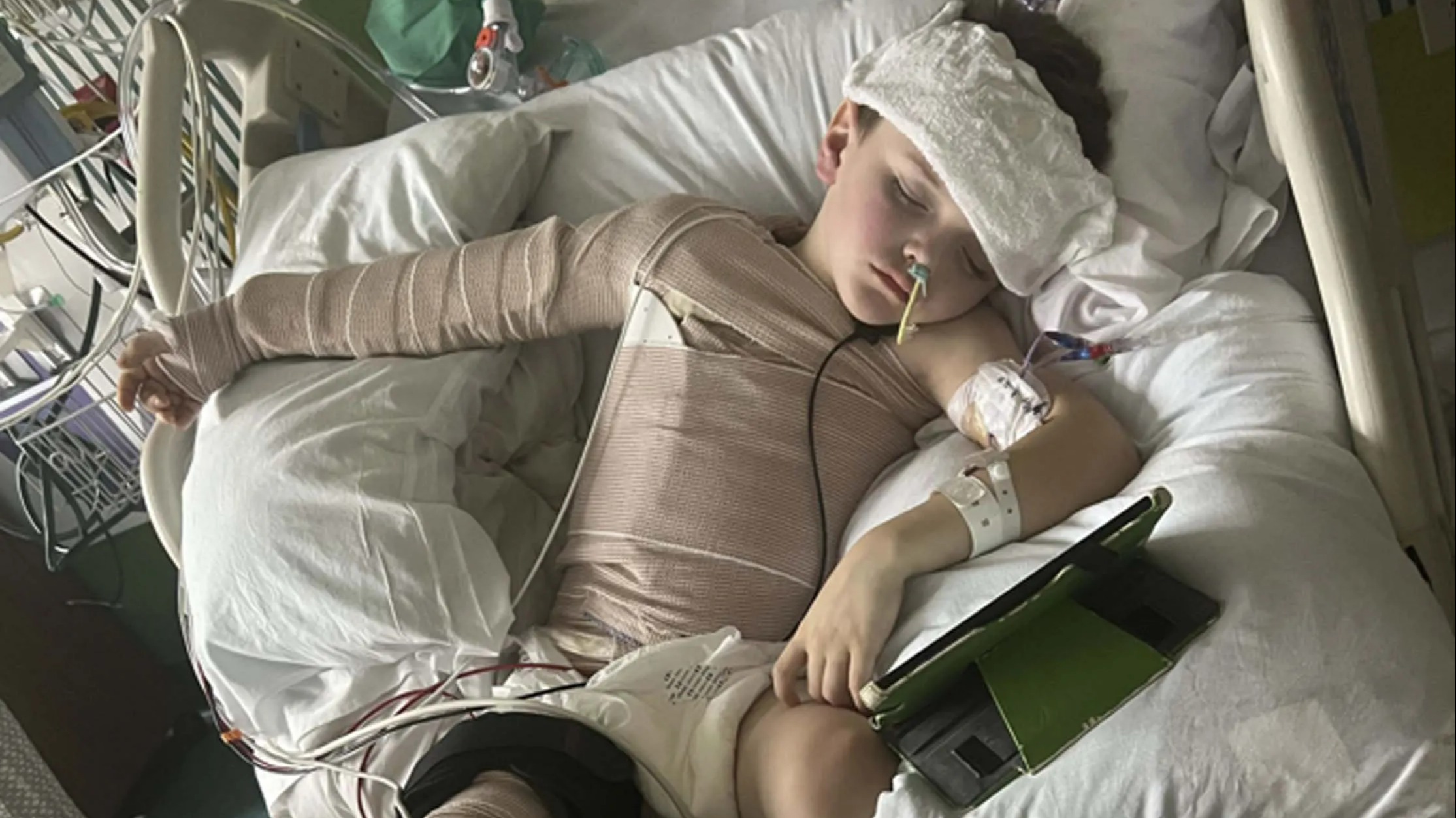
Kason had burns covering 40 per cent of his body – on his chest, shoulder, arm, elbows, bum cheek, and down both legs to his knees.
They were full-thickness – meaning all three layers of his skin had been destroyed.
Erica was told her boy need to be moved to a different hospital, as his injuries were too severe and needed doctors who specialised in burns to treat them.
The mum says: “They told me Kason had 40 per cent full-thickness burns. It was too severe for our hospital to treat.
“I was in shock. I couldn’t stop sobbing. I began begging them to treat Kason there, as we had a burns unit and I trusted everyone.
“I’d been a nurse there for eight years. But they said he needed to go to Shriners Children’s Hospital in Ohio. Kason was too young and needed better care.”
I didn’t know if he was going to live. It was the hardest thing I’ve ever been through.
I slept next to him every night in the hospital
Erica Hutchinson
Before Kason was flown out, Erica was finally allowed to see her little boy.
As she walked into the room, he was covered in blankets.
She says: “I didn’t dare look underneath them. He’d been sedated so was confused as to where he was.
“We broke down into tears as I told him he’d been burned.
“Kason told me he tried to start a fire on the woodstove, just like Daddy does. My heart just broke.”
Erica discovered earlier that morning, Kason had been told to stay inside their garage on their farm, which had a small kitchenette and a fireplace.
Wyatt was helping Mike outside with the tractor and Kason was playing on his Nintendo switch inside.
Feeling cold, Kason remembered what his Dad always did, and fetched the propane to light the woodstove.
But the flames quickly caught his dungarees, setting him alight.
Erica says: “Mike helped save my son’s life. But Kason’s body had been ravaged.
“As a mother, I was wracked with guilt. He’d been left alone in the workshop only for a moment. I should’ve been there.”
‘A miracle’
The next day, Kason was airlifted to the specialist children’s hospital, where he was placed under sedation and began undergoing graft surgeries.
Erica says: “As a nurse, I knew what was happening. I knew what his injuries meant.
“I didn’t know if he was going to live. It was the hardest thing I’ve ever been through.
“I slept next to him every night in the hospital.
“He kept waking up screaming from nightmares, crying out in fear. I would just hold him.
“I went from being a nurse caring for others to being the mother on the other side of it all, feeling helpless.”
In March 2024, after two months in hospital, Kason was finally allowed home early under Erica’s care because of her medical background.
He had to re-learn how to walk, and slowly built his strength back, thanks to the support of the “amazing” medical team caring for him.
“As we left the hospital, doctors told us Kason was a miracle,” Erica says.
“But it was really tough. Still, we made it work. I did his bandage changes and helped him heal, little by little. But he wanted his old life back so badly.”
So impressive was Kason’s recovery that he was allowed to go back to school just a month after coming home from the hospital – three months after his accident.
The burns team visited his classmates beforehand, educating the students about his compression bandages and showing them photos of Kason’s burns.
Erica says: “They were incredible. Because when Kason returned, none of the kids stared or asked too many questions. He settled back in amazingly.”
Slowly, Kason regained his confidence and was swimming, playing with friends and lifting his arms properly six months after the accident.
The family are still close friends with Mike and don’t blame him for the accident.
But Erica has since discovered the dungarees Kason had worn were highly flammable.
Erica says: “I found out they were made of polyester, which is an extremely flammable material.
“It made me sick thinking how many other kids were wearing polyester. It burns really fast.
“Parents need to know what fabrics their kids are wearing, especially around fires.
“That day we could’ve lost Kason. He survived and he really is our miracle. I couldn’t be more proud of him.”