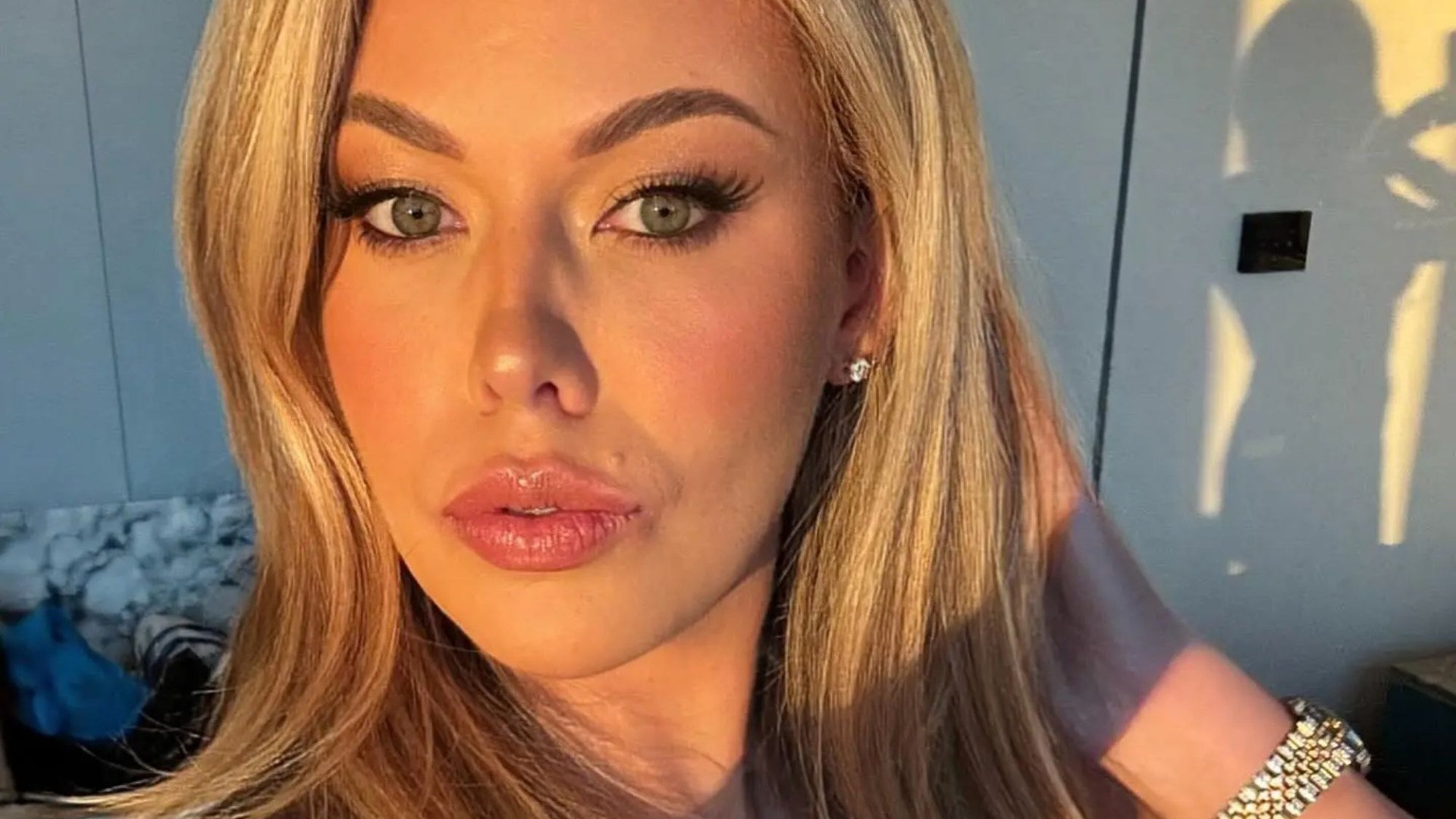
AS Felicia lay asleep in her bed, she was woken up to the sensation of being on fire.
At first, the Miss Australia beauty pageant winner assumed she was shot, but later realised grenades were being thrown through her bedroom window.
It was February 2016, and Felicia Djamirze had gone to bed as normal alongside her boyfriend before the assault took place.
At 5 am, she woke up to a burning sensation across her face and arms and realised she was in serious danger.
“I woke up and I could just feel my face, and my hand was just on fire, and I actually thought that I had been shot in the face,” Felicia told MamaMia.
“I thought it was a home invasion. And I’m laying there and I’m thinking, f—k, I’ve been shot in the face, but I’m still alive, so I’m just gonna lay here for a bit and pretend to be dead and just see what happens.”
READ MORE REAL LIFE STORIES

Felicia began to make her way to the walk-in wardrobe for shelter, but she was soon met by a police officer holding a gun to her face, she claims.
Masked police officers stormed the couple’s home, and 28-year-old Felicia was charged with drug trafficking alongside her boyfriend — an alleged gang associate.
Her boyfriend was said to be part of the Rebels, an outlawed motorbike gang in Australia.
But now, Felicia has revealed how she went from wearing a crown and sash as Miss Australia to a woman everyone wanted dead.
She revealed how she grew up in a rough neighbourhood called Blacktown, where it was normal to see violence and addiction on the streets.
But as a teenager, she was often told her good looks would take her far, and she soon began to get involved in beauty pageants.
It allowed her to escape the hardships of her hometown and she found herself representing Australia on the international beauty pageant stage as Miss Australia International, and would go on to win Miss Australia three times.
But when she moved to Sydney, Felicia found herself surrounded by unsavoury characters in the nightlife scene.
“I feel comfortable around people that have grown up rough, like I have,” she told former homicide detective Gary Jubelin in the latest episode of his I Catch Killers podcast.
“We’re not only in the same book, we’re on the same page.”
Domestic abuse – how to get help
DOMESTIC abuse can affect anyone – including men – and does not always involve physical violence.
Here are some signs that you could be in an abusive relationship:
- Emotional abuse – Including being belittled, blamed for the abuse – gaslighting – being isolated from family and friends, having no control over your finances, what you where and who you speak to
- Threats and intimidation – Some partners might threaten to kill or hurt you, destroy your belongings, stalk or harass you
- Physical abuse – This can range from slapping or hitting to being shoved over, choked or bitten.
- Sexual abuse – Being touched in a way you do not want to be touched, hurt during sex, pressured into sex or forced to have sex when you do not consent.
If any of the above apply to you or a friend, you can call these numbers:
Remember, you are not alone.
1 in 4 women and 1 in 7 men will experience domestic abuse over the course of their lifetime.
Every 30 seconds the police receive a call for help relating to domestic abuse.
Felicia soon found herself in a relationship with a bikie nominee (a person proving their worth to get into a biker gang) who had a violent side and addiction to drugs that almost cost Felicia her life.
But these problematic associates had dark sides.
“I was strangled. I was shot at… being chased around a house with a loaded shotgun,” she said.
After escaping the horrific relationship, Felicia found love again with another ‘bikie’.
She enjoyed the riches that came from being with a drug dealer, but it proved to have serious risks when the police forced their way into their home.
After the grenades were thrown, Felicia was left badly injured with third-degree burns to her hands and face and claims police refused to get her treated in an appropriate amount of time.
“I was not given any burns first aid,” she said, explaining police originally said ambulance would only be called should they unlock their phones.
“We didn’t unlock the phones. More than 40 minutes went by. I was in immense pain. Finally, they decided to call the ambulance.
“It just was all a big f—g balls up, ridiculous situation.”
As Felicia was wheeled out to the ambulance, she spotted military tanks on her front yard.
DEATH THREATS
Felicia was rushed to the hospital, but her ordeal was far from over; she received countless death threats while there.
She said: “If you injure a drug dealer, (the) social perception is ‘f—k them. They deserved it’.”
“When I was in hospital, I actually got a lot of death threats, to the point where they had to change my name to an ‘X’ in the system because people were calling up and threatening me.
“And I really didn’t care, at the time I was on that much medication.
“I just thought you bunch of losers who know nothing about life and nothing about society, and who are very narrow-minded. So yeah, that was a pretty hectic experience.”
Felicia described her recovery as “horrific” as she had to undergo multiple surgeries to treat the damage done to her hands and eye while being handed a three-year sentence, to be served in the community.
As Felicia began to heal, she also decided to have a fresh start and studied to be a social worker.
You are not valued for the skills that you have gained post-conviction, you are seen as your worst mistake forever.
Felicia Djamirze
As her counselling practice took off, Felicia became an advocate for women’s justice, and hopes that sharing her story will help other former criminals re-enter society and debunk the stereotypes that comes with having a criminal record.
“It was honestly terrible. There is so much discrimination that goes on,” she said.
“You are not valued for the skills that you have gained post-conviction, you are seen as your worst mistake forever.
“And I think that women are disproportionately affected by this because we go into more caring roles. So there’s a lot of checks.”
She added: “You shouldn’t have to lie and hide your past because you fear being judged or discriminated against.”
When her partner was released in February 2024, the pair rekindled their relationship on one condition, no more crime.