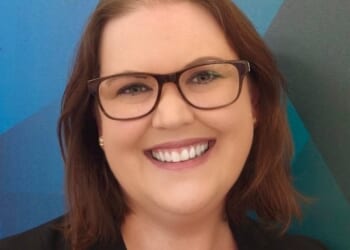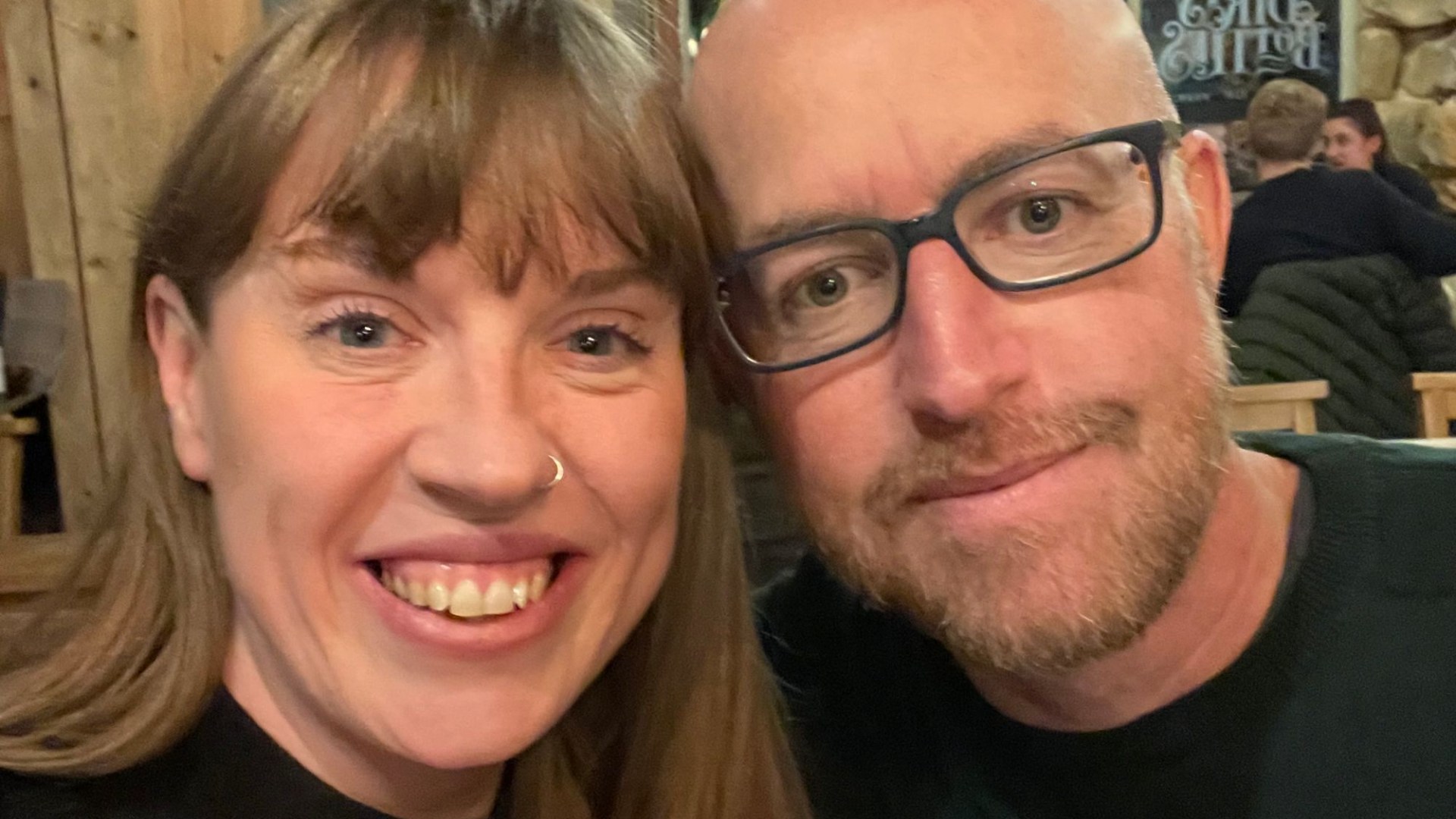
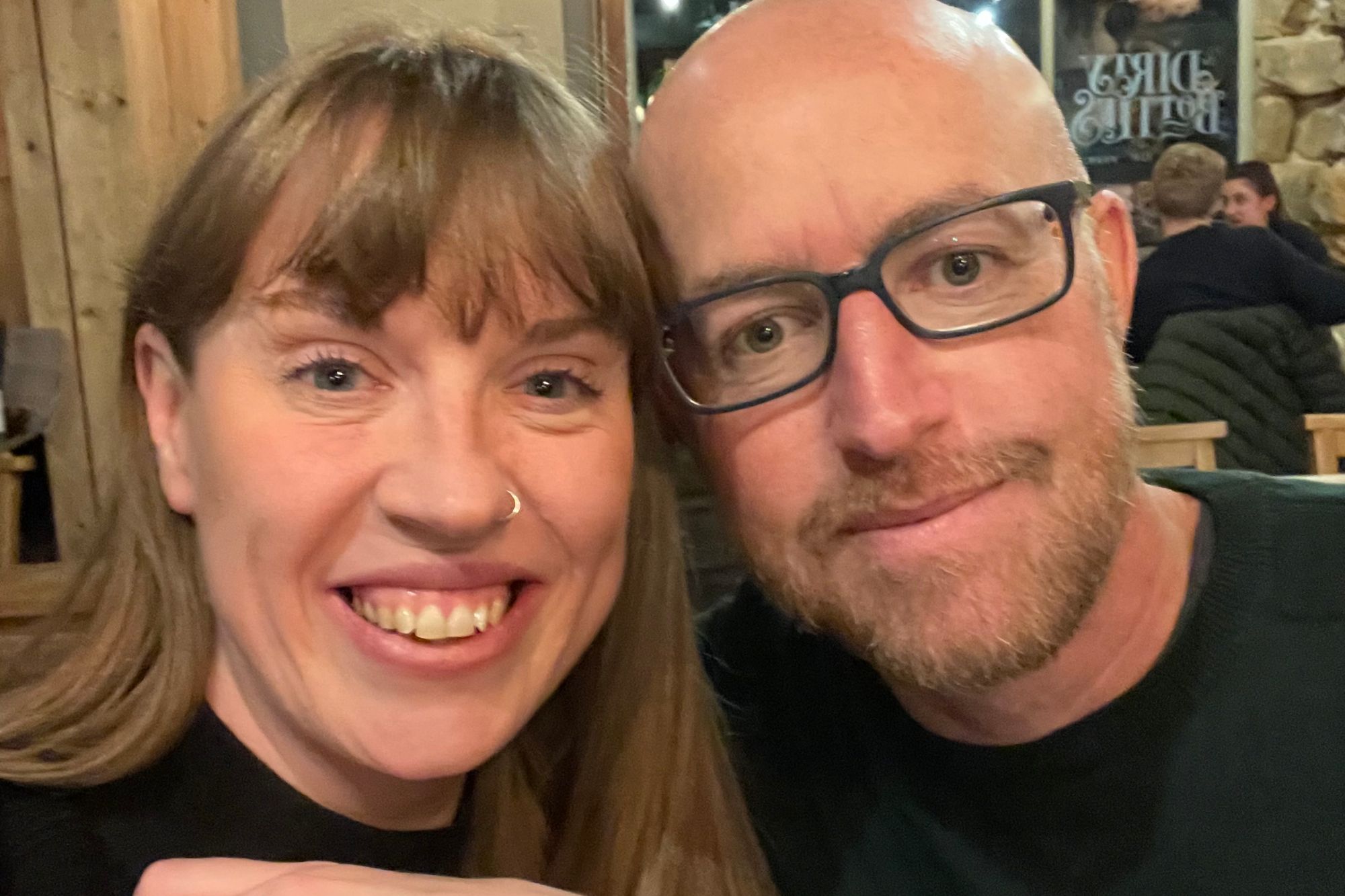
ON the night Sarah Trushell’s husband Ian died, she was trolled by keyboard warriors.
She had reached for her phone and poured her broken heart out to tens of thousands of strangers on TikTok, her video going on to be watched millions of times.
“I’d been publicly charting my journey towards widowhood for over a year after Ian’s diagnosis of bowel cancer, aged 47, and now I was a widow, it felt natural to share that,” says Sarah.
“I took so much comfort from my online ‘village’ that social media was instinctively what I turned to at that desperately low moment. What I wasn’t expecting at such a vulnerable time, was the hate I received for daring to be online after losing my husband.
“I was told I was disrespecting his memory and profiting from his death. Before then, I’d had the odd unpleasant comment, but nothing like this, and I’d had Ian beside me to help brush it off. Now, I was alone, grieving and facing a barrage of hate.
“I was so upset, and realised I’d been naive about how divisive widows sharing on social media can be.”
Welcome to the world of the griefluencers, a growing corner of social media, where women preparing to lose a partner, or who are already widowed, share their lives – to mixed reactions.
Hashtags including #widow, #widowtok and #widowlife bring up hundreds of thousands of results on Instagram and TikTok, and it’s a trend led by some high-profile accounts.
Influencer Lorna Luxe, 43, shared daily updates with her nine million followers on her husband John’s battle with cancer and her experience as his caregiver. Last month, she announced his death at the age of 64.
Kelsey Parker, 35, documented life caring for her late-husband Tom, 33, singer with The Wanted, after he was diagnosed with an incurable brain tumour in 2020. Since his death in March 2022, she’s shared her experiences as a widow, including starting a new relationship, with her 464k followers.
The comments made me feel very low when I was already devastated from losing Ian
Sarah Trushell
Sarah joined TikTok in 2023, 11 months after her husband was diagnosed with incurable cancer.
“Ian and I met working in the RAF, and married in 2006, going on to have our three children, now 20, 18, and 16,” says Sarah, 40, from Northumberland.
“By the time Ian’s bowel cancer was diagnosed in August 2022, following a colonoscopy, it had spread to his liver, meaning his chance of surviving even five years was only 10%.
“I remember one night, unable to sleep, scrolling through TikTok and feeling frustrated that a lot of the content by caregivers and widows was very curated.
“It was mostly glossy American women talking about how their relationship had grown stronger, or how they were ‘making memories’ before their husbands died.
“That wasn’t how I felt at all. I was sad, exhausted from working and looking after Ian, and snappy with him because I was so anxious. But he supported my idea to launch the kind of account I hadn’t been able to find, in the hope it would help me and others, too.”
Sarah, a parish clerk, began making videos under her TikTok account – @Sarah_wtfislife – talking about her experiences.
“It quickly became like a diary. I could say what I wanted and found it really therapeutic – more beneficial than the counselling I was having. To begin with, I had just a couple of hundred followers, many in situations similar to mine. I’d reply to their comments and it felt like a safe space,” she says.
“There were times it struck me how surreal it was to be preparing to lose Ian and sharing my feelings with strangers – especially as my followers grew into the thousands – but it brought me comfort. When I was filming a video, I’d almost forget that other people would see it, and I think that’s what made my content so authentic.”
Ian also joined TikTok and began charting his own experiences as a cancer patient, but Sarah admits not everyone understood why they were sharing this time so publicly.
“We did have family and friends who didn’t get it – for them, grief and loss is private. But we explained that our accounts meant we could express ourselves without worrying about burdening them with it. The children also knew we were sharing, and were supportive of it.”
Georgina Sturmer, a psychotherapist specialising in bereavement, agrees it can be beneficial.
“Widowhood can bring a great sense of isolation. The connections these women form on social media bring solidarity. Also, seeing your follower numbers grow gives a sense of validation that you are being listened to. It’s a very modern way of keeping someone’s memory alive, too. Sharing old photos and stories creates a continued bond and can help with the grieving process.”
However, Georgina cautions that there are risks attached to being so vulnerable online.
“How will other loved ones feel about your decision to share your loss of their son/brother/friend in this way? Without their support, it could damage real-life relationships. Also, it may feel comfortable right now to be defined by that online identity as a widow, but further down the line, you may want to date again, make life changes and almost feel trapped by who you are online,” says Georgina.
Of course, one of the greatest issues of social media is opening yourself up to potential negativity.
“There is a real risk of trolling, and that can be emotionally harmful for these women, who are already coping with so much,” adds Georgina.
SENSE OF SOLIDARITY
Sarah now knows this, after her first – but far from last – encounter with online trolls the night of Ian’s death in November 2024.
Her followers had, she says, increased significantly in the days before his death when he posted his final TikTok video.
“Numbers suddenly shot up by tens of thousands,” she recalls. “The video I posted after Ian’s death was the first time I really attracted negativity. I remember scrolling through countless cruel comments telling me that I was a bad person and hadn’t loved him if I was able to make a social media post.
“Until that point, I’d been very sheltered from that side of social media. It made me feel very low when I was already devastated from losing Ian,” she says.
While this may have forced others to retreat, after reflecting, Sarah refused to delete her account.
“I didn’t want to let the trolls drive me off this space. TikTok had become my therapy, and with Ian gone I needed it more than ever,” she explains.
Sarah – who now has more than 80k followers – carried on posting videos, her content now focused on being a widow, but introduced a safeguarding measure.
“I gave my log-in details to a friend, so she could access my account when I didn’t feel able to cope with trolling – which still happens – to delete those comments,” she says.
“I occasionally do brand collaborations or promote TikTok Shop products, which makes me a tiny amount of money – those are the posts most likely to incite the trolls, and I’m now prepared.”
Tina Chummun is a social media and audience psychology expert, as well as a trauma therapist, and says griefluencer accounts don’t only appeal to those who’ve lost a partner.
“We see these as ‘safe’ accounts to follow, because they may make us feel gratitude for our own life and put problems into perspective. Also, as they are often very raw, they are a contrast to curated, ‘perfect’ accounts many are tiring of. We want to invest in a human story, not commercialised content,” says Tina.
“We can all relate to feelings of loss, and following these accounts may help us process our own losses vicariously.”
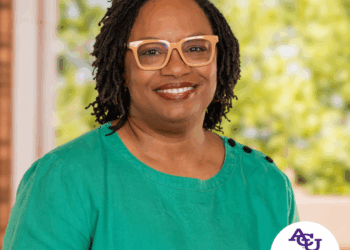
Widow and mum-of-three Lisa Marshall set up her Instagram account @The_widowdiaries two years after her husband Alan took his own life, aged 37, on his way home from work one evening in March 2023.
With no history of mental health issues and no signs that he was suicidal, Alan’s death came as an enormous shock to Lisa and their families.
A friend who works in social media warned me I needed to be prepared for negative comments, but I thought it was worth that risk to create a space online for women like me
Lisa Marshall
“Now, with two children being assessed for autism, I have wondered if Alan may have been autistic himself and masking struggles he was having, along with the fact he was depressed,” says Lisa, 34, from Lenzie, East Dunbartonshire, whose children are now aged nine, seven and three.
“We’d been together since I was 19, after meeting in a nightclub, and we had a good life, until that terrible day in 2023.
“At first, after Alan’s death, I was in such a deep state of shock that being on a public platform was the last thing on my mind. I had internalised a lot of my thoughts and feelings about losing Alan.
“As time passed, I began to want to share more about what I was going through. So many complex emotions surround a loss like mine, and I wanted to see someone else who was further down the line coping with it. I couldn’t find many social media accounts about being widowed by suicide, though, so I set up my own account.
“A friend who works in social media warned me I needed to be prepared for negative comments, but I thought it was worth that risk to create a space online for women like me. Some family and friends were concerned I’d end up supporting others when I had enough on my plate.”
Since last June, Lisa has amassed almost 23k followers across Instagram and TikTok. She shares posts and videos about everything from the decision to take off her wedding rings, her finances, dating after loss, and buying a new bed to replace her marital one.
BOTTLED UP EMOTIONS
“I do get some negative comments, usually from men, criticising me if I smile in a video or accusing me of being a bad mother when I shared that I sent my older two children to school the day after Alan died.
“When I shared earlier this year that I’d joined a dating app six months after Alan died and had been on a few dates, that received a backlash from both male and female followers,” says Lisa, who’s currently single.
“The comments were predictable – I mustn’t have loved Alan if I wanted to be with someone else so soon and I should be focusing on my family not my love life. Basically, they told me I wasn’t doing widowed life properly. Nobody likes being criticised, but going through this has made me strong, and I wouldn’t let it stop me.
“I know my account is a helpful space, and after all I’ve been through, I’m not going to be silenced by a handful of unkind people. I am a dentist, but I haven’t been able to go back to work since Alan’s death, so creating content gives me a sense of purpose and identity beyond being a stay-at-home mum,” Lisa adds.
“The algorithm has also helped me connect with other suicide widows, and that has been invaluable. It has become a vehicle for expressing emotions I’d bottled up. I couldn’t even look at a photo of him for two years after he died, but now I can share photos and videos of our life and remember the good times we had.”
For Sarah, posting about her experience has transformed her life, despite the trolls.
“I share knowing there are people who will disapprove – but I also know that my experience of losing Ian and building a new life as a widow would have been much tougher without my TikTok account.”