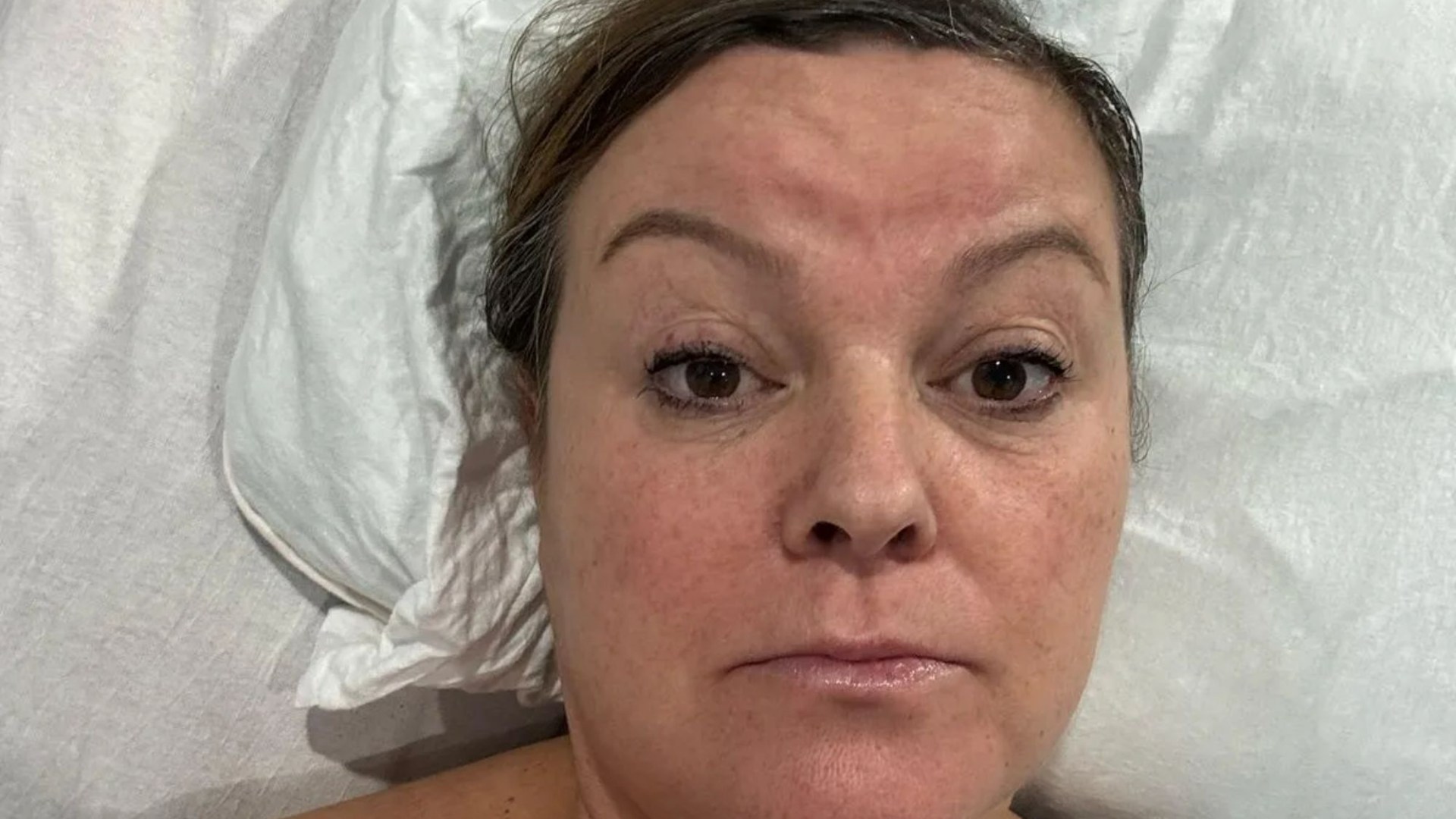
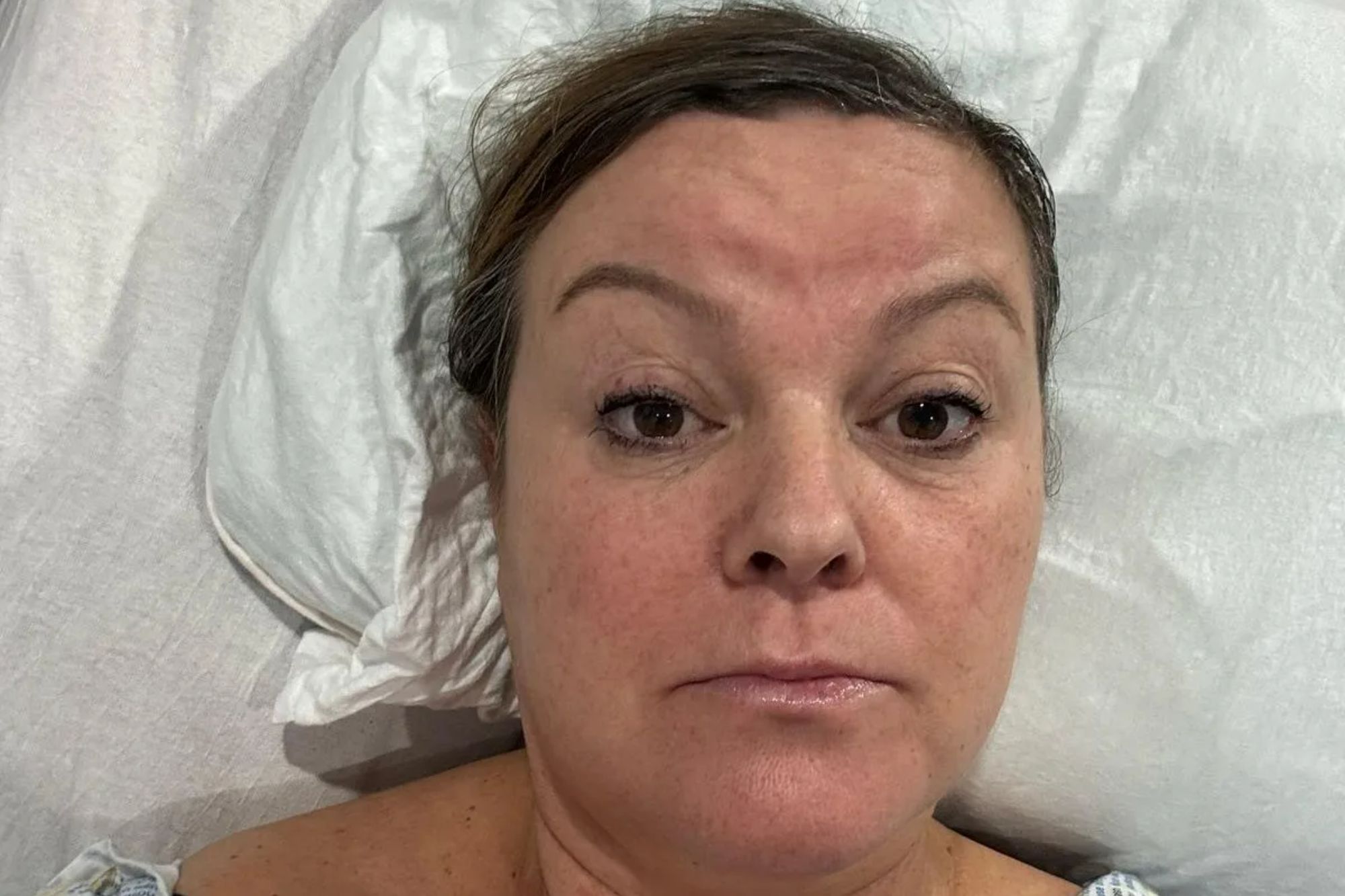
IT was something she never imagined she’d have to do – Gail Redpath sat her twin daughters, 19, down and told them calmly that she’d been given “months to live”.
Feeling “guilty” that she was having to “put them through this trauma”, she watched them with “panic in their eyes” as they cried.
The mum had almost “blacked out” herself when told her diagnosis, which came after being told to “wait a year” and see if her symptoms settled on their own.
Gail, 54, was told she had a rare cancer that had caused a mass growing downwards, out of her vagina, making life very uncomfortable.
Until this point, Gail claims that she had been reassured and told she was merely going through the menopause.
Now, she is receiving palliative care with the hopes it will extend what time she has left.
She has been left preparing for her death by clearing out her home, and spending her final months with her family.
Gail, a former administration worker, from Edinburgh, says: “I think I nearly blacked out at the news.
“I honestly thought the lump would just be cut out with surgery, but it was too late for that.
“When I knew I was terminal I sorted out all my paperwork, cleared out all my clothes, so that my family wouldn’t have to deal with it.”
Gail began suffering bleeding that lasted for months in 2023, as well as menopause-like symptoms.
It’s not unusual to experience irregular bleeding or periods in the lead up to menopause – when periods have stopped for a whole year.
But bleeding after menopause should always be investigated.
“I was on HRT due to menopause symptoms such as anxiety and bleeding, but even on HRT I continued to bleed,” Gail says.
It was discovered that she had fibroids, which are common growths in the womb that tend to grow in a female’s reproductive years.
Gail had them removed but there was a large one that could not be removed vaginally, so it would need a full hysterectomy – the removal of reproductive organs.
“I was told to wait a year to see if things settled,” says Gail.
But during this year, Gail repeatedly raised the continuous bleeding with her GP.
Then, in May 2024 Gail found a lump while having a shower.
The lump was in the vaginal wall, which led her GP to refer her to the Royal Infirmary of Edinburgh.
A consultant diagnosed her with a Bartholin’s cyst – a painful but benign growth.
Doctors removed the “golf ball-sized mass” in a short procedure using local anaesthetic.
Gail says it was “squeezed out by hand” and she was “stitched up” and sent home.
However, weeks after the lump was sent for biopsy Gail spotted several missed calls from the hospital asking her to attend an appointment.
“Alarm bells rang,” Gail said. It was June 17, 2024 – the same day that her father was diagnosed with Alzheimer’s.
She was told she had cancer and further tests found the large fibroid that had been put “on hold” had become cancerous.
“The fibroid became cancerous and is now 10cm, and this is where the cancer originated,” says Gail.
“I went alone – I knew what was coming and they said I had cancer, one that affects soft tissue and muscle, but didn’t name it.
“I was shocked but thought ‘no probs, they’ll cut it out and I’ll be fine’”
It wasn’t until Gail saw her GP again that she was told her cancer was uterine leiomyosarcoma, a rare and aggressive form that came with limited treatment options.
Despite being removed, the mass that had been squeezed out returned and grew again, making it “quite awkward for me to sit”.
They told me my life expectancy was only a few months. I nearly passed out with shock
“It grew downwards and outwards, so was literally hanging from my vagina,” says Gail.
Doctors monitored its growth while she started radiotherapy treatment in July 2024.
Following 10 rounds of radiotherapy, doctors delivered the devastating blow that her case was terminal – the cancer had spread to Gail’s lymph nodes and lungs.
“They told me my life expectancy was only a few months,” she says. “I nearly passed out with shock.
“They said my timescale was just months and I needed to get my affairs in order.
“My twin daughters were 19 at the time and telling them was awful.
“My poor husband – we’ve been together 36 years so I can’t imagine how he felt, but I knew I’d fight this with every breath.
“Telling my children, husband and close family was the worst part for me – devastating.”
She adds: “I remember feeling so guilty in telling my family the news – like it was my fault and I’m putting them through this trauma.
“We have a huge family and there was a lot of tears and I feel I’m fairly strong so I managed to remain positive.
“To be honest if it was going to happen to anyone in the family I’m glad it was me.”
Gail says her family have put their “lives put on hold” while they come to terms with the news.
She says: “Initially, there were a lot of tears and fears. But we are a strong unit and we have been there for each other.
“My daughters both live at home so are a great help, and my husband is one in a million.
“My parents live very close by and it’s been especially difficult as my dad’s Alzheimer’s progresses, but we all manage.”
Gail has been receiving palliative chemotherapy to keep her alive since November 2024, meaning she cannot be cured.
“Unfortunately, due to this being a rare and aggressive cancer there are only limited options,” she says.
But she is proud to have beaten the odds to survive, having been given just months to live back in July 2024.
Gail says she “doesn’t really ask” about how she’s managed to defy such odds.
She has scans every three months to check for new or growing tumours.
“It’s tough but I’m trying to live my life as much as possible,” she says.
“Some days I just can’t get out of bed – chemo isn’t easy and I’ve been on it for 15 months so it does take its toll on your body.
“I sometimes feel quite low as everyone’s lives are moving on and they are making plans while I’m just kind of existing.
“But I can’t complain, I’m very, very lucky that I have a huge support system of family and friends who are there for me – my army as I call them.
“I force myself to try and live as normal a life as possible – once I’ve got my make up and wig on I’m ready to face the world.
“We’ll see what the scan results say and continue chemo – I’m planning on being here as along as possible”
Gail is raising money for LMS Research UK. To donate, please click here.
What is uterine leiomyosarcoma?
A uterine leiomyosarcoma is a rare and aggressive cancer that accounts for roughly one to two per cent of womb cancers.
Research suggests that the cancer, which develops from the smooth muscle lining the walls of the uterus, impacts between roughly 0.34 to 0.64 per 100,000 women annually.
The exact cause of leiomyosarcoma, including uterine leiomyosarcoma, is unknown.
But they are most commonly diagnosed in women aged between 50 and 60.
Common signs of the cancer can include abnormal uterine bleeding, pelvic pain, or pelvic pressure.
Other rarer symptoms reported are a persistent cough and shortness of breath.
The condition is often assumed to be benign fibroids and there is currently no standardised screening for leiomyosarcomas.
Experts advise seeking medication attention from a gynecologist if you are experiencing abnormal uterine bleeding, pelvic pain or pressure.
Treatment can involve surgery, chemotherapy, radiotherapy and sometimes hormonal therapy if leiomyosarcomas overexpress estrogen or progesterone receptors.
Sources: Foundation for Women’s Cancer and the National Organisaion for Rare Disorders