On the surface, it wasn’t obvious to anyone that Emma Griffiths was drinking more than ten bottles of wine a week.
Her home was immaculate. She got up at 5am most days to go to the gym and had a highly successful career managing a charity’s finances.
But without fail, the cork would be popped on a bottle of wine at around 5pm, an essential part – as Emma saw it – of winding down after a stressful day.
Except it was never just one glass. Often it was two bottles. On some nights, a glass of wine in a bar with colleagues could turn into an all-night drinking session that saw her return home briefly to shower and change before heading straight back into work. During the pandemic, while working from home, ‘wine o’clock’ started on the dot of midday.
Hitting the menopause four years ago only led her to lean more heavily on alcohol as a crutch as she struggled to cope with debilitating brain fog and depression.
At its worst, mother-of-two Emma, now 55, admits she was drinking more than 100 units of alcohol a week – more than seven times the NHS’s recommended limit of 14 for both men and women.
And while she made several attempts to cut back – once using an NHS programme and on another occasion after a breast cancer scare – each time the drinking ramped back up again because she believed, wrongly, that she had finally got her habit under control.
‘Honestly, I had started to feel slightly invincible,’ Emma, who lives in the New Forest on the outskirts of Southampton, says. ‘Generally, nobody knew I was drinking as much as I was. I hid it well. There was always a reason for me to think I deserved a drink – it was sunny, or I’d had a bad day, or it was Sunday lunchtime in the pub, so why not? I have a busy life – I overstretch myself because I never say no – so it was my way to relax.
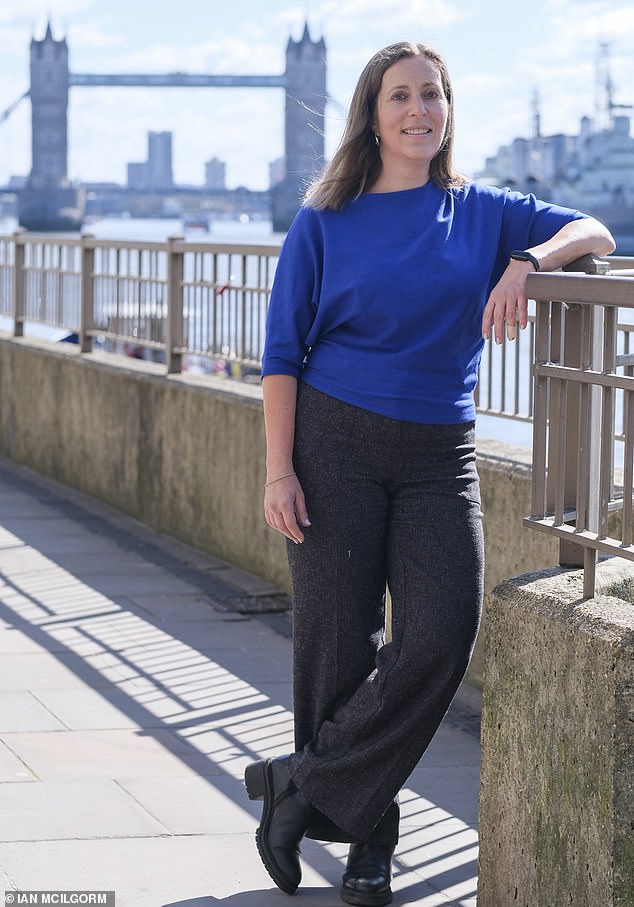
Emma Griffiths no longer feels the lure of a glass of wine, even if her favourite bottle is near
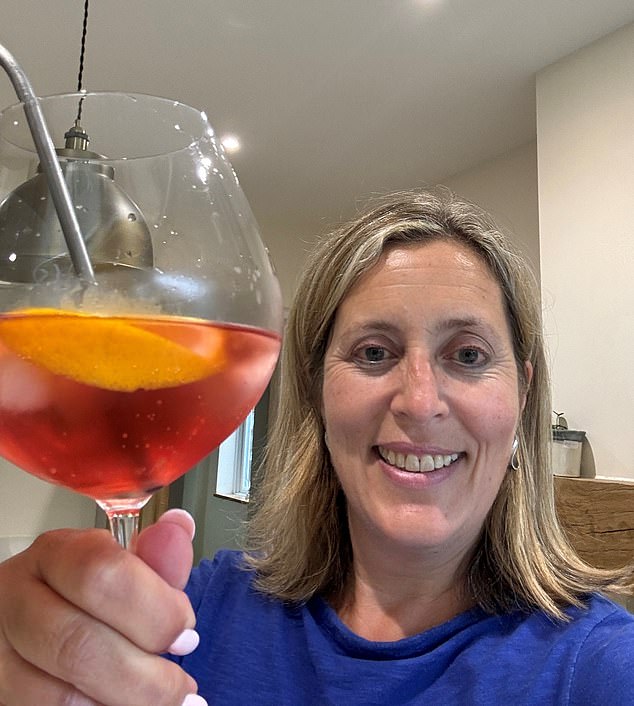
The 55-year-old drank over 100 units of alcohol weekly – seven times the recommended limit
‘I’d tell myself it wasn’t that bad as I wasn’t downing spirits, and I’d always be able to perform at work, no matter how much I’d had to drink the night before. Perhaps if I hadn’t been able to, it might have stopped me sooner.
‘Every time I did stop or cut back, I’d think it was under control and I could manage having a couple of drinks. I was always wrong.’
Today, however, Emma has achieved an astonishing transformation. She has been sober for nearly 12 weeks.
She no longer feels the lure of a glass of wine, even though her favourite bottle has been lurking in her kitchen fridge.
‘I think I’m at the point now where I never want to drink again,’ she says. ‘And I can’t see that changing. My last drink was on January 8.’
The reason for Emma’s extraordinary turnaround is a £3 pill, dubbed the ‘Ozempic of alcohol’.
The tablet, naltrexone, eliminates cravings by blocking opioid receptors in the brain, making alcohol less pleasurable and curbing the desire to drink. It means the brain ‘unlearns’ the link between alcohol and the production of feel-good chemicals that spark the urge to reach for a glass in the first place.
Studies show naltrexone has a near 80 per cent success rate at getting users to drastically reduce or eliminate drinking altogether.
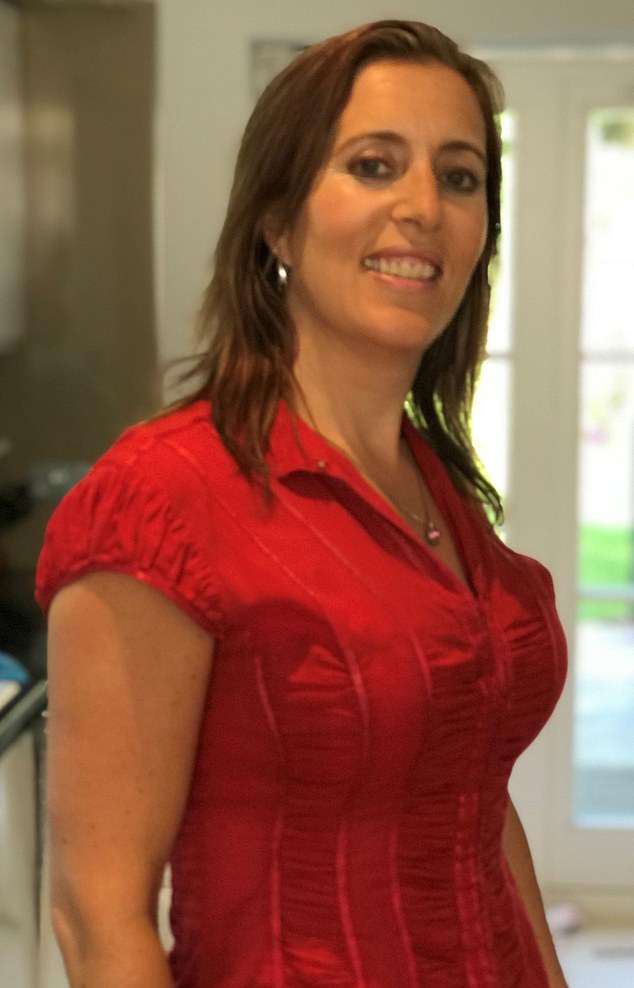
Emma, a mother of two, says the pill worked almost immediately in calming her drinking
In comparison, other rehabilitation methods – such as Alcoholics Anonymous’s 12-step programme, which relies on changing thoughts and behaviours and accepting responsibility for past harms – has success rates of less than 15 per cent, according to the World Health Organisation.
Yet, while naltrexone is available on the NHS, it is only usually prescribed to people to prevent relapse once they have already become sober – something experts say should change.
Emma got a private prescription via The Sinclair Method in November, a clinic that advocates an approach which involves continuing to drink, but taking a pill an hour before the first drink of the day. This is combined with psychological and lifestyle support with a counsellor. Many of The Sinclair Method’s clients are high-functioning professionals, such as Emma, and some have described it as ‘miraculous’.
Emma says the drug worked ‘almost immediately’ and that she only drank half her first glass of wine by the second day.
Within a couple of weeks, she was drinking 25 units a week and by January was down to just two – a glass of wine with Sunday lunch.
‘It was weird – this feeling of not wanting it,’ she recalls. ‘I’ve always known I could quit alcohol if I wanted to, but the issue was that I could never do it without feeling deprived.
‘I always wanted to drink, and it was always really, really hard resisting it.
‘But today, when people say “Well done”, I don’t think I deserve it because I really didn’t have to do much.
‘I do feel slightly like a fraud because I haven’t had to go through any pain or stress. I just don’t feel like drinking any more.’
Emma is part of a growing number of midlife women who have a problem with alcohol.
While younger adults are drinking less than previous generations, the proportion of women aged 45 to 64 who consume ‘hazardous’ amounts – regularly drinking more than 14 units a week – has remained steady.
And the number of women aged 55 to 64 in this at-risk category has seen the sharpest rise – 14 per cent, or around 1.2 million women, now drink at this level compared to nearly 8 per cent in 2000, according to NHS data. This has been linked to menopause, midlife stress and changes such as children leaving home, divorce and reduced social networks.
Harvey Bhandal, managing director of The Sinclair Method, said the number of women using the service was ‘growing steadily’, partly because ‘it doesn’t require them to disappear’ on a retreat to get sober, which often isn’t compatible with their lives – particularly if they have caring responsibilities.
Experts say there is a case for making naltrexone more widely available on the NHS to help people reduce their alcohol intake, and that more GPs should be trained in prescribing it.
Addiction psychiatrist Dr Peter McCann, medical director of residential rehabilitation centre Castle Craig, said: ‘The harms from alcohol are only increasing, and there are many people who are put off by the all-or-nothing approach. We need to see more GPs able to prescribe medication such as this.
‘There’s a theoretical worry that giving out lots of naltrexone will reinforce drinking culture, or make it more normalised by giving you a pill to take which will stop you drinking as much.
‘But it would engage more people in treatment, and I think we need to be creative and throw as much as we can at the problem.’
And as people like Emma know, cutting down or going sober might start off easy, but making it long term is significantly harder.
Around ten years ago, she had enrolled on NHS programme One Recovery, which involved keeping an alcohol diary to reduce her intake by 10 per cent every week, and regular meetings with a support worker. This got her drinking down to below the recommended limits, but her habits simply resumed once it ended. She also quit alcohol for a year and a half after finding a lump in her breast and being investigated for breast cancer, which runs in her family.
‘I said to myself that if it was breast cancer, I wanted my body to be the strongest it could be. I stayed sober even though I got the all-clear. But I never stopped thinking about alcohol, and it just crept back in.’
During the pandemic, in which she worked from home, it was, she says, ‘a total nightmare’. ‘Around 11am I’d start looking at the clock, and by two minutes to noon I’d have poured a glass of wine so it would be ready for midday,’ she recalls.
Then the menopause hit. Emma avoided the physical symptoms but struggled with brain fog and negative thoughts. She found herself ‘staring at the wall for hours’ and gave up work because she couldn’t function.
Hormone replacement therapy was not effective and, again, alcohol became a crutch – along with antidepressants.
But it was another side effect of the menopause that pushed her to investigate naltrexone.
‘It was vanity, really,’ she says. ‘I’d put on 2st during the menopause, as many women do. Nothing would shift it. I go to the gym five times a week, am largely pescatarian and I use intermittent fasting [only eating within a short time window] but couldn’t lose a pound. I realised alcohol contained a lot of calories.’
Using the drug and The Sinclair Method appealed because it ‘sounded easy’, she says, as well as being scientifically grounded.
‘The first thing they say is you can still drink if you want to – it’s just that you might reach a point where you don’t want to. But nobody is telling you that you can’t drink.’
Emma’s coach advised her to do something else around the time she would normally have a drink – one tip was looking up something funny on YouTube so her brain still got a dopamine hit, just not from alcohol.
She was also told the pill only does 60 per cent of the work – the other 40 per cent is your own mindset changing.
‘I think that’s true,’ Emma says. ‘The act of taking a tablet an hour before you drink removes the spontaneity of it. You have to think about why you want to have that drink, and plan for it. It’s more mindful.’
Having got down to two units a week by January, she made the decision to stop drinking altogether when she was diagnosed with prediabetes – elevated blood sugar which is on the cusp of type 2 diabetes – and was told she had signs of fatty liver disease. Since then, Emma’s health has transformed. She has lost 10lb, her skin and hair are healthier, she is sleeping better and her gum health has improved. Plus, her blood sugar is lower and her latest liver tests came back clear.
‘I can honestly say I haven’t had a drink for two and a half months and I haven’t wanted one, either. When I’d normally reach for wine, I’ll spend more time in the gym, go for a walk or do some cross-stitch.
‘It has changed my life – I’d recommend it to anyone.’
It’s been around for 30 years. Why aren’t more people told about it?
What’s the definition of an alcoholic? Someone who drinks more than their doctor, writes Barney Calman.
I thought of that joke while reading Emma’s story of overcoming a quite profound alcohol addiction thanks to naltrexone – and wondering why more people aren’t told about the drug.
GPs are drilled to ask patients about their alcohol intake as part of a general consultation. Yet they rarely offer treatment at all – and if they do, it’s usually talking therapy, which has a patchy success rate.
Perhaps, as the joke implies, it’s because doctors – like their patients and just about everyone else – tend to drink, and so it is less likely to be seen as a problem requiring serious medical intervention.
That was certainly the suggestion when I spoke to a number of experts in pharmacology and addiction about Emma’s story, who are equally mystified as to why it is not more widely used.
It’s all the more odd when you realise naltrexone isn’t new – it has been around since the mid-1990s.
There is good scientific evidence that the Sinclair Method – taking a naltrexone tablet at times when alcohol cravings are more likely to strike – can help people dramatically cut down or even quit booze altogether.
But despite this, it is not recommended by the NHS watchdog, the National Institute for Health and Care Excellence, as a first-line treatment for alcohol dependence.
It’s not the only drug option. Other established, proven treatments include nalmefene, which works in a similar way to naltrexone to reduce cravings, and acamprosate, which helps dampen withdrawal symptoms.
And yet these are often seen as a last resort. Why aren’t they offered more widely – as, for example, smoking cessation medication is?
It’s true, smoking does kill more people – around 80,000 a year. But alcohol, which is behind more than 10,000 deaths annually, comes a close second in terms of preventable deaths.
The bottom line is, people need to know there are treatments available. Some will say it’s cheating – as with weight-loss jabs. That you should overcome these ‘weaknesses’ with sheer grit and determination.
But if there’s a drug – whether naltrexone or Mounjaro – that does much of the heavy lifting and helps people live healthier lives, then why not use it?