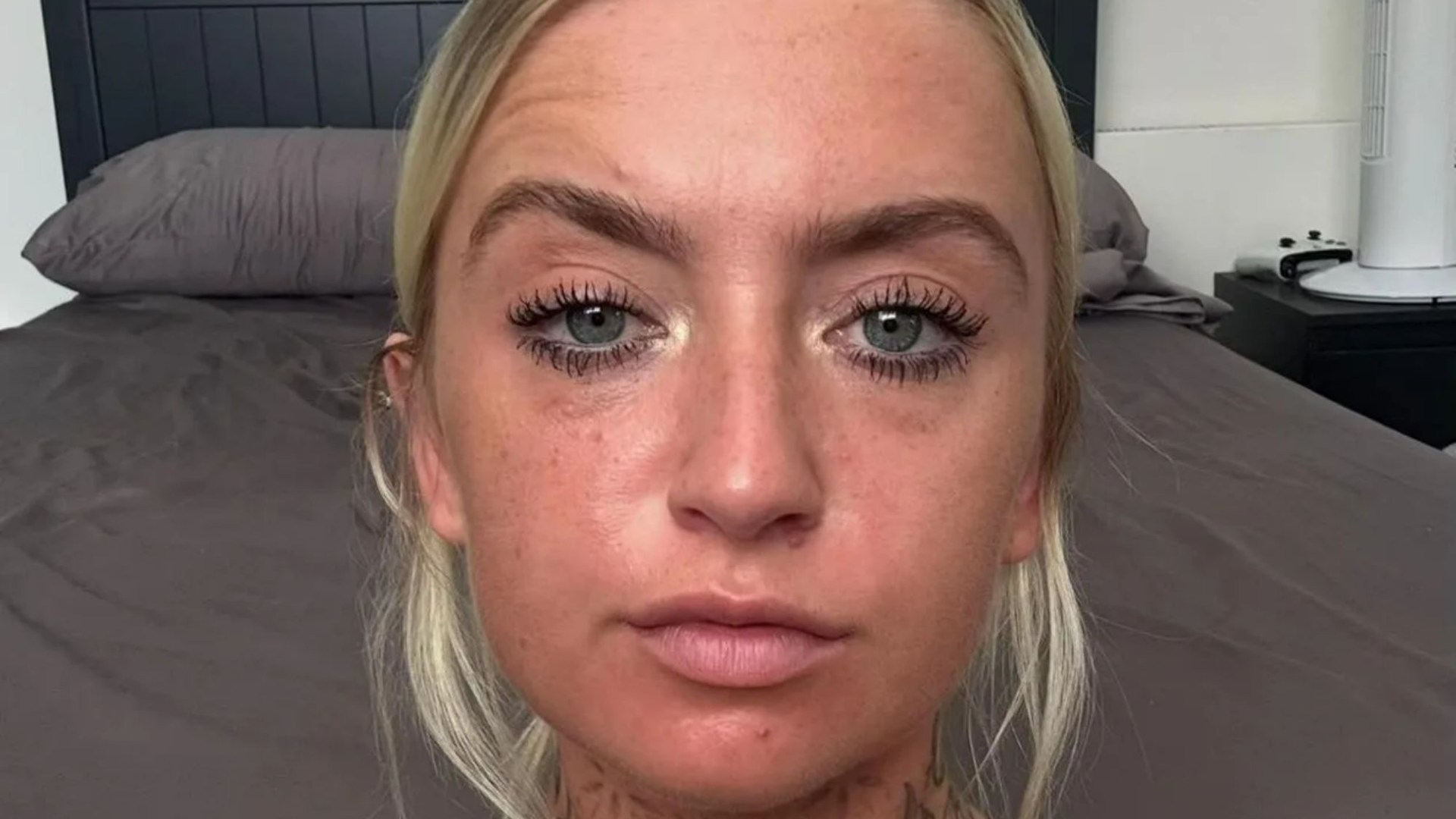
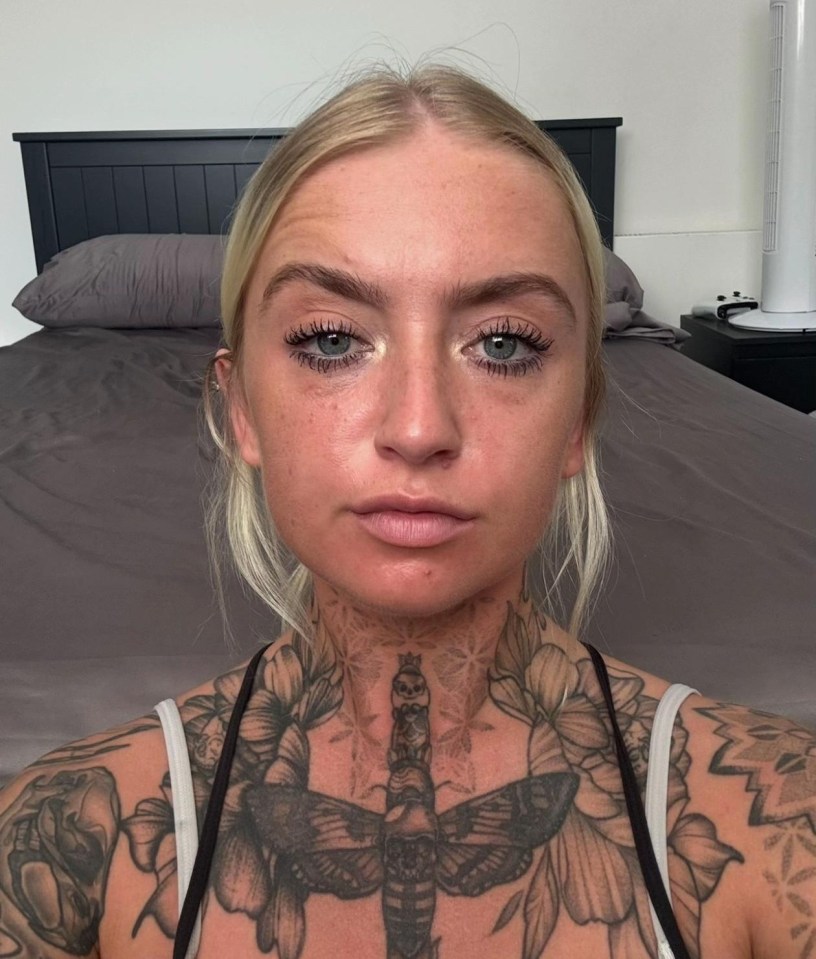
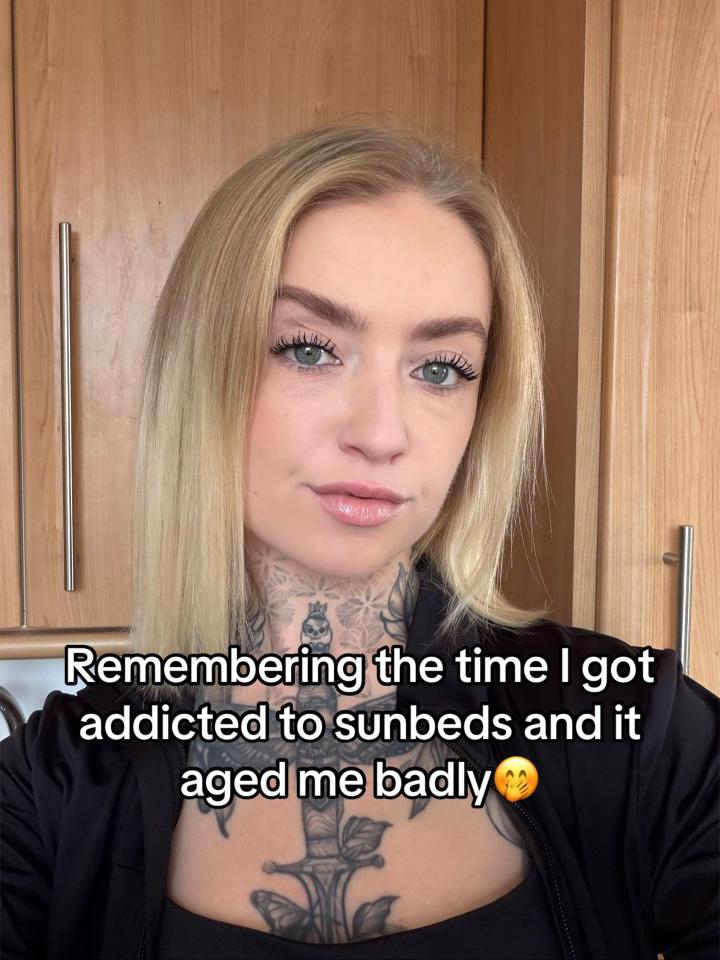
A FORMER sunbed addict has revealed what her skin looked like at the height of her addiction – versus now.
Mia Calver took to TikTok to share what her face looked like after topping up her tan a whopping five times a week for a 12-minute session each time.
According to the TikToker, she religiously followed this routine for around two years, not bothering to protect her skin with sunscreen.
Inevitably, Mia said in a video, she began to notice a drastic change in the condition of her skin, which she said was “awful”.
Sharing a snap of herself at the peak of her sunbed addiction at 24, the now 26-year-old said she looked “ten times older” than what she does now, two years later.
“It’s mad. Like, if you want to use sunbeds every now and then, fine, okay. Like, I’, not here to tell you what you shouldn’t do – I’m literally just showing you the difference in what’s happened with my skin.”


She continued in a different video: “The thing is as well, like after you’ve had one done, you feel so nice, you feel so refreshed and it feels amazing.
“I had this thing in my head, ‘It’s been a few days, I need to go and get one straight away cause otherwise I’m gonna lose the colour’.
“And this is where the habit got out of hand because it was just getting to the point that I was then starting to go every day as much as I could.
“And then when I got off the bed, I’ll be like, ‘I’m burning, this is great – this is exactly what’s supposed to happen’.
“It wasn’t until I started actually noticing it on my face. I never covered my face at all – and that’s where it started to get worse.”
According to the TikToker, who posts under the username @miacalver_, the constant exposure to the harmful rays caused her skin to feel “tight” and become “dehydrated”.
Although Mia has now embraced her natural complexion, it wasn’t always like this, as she said she “wasn’t comfortable” with her “actual skin colour”.
But the bronzed glow wasn’t “worth it”, as Mia noticed her skin “ageing rapidly”.
Now, the fitness lover applies sun cream “every day without a fail”.
Sharing her experience, the former sunbed addict said: “I’m not telling you at all stop using sunbeds and everything.
“But I’ve not used a sunbed since September last year and I’ve never been more comfortable just as me.”
Sunbeds have long been linked to skin cancer and have even been banned in countries like Brazil and Australia.
According to the International Agency for Research on Cancer (IARC), there is significant evidence to show that using tanning beds causes melanoma.
They report that sunbeds increase the risk of skin cancer by up to 20 per cent, and also state that they have no positive benefits to our health.
Sharing her expertise, Carol Cooper, Sun Doctor, said: “Let’s be clear about sunbeds. It’s not just ‘some’ experts that say they’re bad for your skin. It’s almost all of them.
“Actually, anyone who’s ever used a sunbed is at least 20% more likely to develop malignant melanoma, the deadliest skin cancer.
“UV rays damage the DNA in skin cells, so they’re more likely to mutate into cancer. You don’t even have to burn for it to happen.”
The jaw-dropping transformation video has since taken the internet by storm, racking up more than 110K views, with dozens flocking to comments.
One person said: “Proof a tan ages you well done for turning it around before you destroyed your skin you have beautiful ivory skin, mines ruined from sunbeds and I feel unwell if I don’t go on them.”
“I’m so happy I stopped, it was never worth a tan and never will be,” another chimed in.
“This is why I’m scared to start them I’mm so pale but don’t want wrinkles at 20,”a beauty buff commented.
“Same girl, I’ve not been on for 10 weeks after been addicted for 8 years,” a fourth said.
Risks of sunbeds
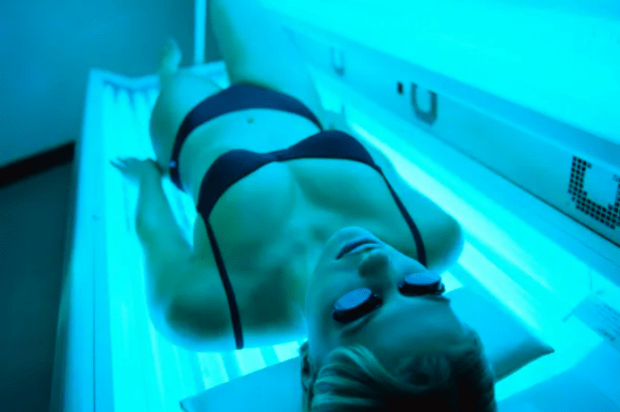
THE promise of a constant glowing tan is too tempting for some people to deny.
But while popping to the sunbed shop may seem harmless, people who use tanning beds should be aware of the risks.
Approximately 10 per cent of the population of Northern Europe use sunbeds on a regular basis, the World Health Organization says.
Some people use them for years on end, accumulating risk of serious disease.
We are here to give you the lowdown on sunbeds and if they are safe to use.
According to the World Health Organisation (WHO), sunbeds are as dangerous as smoking.
Like the sun, they give out harmful UV rays that damage the DNA in your skin cells.
Over time, this may lead to malignant melanoma – the deadliest form of skin cancer – studies have shown.
According to the International Agency for Research on Cancer (IARC), there is significant evidence to show that using tanning beds causes melanoma.
They report that sunbeds increase the risk of skin cancer by up to 20 per cent, and also state that they have no positive benefits to our health.
Cancer Research back this statistic, adding that ” there is no such thing as a safe tan from UV radiation”.
One study found that sunbeds can almost double the risk of cancer compared to never using them – with women 83 per cent more likely to develop the disease.
While some people think tanning beds are safer than sitting out in the midday sun, according to Cancer Research, the risk is still twice as high when compared to spending the same amount of time in the Mediterranean sun at lunch time.
The Sunbed Association claim there is not enough evidence to link sunbed use with melanoma, adding: “It is over-exposure and burning that will increase a risk of skin cancer, not responsible UV exposure.”
But the WHO says: “The majority of tanning parlours provide inadequate advice to their customers.
“The use of eye protection such as goggles or sunglasses should be mandatory.
“However, as sunbed users aim to have an even tan, they often decide against protecting any part of their body.”
Referring to the link with skin cancer, the world health experts add: “Sunbeds for self-tanning purposes have been available for the last two decades and due to the long latency period for skin cancer and eye damage it has been difficult so far to demonstrate any long-term health effects.
“Even though the causes of malignant melanoma are not fully understood, tumour development appears to be linked to occasional exposure to intense sunlight.
“Sunbeds subject their users to intermittent high exposures of UVA and UVB radiation – this may provide the ideal setting for the development of malignant skin cancer.
“However, the few epidemiological studies that have been carried out to date have not provided any consistent results.”
Despite the WHO’s cautious stance on the skin cancer link, it discourages the use of sunbeds, quoting an expert who said the use of tanning parlours is like “an industrial-scale radiation exposure experiment”.
Regardless of skin cancer, sunbeds don’t just have long-term health risks.
Users have reported a range of short-term symptoms including itching, dryness and redness of skin, freckling and photosensitivity.
Common outcomes in the longer term, especially in fair-skinned people, may involve blistering of the skin.
“Sagging and wrinkling of the skin are an almost certain price to be paid by frequent sunbed users”, the WHO says – not quite the outcome you hope for when going to the sunbed shop for a beautiful, youthful look.