As she was banished from the hospital where she had worked for 25 years, a shocked Sandie Peggie was offered two things – a hankie, and the chance to leave by the back door.
The A&E nurse took the former without thinking, but had the presence of mind to refuse the latter.
‘They said I could go out the back way to save embarrassment,’ she recalls. ‘I said, “No, I will go out the front.” Why? I wanted to go out with my head held high. If I’d gone out the back door, it would have looked like I had done something wrong – and I hadn’t. I still don’t believe I did anything wrong. I would do it again.’
Since that day, in January 2024, Sandie, 52, has become one of the most famous nurses in Britain – her objections about sharing a women’s changing room with a transgender colleague (‘a man’, she insists) turning her into a lightning rod in the culture war over sex, gender and women’s rights.
A heroine to some – Harry Potter author JK Rowling has called her the woman who dared to break the ‘spell’ of the transgender cultists and Conservative leader Kemi Badenoch saluted her bravery – this is Sandie’s first ever interview.
We meet in a hotel in Dundee the week after Sandie won a partial victory in one of the most extraordinary employment tribunals the UK has ever seen.
A tiny woman with size three feet, she visibly shakes as she recalls that walk out of Victoria Hospital in Kirkcaldy, Fife, pinpointing her formal suspension as the moment her ‘life was turned upside down’.
She thought she was going in for an informal chat where ‘common sense would prevail’. ‘But then suddenly they were telling me that my badge was going to be taken off me,’ she says. ‘I couldn’t come into my work or access my emails. I had to stay away from the hospital entirely unless it was an emergency.
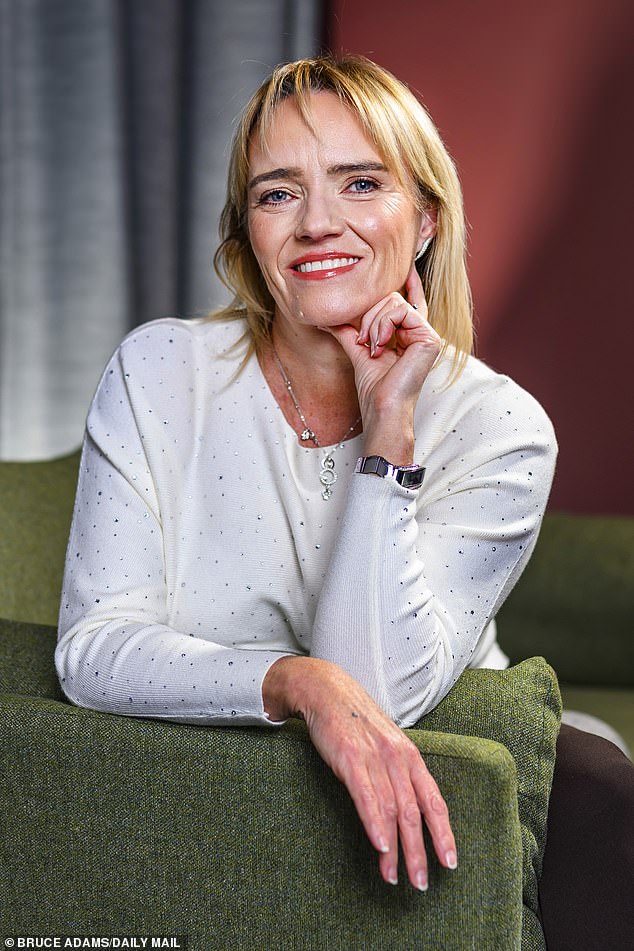
Sandie Peggie, 52, (pictured) has become one of the most famous nurses in Britain – her objections about sharing a women’s changing room with a transgender colleague turning her into a lightning rod in the culture war over sex, gender and women’s rights
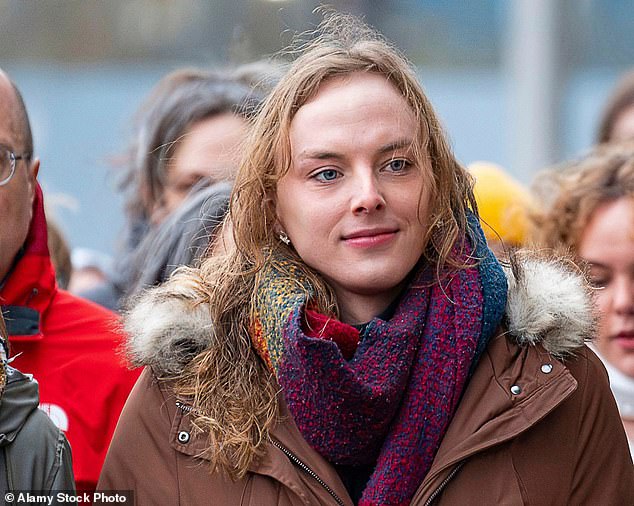
Beth Upton (pictured), Sandie’s transgender colleague who she objected to using the women’s changing room
‘I remember thinking, “What if there’s a situation where a member of my family has a broken bone?” My mother–in–law had an appointment in the hospital the following day. I was thinking, “I can’t take her. I’ll have to get someone else to.”‘
Sandie was determined ‘not to let anyone see me cry’, she says, and held it together until she got to her car. ‘Then I burst into tears,’ she says. ‘I probably used their hankie.’
What on earth had Sandie done? In her view, it is simple. ‘I had tried to stand up for myself and for other women,’ she says. ‘And they tried to stamp me down. They tried to destroy me.’
During the interview, she uses words like ‘squashed’, ‘belittled’ and ‘abandoned’, but what comes through is a sense of hurt and bewilderment rather than blind fury.
‘I feel let down – by managers, senior people, board members I’ve never even met. There has been no backing whatsoever. I’ve lost friends over this. They [her bosses] tried to destroy me. They went digging for dirt in my life. I was turned into a pariah.
‘In the middle of all this, I went to a funeral for one of our ambulance drivers and later discovered my supervisor was going round telling people she didn’t know how I had the brass neck to be there. I’m quite a strong person, I think, but that cut me.’
She adds: ‘My family have been supportive. They are the ones who have seen me cry, but I feel bad that I have put them through so much. And I still don’t know why I’m getting called a bigot because I don’t believe I am one.’
Sandie insists she never went looking for a fight. When she realised there was an issue at work – a transgender colleague using the female changing room – twice she simply slipped out of the room without making a fuss.
She then ‘had a word’ with her superior, saying that the presence of a 6ft, ‘fully intact’ junior doctor was making her feel uncomfortable and was told ‘something would be done’.
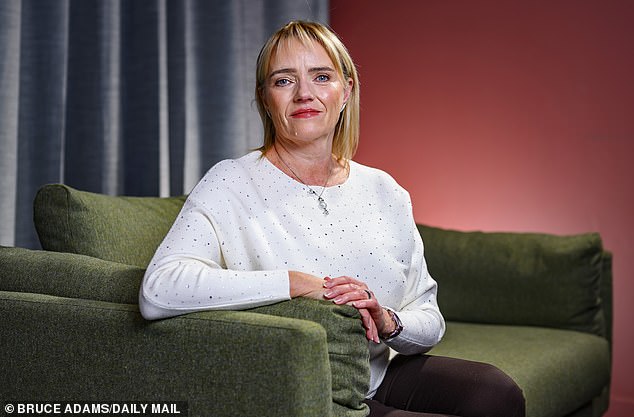
Sandie told the Daily Mail she felt let down by ‘managers, senior people, board members I’ve never even met’
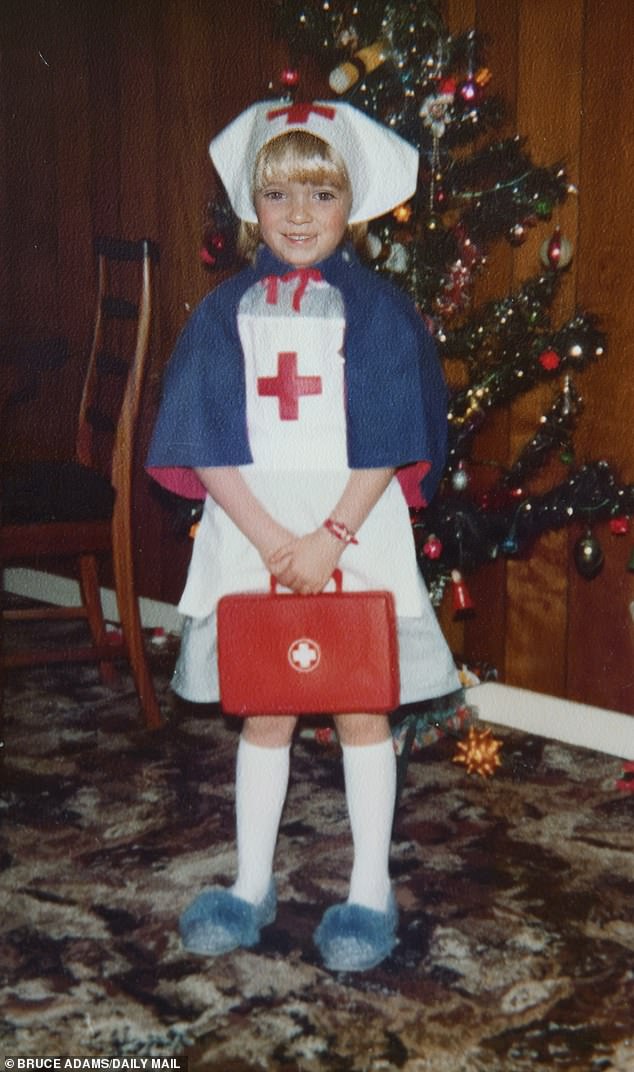
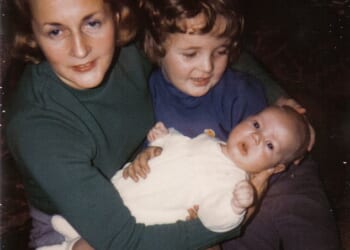
Sandie aged seven in a nurse’s fancy dress costume that her parents gave her
On the third occasion, however, it was impractical to just take her discomfort out into the corridor. She had suffered a heavy menstrual bleed in the middle of a busy shift on Christmas Eve in 2023 (‘yes, our busiest time’) and had rushed to the locker room to change and found [the transgender doctor] Beth Upton there.
Sandie was mortified. ‘Any woman will know how embarrassing that is,’ she says. This time, she firmly made her discomfort known.
When she refers to Dr Upton, Sandie still uses he/him pronouns as she did throughout the tribunal. ‘I told him that I did not think a biological man should be in the women’s changing room,’ she says. Dr Upton, who claimed to be a biological woman in the tribunal, disagreed.
‘He told me that he had as much right as I did to be in there.’
She insists that there was no row, no raised voices.
‘I told him I’d had previous bad experience with men. I didn’t go into detail. I was just pleading with him to have a wee bit of understanding about why I was feeling the way I was. And it backfired.’
By the next day, Christmas Day, Dr Upton had made a formal complaint and Sandie was under investigation for ‘serious bullying’.
What rankles Sandie is the speed at which blame was laid at her feet. There were two sides in this dispute and, she says, ‘they sided with him. I was thrown under the bus because I wouldn’t allow myself to be brainwashed into agreeing that a man was a woman just because he said he was one.’
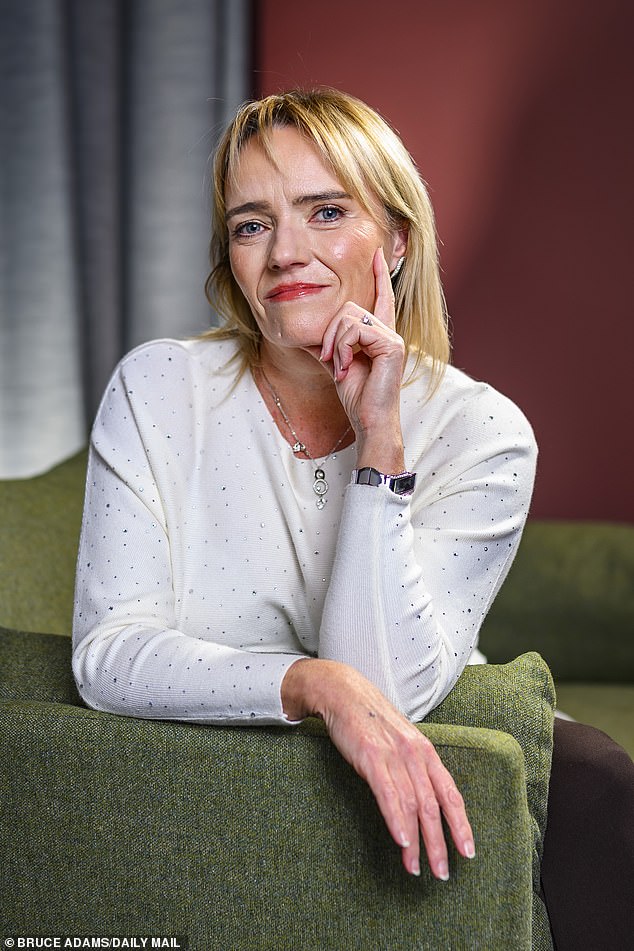
Sandie insists she never went looking for a fight. When she realised there was an issue at work – a transgender colleague using the female changing room – twice she simply slipped out of the room without making a fuss
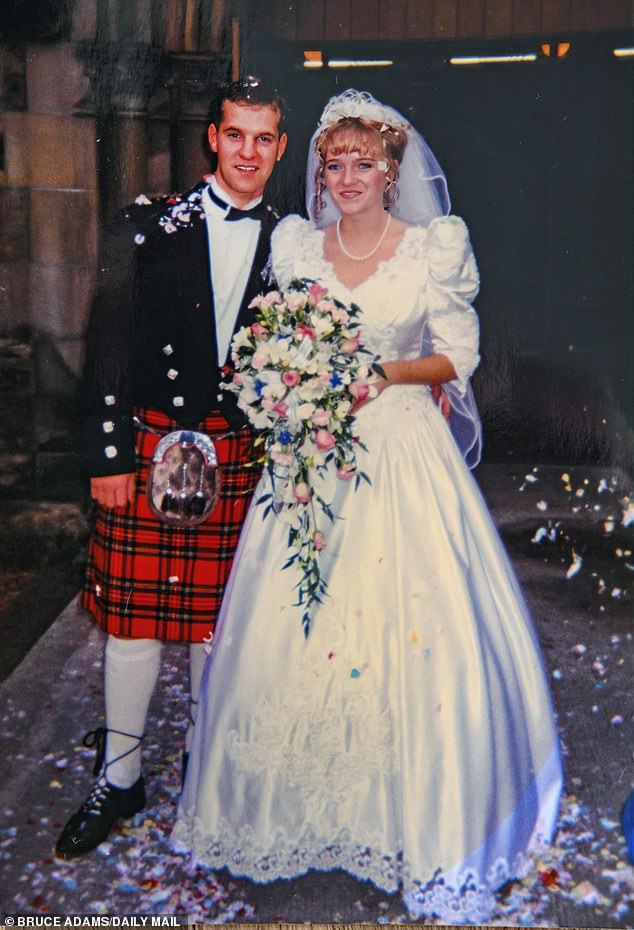
Sandie on her wedding day to husband Darren. Her family have been supportive of her during her campaign
She tells me how her parents, who bought Sandie her first nurse’s outfit for Christmas when she was about seven years old, setting her on her life’s path, reacted to her predicament.
‘My elderly dad could barely walk, but he said, “I’ll walk down to the hospital and tell them what I think.” My mum said [of Dr Upton], “I’ll make him into a woman!” They were trying to make me laugh, I suppose. None of us had any idea it would go as far as it did.’
For 18 months, Sandie had gross misconduct charges hanging over her. These charges were dropped in July 2025, but by then she had already sued NHS Fife herself and taken them to tribunal. Her father died in January, two days before the start of the tribunal.
She had nursed him until the end. ‘I know my Dad was very proud of me,’ she says. ‘And he died knowing that he had raised a woman who wasn’t afraid to stand up for herself.’
She reckons it is probably for the best that her father was spared one of the most ‘ludicrous’ moments of the tribunal, when Isla Bumba, equalities chief for NHS Fife, claimed she did not know whether Dr Upton was a man or a woman and could not be sure of her own gender, because she had never had her chromosomes checked – although she ‘hazarded a guess’ that she was female.
Sandie’s face says it all. ‘I couldn’t believe what I was hearing. How can you work in a hospital and come out with such a thing?’
So how will Sandie’s story be told in the history books? Her fans believe she will be another Pankhurst – an icon of our age. She has brought along a selection of the thousands of cards which were sent by well–wishers, many delivered to the hospital she wasn’t allowed to enter.
A typical message reads: ‘Thank you Sandie. The women of the world are behind you.’ Her lawyers have had interview requests from all over the world and there is even someone who wants to make a Sandie Peggie musical.
She is the most unlikely heroine. Prior to all of this, she had led a quiet, unassuming life. She met her husband when she was 16 and they now have two daughters, Nicole and Emma, who are now in their 20s.
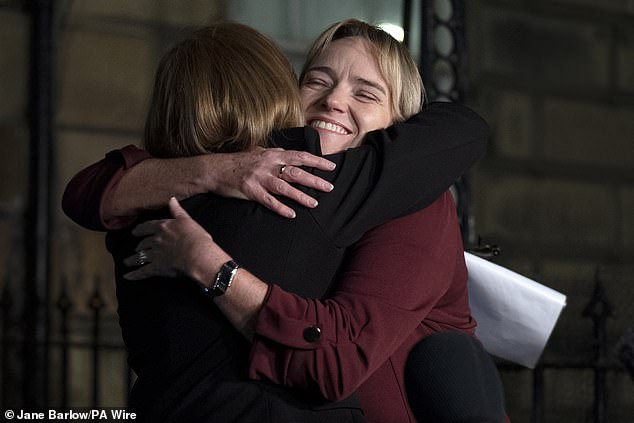
Sandie hugs her solicitor Margaret Gribbon outside the Edinburgh Tribunals Service after she won a claim for harassment in her employment tribunal case against a health board
Yes, she did do a skydive to mark her 50th birthday, which suggests some fearlessness, but this is not a woman who thought she would rock the boat. ‘Although I guess I was always a feminist,’ she says.
It’s too early to say what her legacy will be – because her fight is ongoing. Only four of her complaints against NHS Fife – that she was harassed by her employers – were upheld. The others, of discrimination and victimisation, were dismissed and her legal team has confirmed that it will now go to appeal. Sandie’s case progressed through the legal system at exactly the time as the Supreme Court, the highest in the land, clarified the law. References to ‘sex’ in the Equality Act were ruled to relate to biological sex, not gender identity. Consequently, a transwoman, being legally male, would not have the right to use a women’s changing room.
Yet any hope that this would bring calm and clarity for Sandie were immediately dashed.
Not only did parts of the 312–page tribunal ruling seem to be in direct conflict with the Supreme Court ruling, but serious factual errors were discovered in it, requiring amendments but which did not alter the conclusions.
There have now been calls for judge Sandy Kemp’s resignation.
What has resulted is an unholy mess and an expensive fiasco. Legal experts predict by the time the case is over, £1million of public money will have been spent.
Sandie shakes her head. ‘It’s complete madness, lunacy. I think it’s disgusting. There has been no common sense. I still don’t understand why this could not have been sorted earlier.
‘There were other places [in the hospital] he could have changed. There are toilet cubicles elsewhere that are huge. He could have been asked to use one of those.’
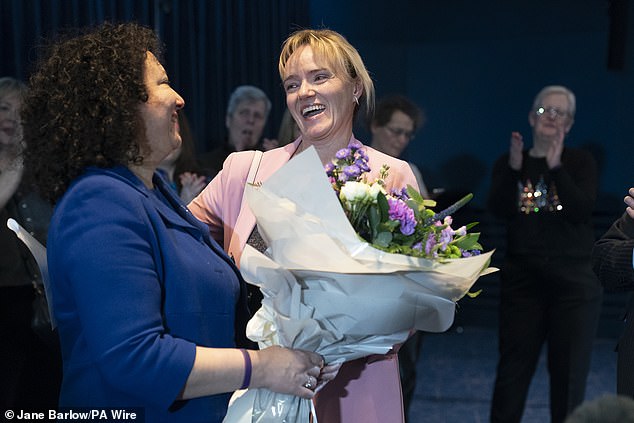
Sandie receives flowers from Maya Forstater who founded Sex Matters to stand up for single sex spaces
Nevertheless, Sandie is reluctant to ‘get personal’ in her criticisms of Dr Upton. ‘What I will say is that I think all biological men who think they can just say they are women are delusional.’ But she is angry that the doctor was ‘allowed’ to say that there had never been any issues with colleagues until Sandie came along.
During the tribunal, it was claimed that, in a previous job, Dr Upton had made a complaint about being misgendered by an elderly woman with dementia. There were also claims that Dr Upton had been ‘keeping notes’ on other members of staff.
‘Yet lies about me were taken as if they were fact,’ says Sandie. There was an accusation that her supposed issues with Dr Upton had led to patient safety being compromised, which was disproved during the tribunal.
We must stress that Sandie’s complaints (discrimination and victimisation) about Dr Upton were not upheld. But it is hard to escape the conclusion that, because of NHS cack–handedness, both employees here were failed.
Several times, Sandie talks about what a close team it was in the A&E unit. But friendships were trashed in the fallout, as colleagues were called to give evidence against her and railed against being ‘dragged into’ the affair.
It would be wrong to portray Sandie as a saint. In the epic trawl through her thousands of WhatsApp messages sent between friends, several apparently racist jokes were unearthed.
Ditto the public retelling of a conversation she had with a friend about how she struggled with her daughter telling her she was gay. It was used to paint her as a bigot – entirely wrongly, said Nicole, the daughter in question, and her biggest cheerleader.
‘It is horrible having your life turned upside down,’ says Sandie. ‘I think I’m probably less trusting now. I still believe what I did was right. It’s women’s rights that are being trampled over. This isn’t about me.’

Sandie counts best–selling author JK Rowling among her supporters
She is a private person by nature. Yet here she is opening up about the most intimate parts of her life, to make a point.
That previous ‘bad experience’ with men she referenced in the changing room with Dr Upton? Sandie tells me it involved sexual abuse by a doctor.
She is not presenting this as a factor in what happened in that changing room. But in the wider sense of why single sex spaces are enshrined in law, it is significant.
Sandie was 17 when she went to her GP and asked to go on the Pill to regulate her heavy periods. But she felt increasingly uncomfortable as he carried out a lengthy, apparently ‘essential’, examination of her breasts. ‘He did it himself, then he watched as I did it, to check I was doing it properly.
‘He had his hand over mine and it went on for ages and I just remember thinking, “This isn’t right.” I felt so, so uncomfortable. He said I’d need to have this done every time I got a prescription and so I went back twice more – each time feeling horrible.’
She did not make a complaint and the doctor retired soon after. It was only years later, while talking to friends who pointed out this was not normal or acceptable, that she thought: ‘Oh my God…’
Sandie stresses that at no point was she afraid of or did she feel threatened by Dr Upton. But she says: ‘I’m not the only woman who simply does not want to undress in front of a man.’ She also abhors the accusation that she is simply an ‘old bigot, out of touch’.
She tells me that just a few weeks before the changing room incident, she treated a 16–year–old who had attempted to take her own life. Trans issues were a factor. ‘Her father hadn’t reacted well to it,’ Sandie says. ‘The mum was upset. I was triaging her and I remember saying to my colleagues, “This wee tot needs to be seen quickly.”‘
Her empathy was referred to at the tribunal.
During her three–month suspension from work, Sandie’s brother had a heart attack and she had to ask special permission to visit him in ‘her’ hospital. She isn’t working at the moment (although she is technically still employed), but tells me she ‘snuck in, through the ambulance entrance’ to visit another relative recently. So she is no longer barred? ‘No, but things are still… frosty.’
She misses her work. ‘I feel a bit lost, I suppose. I miss that camaraderie. I miss that sense of purpose – and being a nurse is all I ever wanted to do. I never wanted any of this.’ But if she had it all to do again, would she take the option offered of slipping out the back door and not making a fuss? ‘No,’ she says. ‘I’d still go out the front.’
Sandie Peggie has not received any payment for this interview but asked for a donation to be made to a Scottish charity which supports survivors of rape and sexual violence.