The latest research shows that the middle-aged and middle-classes are dominating the weight loss jab market with women just like me making up the majority of the estimated 2.4million GLP-1 users.
While NHS availability remains severely rationed, we are supposedly the lucky ones, solvent enough to be able to fork out about £200 a month for this relatively easy route to weight loss.
When I first started taking Mounjaro in January 2025, I worked out that if I kept the dose low I’d be paying about £4 a day. That was less than the price of the takeaway latte I could no longer stomach without feeling queasy. Besides, I figured I’d be saving at least that much on the family food bill now that my appetite had shrunk and I’d gone off the idea of wine. Then, in September, Mounjaro prices tripled and that monthly outlay started to feel strangulating.
Food prices were rising fast and our weekly food bill had become plumped out by the chicken breasts and salmon steaks as well as GLP-1-friendly ready meals and protein-enhanced foods I felt I needed to meet my protein goals, as well as berries, cherry tomatoes and endless bags of salad for essential fibre. Additional costs included protein powders and fibre supplements and a raft of expensive vitamin supplements to stop my hair from falling out.
The jabbing route to weight loss was fast becoming a very pricey business.
A year into my journey, my weight has plateaued at 70kg (11st) which I’m delighted about. It means my BMI has dipped out of the ‘overweight’ range for my 5ft 7in height and I feel healthier than I have for decades. But I’m too terrified of rebound weight gain to wean myself completely off the tiny trickle of GLP-1 I feel I need to keep me on track. However, jab life has become so expensive, I’m beginning to wonder if I can afford to continue.
In search of expert advice on how to cut my food costs enough to continue jabbing, I asked nutritionist Ruby Chauhan, who works for Calo (a healthy home delivery service) for her suggestions. She spotted some great savings immediately. As a bonus, it is clear that Ruby’s low-cost diet advice will help you optimise nutrition and maintain a healthy weight if you decide to come off the jabs, or if you’ve chosen not to take them at all.
When GLP-1s first arrived in the UK, many users took advantage of the appetite suppression to skip meals. But experts warned about the very real risks of malnutrition and we jabbers were encouraged to make sure we were eating enough protein to protect our muscles, and fibre to ensure optimal health.
Suddenly supermarket shelves were groaning with premium-priced protein-enhanced foods, and my social media feed filled with adverts for pricey protein powders and fibre supplements which could conveniently help us meet that shortfall.

‘There are plenty of simple, cost-effective ways to boost protein and fibre while keeping meals affordable and satisfying’ (Stock image)
‘The wellness industry is full of expensive products, probiotics, fibre supplements, and protein-fortified food, but you don’t need to spend a fortune to nourish your body,’ says Ruby. ‘There are plenty of simple, cost-effective ways to boost protein and fibre while keeping meals affordable and satisfying.’
Here are Ruby’s money-saving tips:
Scrutinise labels
Supermarkets and food manufacturers have jumped on the protein bandwagon to offer premium-priced protein-enhancement to a wide variety of foods from breakfast cereals, bagels and rolls, pastas, wraps, yoghurts and milk to ice creams, puddings and pizzas.
But many offer little protein gain. For instance, Warburtons protein thin bagels £1.85 (46p each) contain 8g protein in each. But Warburtons sesame sliced bagels deliver 8.3g of protein per bagel for 38p each.
Arla protein yoghurt gives 20g protein for £1.45 (0 fat, 200g) while Skyr has 18g protein in 200g for 82p.
My potential weekly saving: £4.97
Shop in the freezer aisle
Frozen food is often cheaper than fresh because the longer shelf life means supermarkets can buy it in bulk without fear of unbought food being wasted.
For instance, chicken (fillets £4.25 per kg versus fresh chicken breasts £7.15 per kg), salmon fillets (£15.10 per kg versus fresh salmon fillets at £18.46 per kg).
Frozen berries, spinach and vegetables are considerably cheaper too: blueberries £8.86 per kg versus £13.33 fresh, spinach £1.78 per kg or £4.80 per kg fresh, and cauliflower florets £1.78 per kg or £3.38 fresh.
My potential weekly saving: £4.68
Cook from scratch
Last month Co-op, M&S and Morrisons launched GLP-1-friendly ready meals offering to take the headache out of trying to maximise your nutritional intake when eating smaller portions. I was seduced. For instance, a Co-op Good Fuel chicken curry delivers 20g protein and 6.9g fibre for £3.50. A Morrisons Applied Nutrition Small & Balanced salad bowl is 20.9g protein and 9.1g fibre for £4.25. The M&S Nutrient Dense tandoori chicken might offer an impressive 42g protein and 8g fibre but it will set you back £7.
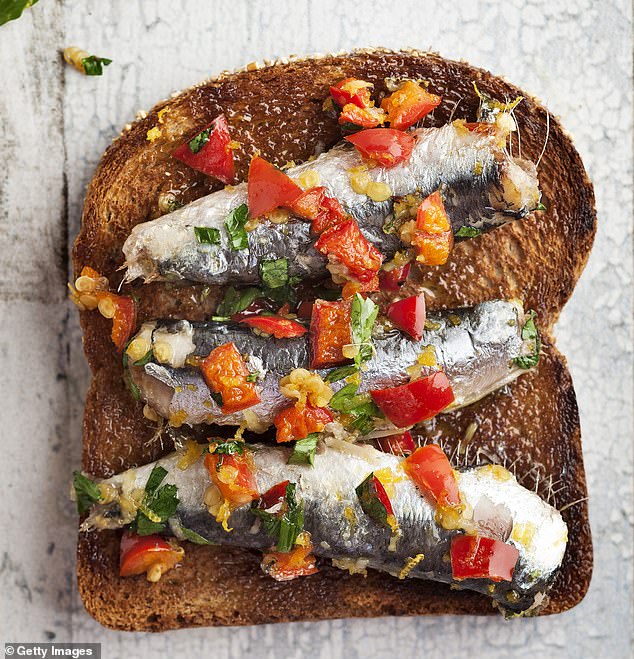
‘Sardines are nutritionally superior to tuna too,’ she tells me, ‘They are a powerhouse of omega-3s, vitamin D, and calcium with lower mercury levels and higher nutrient density’
These are certainly convenient and I found it reassuring to be able to accurately calculate my intake, but the cost was frightening.
Instead, Ruby recommends making time for batch cooking, putting smaller portions in the freezer.
My potential weekly saving: £4.25
Don’t skip breakfast
I’d got into the habit of taking advantage of GLP-1 appetite suppression to skip breakfast, figuring that would fast-track my weight loss and frankly, it was one less meal to worry about.
But, according to Ruby, this puts a lot of pressure on lunch and dinner to meet protein and fibre targets, making it more likely you overeat later in the day.
‘Starting the day with a protein- and fibre-rich breakfast is one of the most effective ways to support sustained energy and appetite control,’ she says. ‘We have a strong biological drive to meet protein needs, meaning we may continue eating carbohydrates and fats until enough protein is consumed.’
She recommends nutritional balanced breakfasts such as cottage cheese or eggs on a slice of dense rye bread (300g of cottage cheese costs about 89p and delivers 9g protein per 100g, eggs contain 6g of protein and cost about 30p each).
The extra expense (roughly £4.19 a week) would be offset by the extra food I would no longer find myself eating in the evening.
My potential weekly saving: £0
Make a packed lunch
Although daily protein targets vary, most dietitians recommend eating 1-1.5g of protein per kg of target body weight. This means I need to try to consume 70-105g of protein a day, which isn’t easy when your appetite is suppressed by GLP-1s. Ruby suggests 25-30g per meal.
However, trying to meet lunchtime protein targets when you’re on the run can leave you at the mercy of premium-priced protein salads from High Street outlets. Although I only buy lunch out twice a week, my favourite Pret Chef’s Italian chicken salad for instance (25g of protein) costs £8.30 and the M&S high protein naked chicken katsu Salad (26g protein) costs £5.75.
Far cheaper to make your own salad in a jar (about £1). And with two hard-boiled eggs as a protein ‘snack’ (11g protein) I can save an extra £2.50 by avoiding Pret’s egg and spinach protein pot £3.10.
My potential weekly saving: £7
Think outside the box
No need to splash out on chicken thigh fillets (£9.33 per kg) when you can roast a whole chicken (£3.03 per kg) and use the meat across a number of meals.
Keep fillet steak (£49 per kg) as a rare treat, because minced beef (£10.38 per kg) contains just as much protein (22g per 100g).
I’m partial to a fresh salmon fillet (£2.65) but Ruby pointed out frozen fillets are cheaper and more likely to be ‘wild’ rather than farmed. Better still, she says, sardines count as an oily fish plus they’re a great source of protein (20g a tin) for just 50p.
‘Sardines are nutritionally superior to tuna too,’ she tells me, ‘They are a powerhouse of omega-3s, vitamin D, and calcium with lower mercury levels and higher nutrient density.’
Potential weekly saving: £2.15
Go semi-veggie
You don’t have to splash cash on meat and fish to meet your protein targets. According to Ruby, you can get all the protein you need from legumes and pulses and boost your fibre at the same time. A tin of beans can cost as little as 50p (see recipe below).
Half a tin of chickpeas (about 120g drained) provides roughly 8-9g of protein plus about 7g of fibre and red lentils are 24g protein per 100g (dry). The key to meeting protein targets for a veggie meal is combining pulses and complex carbs (brown rice or quinoa).
My potential weekly saving: £2.50
Ditch protein powder
I’m a sucker for whizzing up a protein shake if I’m rushing out of the house without eating and I’ve got into the habit of taking a clear protein drink to the gym with me, to keep my protein levels topped up.
But the cost can escalate. For instance, Ancient and Brave Ancestral Protein powder is £52 for 20 servings, so that’s £2.60 for one 22g protein shake. The Bulk clear protein I drink is £29.99 for 28 servings, which is an extra £1 a pop. Ruby tells me if I’m meeting my daily protein targets through good food, I don’t need either.
My potential weekly saving: £3
Natural ways to go
One of the most undignified jab side effects is constipation and, like many jabbers I rely on an occasional Fybogel sachet (£5.65 for 10 which delivers 3.5g fibre) to keep my digestive system moving. My social media feed is currently full of ads for fibre supplements and I’ve been tempted by a fibre shot drink called Deeply (£2 for 7.5g fibre).
Ruby says we should all be aiming to consume 30g of fibre a day, 10g at each meal if possible and she points out that far cheaper (and more nutritious) natural fibre ‘supplements’ come in the form of prunes (four prunes deliver 3g fibre for about 30p) and chia seeds (5g of fibre in a tablespoon for about 9p). I’m happy to take on both. In fact, prunes become my new addiction.

You don’t have to splash cash on meat and fish to meet your protein targets. According to Ruby, you can get all the protein you need from legumes and pulses and boost your fibre at the same time
If you’re struggling to meet your daily fibre targets, it may be heartening to know that a 100g bar of dark chocolate (above 70 per cent) can contain 11g per 100g of fibre (for about £3).
My potential weekly saving: £1.50 (if I avoid the chocolate)
If I stick to Ruby’s tips, I can shave £30 off my weekly food shop. That’s £120 a month, which helps offset the £140 cost of my maintenance dose 2.5mg Mounjaro pen.