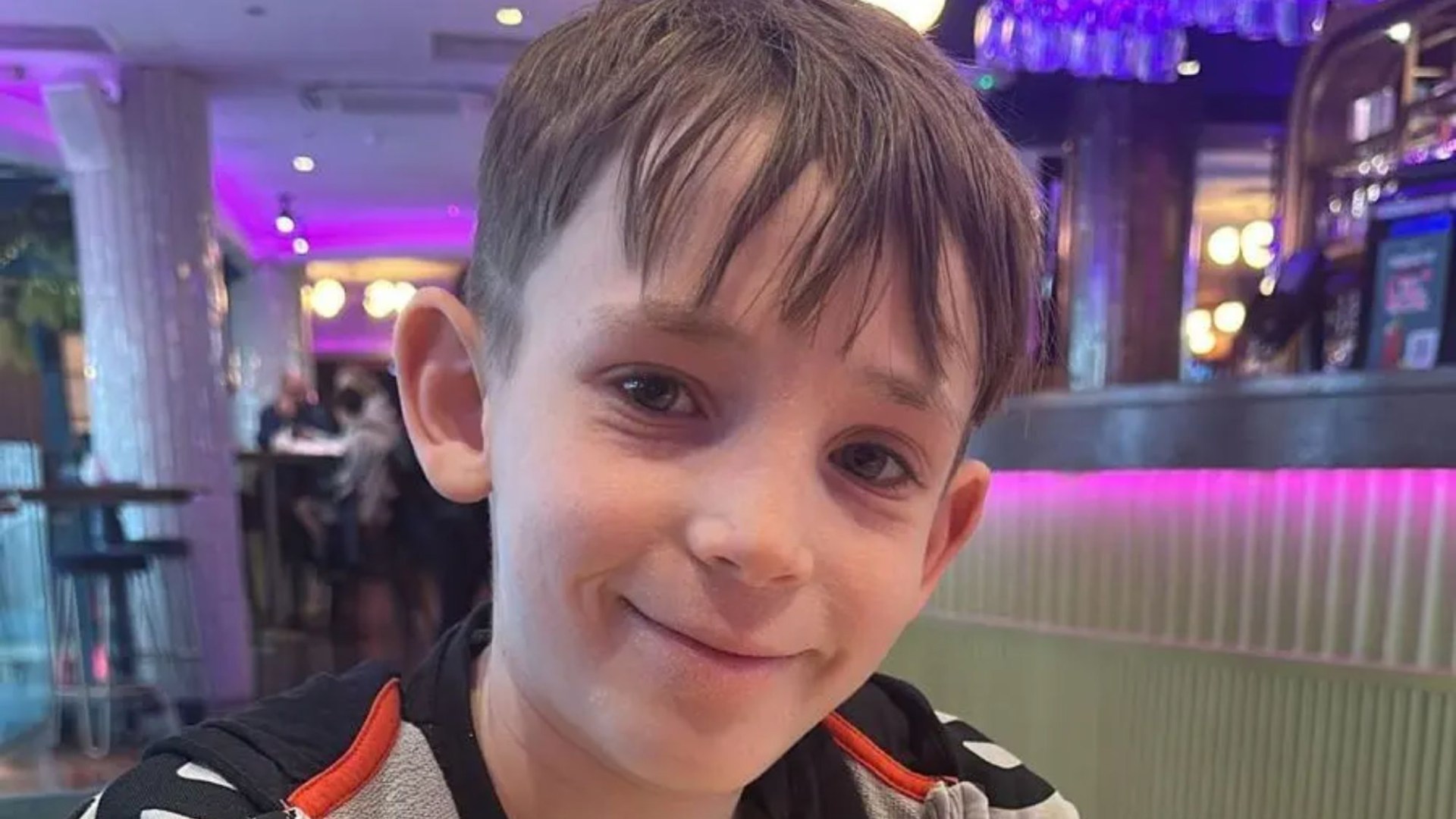
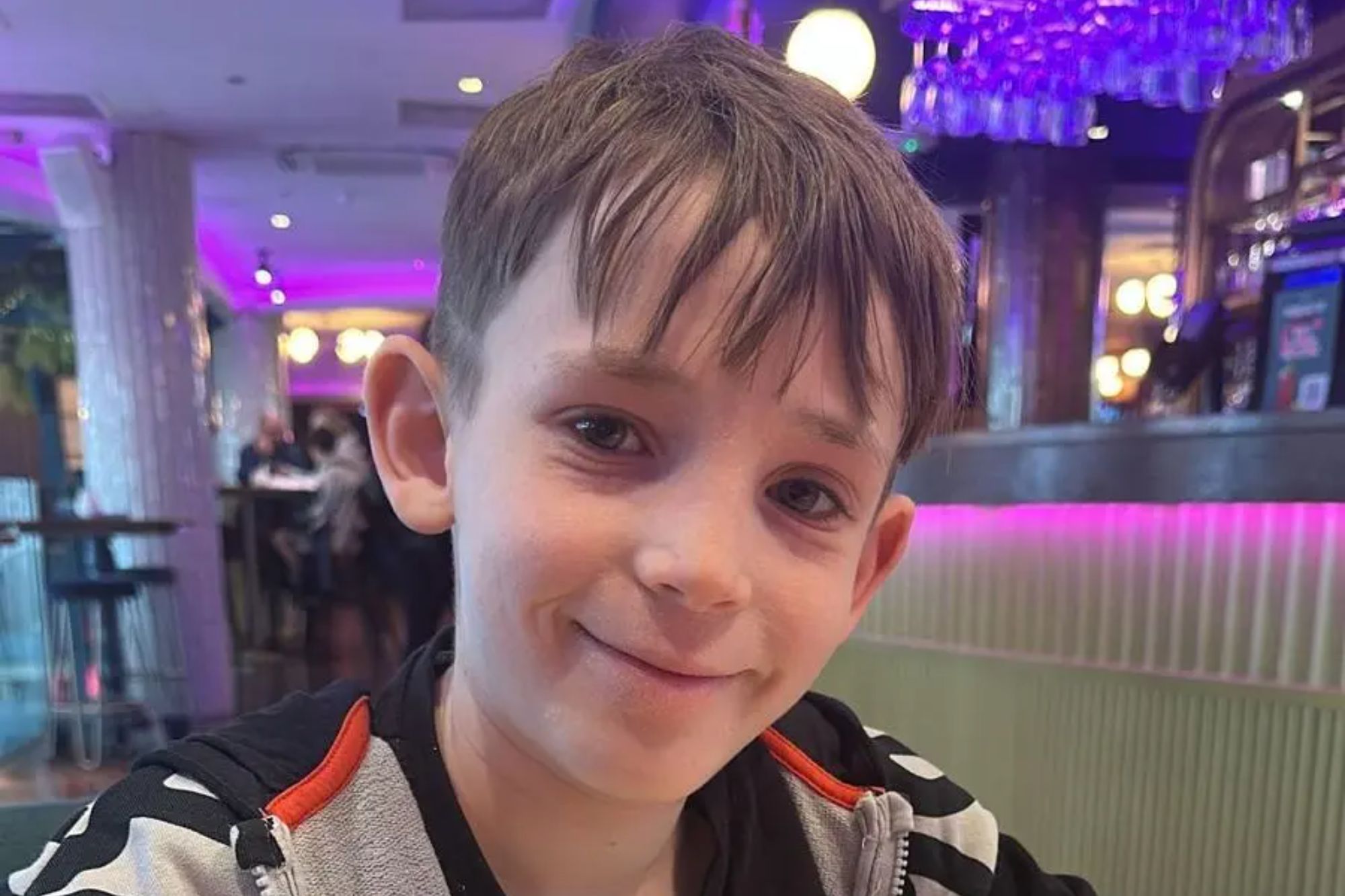
FOR years, parents Amy and Jason nagged their 11-year-old son Joshua Harding to “eat more” because he was slight and pale.
One minute he was running around in the park with his sister. The next, he was fighting for his life in hospital with multiple organ failure, his parents racked with guilt that the signs were there all along.
Prior to September 2025, Amy, 44, recalls that Joshua had suffered pounding headaches – which were blamed on puberty hormones – and a racing heart, dismissed as anxiety.
Yet, the mum, who lives in Rochester, Kent, with husband Jason, 49, Joshua, and five-year-old Alanis, could never have predicted she would be told her son was a “Crash Lander”.
Here, she reveals how she discovered the shocking truth.
“MUM I can’t breathe when I lie down.”
They are words that no parent wants to hear, and as I looked at my then 10-year-old son Joshua, I had a gut feeling that something was desperately wrong.
He looked pale and clammy and his breath seemed shallow.
He’d had a slight cough for a couple of nights, and although Jason thought he would be okay after some Calpol and a good night’s sleep, I had a sense that it was more than a cold.
“I’m going to take him to A&E,” I told Jason, who stayed at home with Alanis.
Hours later, I’d be told my son was in heart failure, he had water on his lungs and his kidneys were shutting down.
Joshua was a typical boy who loved LEGO and riding his bike.
Now he needs a machine to keep him alive and we’re unsure what the future holds.
How had this happened?
Joshua was under the care of a nutritionist for years because he has always been pale, small and light for his age.
We had taken Joshua back and forth to various doctors and specialists constantly and had been endlessly fobbed off.
He didn’t have as much energy as other children, and when Alanis was born, the difference became more obvious.
She is a robust, strong-looking child.
Joshua’s build was completely different to Jason’s two sons from a previous relationship – Oliver, 22, and Lucas, 16.
He had always been a quiet child and we put it down to his inherent personality, but now, I wonder if it’s because he didn’t ever feel well – but he wouldn’t have realised that.
We were told that Joshua needed to eat more in order to grow and Jason and I spent years nagging him about food, as advised by the doctors.
Joshua began experiencing severe headaches in the summer of 2024, that made him feel sick for a year.
The doctors blamed hormones and the optician gave him glasses.
Then, in the summer of 2025, Joshua started to complain about his heart beating too fast.
When I put my hand on his chest, it felt as though his heart was going to burst out.
This time, the GP asked Joshua if he thought it might be anxiety.
Joshua didn’t think so, but the doctor didn’t take that on board and did no basic tests.
But upon insisting, Joshua was sent for an MRI, which eventually came back clear.
If anyone had checked his blood pressure, they might have found that it was dangerously high, and the cause of both his symptoms.
This was discovered once we were in hospital, a year after his headaches began, and two months after his heart palpitations.
We were transferred from hospital to hospital, my anxiety levels ramping up, especially when they carried out a heart echo.
One of the medical staff said they had never seen anything like that before.
Joshua – exhausted and confused – was bluelighted to Evelina Children’s Hospital in London, where yet another team of doctors were waiting for us.
He was attached to all sorts of machines and although I knew how seriously ill he was, I tried to appear positive as I didn’t want to scare him.
I couldn’t believe what was happening.
Less than a day ago Joshua had been playing in the park with his sister and deciding what LEGO set he wanted to build next.
Jason joined me at the hospital and the pair of us sat in a state of shock as the doctors explained they would work out what was going on.
The next day, we learnt that Joshua’s heart was struggling because one of his kidneys was defective. It had been putting pressure on his other organs for years.
We later learned that both of Joshua’s kidneys hadn’t grown properly in the womb, known medically as renal dysplasia.
His body had adapted until it couldn’t anymore.
They used the phrase ‘Crash Landing Kid’ – a term we hadn’t heard before.
The consultant added that when kidneys start to fail, there are no clear signs and by the time it’s apparent something is wrong, the kidneys are already compromised with limited capacity left.
But we were angry. It felt as though a lot of time had been wasted over the years.
The decline in his kidneys could have been avoided, had someone carried out a blood test, which measures waste products and filtration efficiency.
WHAT IS KIDNEY DYSPLASIA?
Kidney dysplasia starts in the womb.
It can be caused by various things – from genetic factors to a mother’s exposure to seizure medication, prescription medicationss or drugs.
It prevents the baby’s kidneys from developing correctly.
Instead, fluid-filled sacs grow where there should have been normal tissue.
For some, it’s manageable: many can live healthily and comfortably with just one kidney.
But for others it’s more complicated.
The condition can make them more prone to urinary tract infections, cramping and exhaustion.
Hypertension and kidney cancer are also slightly more common in people with kidney dysplasia.
If it worsens, patients may need dialysis and eventually a kidney transplant.
Source: National Institute of Diabetes and Digestive and Kidney Diseases
Joshua was in hospital for three weeks and three days in September 2025.
Now, he is on dialysis every night.
This also could have been avoided, and he might have gone straight to a transplant.
At the moment, his body isn’t strong enough for such invasive surgery.
We had training to use the dialysis machine and barely slept the first few nights because of the huge responsibility.
The machine frequently lets off an alarm if Joshua changes sleeping position or if his bladder is full, which means we need to reset it.
We have to record observations daily and if at any point he has a temperature of 37.5 or higher, he has to go straight to hospital.
I’m hopefully going to donate one of my kidneys, and the initial tests are showing I’m a match.
On the plus side, Joshua has grown 2cms and put on 5kg in weight since October.
He’s behind at school and our lives as a family couldn’t be more different.
At the moment, our focus is totally on Joshua’s health.
Both Jason and I have had to reduce our work hours and we don’t often go out as a family anymore.
We are conscious of Joshua’s energy levels and also the fact that he’s immune-compromised because of the dialysis, meaning he’s more susceptible to illnesses.
We’re backing recent calls from leading doctors for a national UK programme to monitor school children for high blood pressure.
The UK National Screening Committee doesn’t recommend routine blood pressure screening for children because it is so rare.
However, if a child is presenting with symptoms such as severe headaches and a racing heart, surely that simple test should be done?
There were so many opportunities to help Joshua and as a family we feel angry and let down by the system that is supposed to support and care.