Goodbye to our beloved British pubs. I honestly do not see how they can survive the hammer blow of last week’s Budget.
Soon, the quirky, independent inns and public houses that were once a mainstay of our culture will cease to exist altogether. The only traditional boozers left will be on television – the Queen Vic and the Rovers Return.
In the real world we’ll have the choice of drinking supermarket lager at home or sitting in soulless chain outlets with plastic tables, paying £10 for a pint of gassy gunge.
And the same is true for the whole of the UK’s hospitality industry. In an act of shocking betrayal, Chancellor Rachel Reeves has sentenced countless restaurants, hotels, cafes and coffee shops to death, hiking rates by tens of thousands of pounds for individual businesses.
Some will see their business rates rise by 400 per cent or more. That spells immediate closure for many, with devastating effects for local economies.
One Lancashire publican contacted me in despair at the weekend. He doesn’t want me to reveal his name, and I can understand why. The wretched man is facing complete wipeout, and his mental health is in tatters.
Already struggling with debts from the pandemic, he will have no choice but to shut his pub before the rates bill arrives. His chances of selling the business are slim. And when he hands back the keys to the brewery, he and his family will lose their home – because they live over the pub.
His marriage is buckling under the strain. He will almost certainly have to go on the dole, since few businesses are hiring middle-aged ex-publicans.
Nobody wins, because he will be costing the Treasury money instead of paying taxes. It’s a personal calamity, and one being repeated on a massive scale across the country.
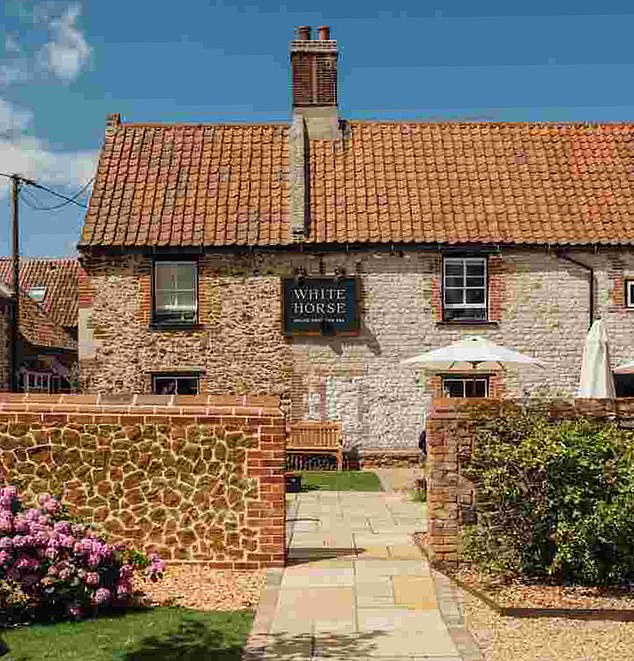
White Horse Holme-next-the-Sea in East Anglia. Owner James Nye says: ‘It feels like the Government is piling on pressure at the very moment we need its backing most’
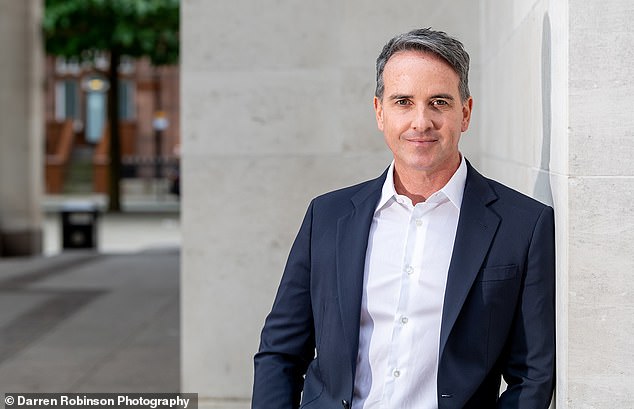
‘Labour sold a pack of bare-faced lies to the hospitality industry at the last election,’ says Sacha Lord. ‘And I was one of those who fell for it’
In Cornwall, Lara Trubshaw of the Peterville Inn in St Agnes told me her business rates have gone from £18,500 to £73,000 in one shattering moment.
The Peterville was named as Visit England’s number one pub in 2024. It has a loyal clientele, including many tourists who come from across the UK and far beyond. But even their enthusiasm is unlikely to keep the beer flowing behind the bar.
Very few small businesses can withstand on-the-spot increases in taxes of more than £50,000.
The fact is that Labour sold a pack of bare-faced lies to the hospitality industry at the last election. And I was one of those who fell for it.
Eighteen months ago, I was a Labour Party member. I was there at the manifesto launch in Manchester, when Ms Reeves stood up and proclaimed herself the Chancellor of Business and Growth.
Here was a politician, engaging with entrepreneurs who run hospitality businesses, and assuring us that she understood our needs.
And she had been doing that consistently for a couple of years.
In November 2022, Labour ran a campaign on social media, promising to ‘scrap business rates and replace them with a fairer system to revitalise our high streets and drive economic growth’.
Last week’s Budget gave the lie to that pledge.
We were expecting that increased levies would be targeted at high-value properties such as warehouses owned by international corporations like Amazon. And we were told that a lower percentage of rateable value would be levied on smaller sites in our towns and cities. That is not what happened.
Labour has already done terrible, lasting damage to the hospitality industry with last year’s National Insurance increase, which was completely unexpected and has cost at least 100,000 jobs. The great majority of those jobs were for young people – the ones working in pubs and restaurants on Saturdays or a couple of evenings a week, trying to earn some cash while studying at college or university.
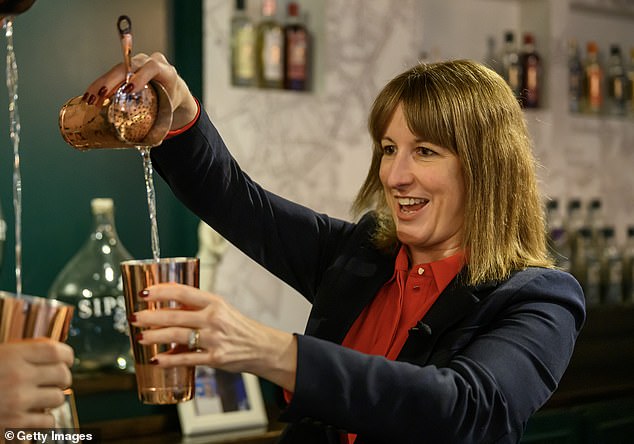
Rachel Reeves on a visit to the Sipsmith Distillery, Chiswick, in October
Casual employment on that scale has been swept away, and that’s a catastrophe for businesses as well as thousands of young people who are desperate to work but cannot thanks to the Chancellor’s indefensible policies.
I can’t make up my mind whether Rachel Reeves simply doesn’t understand how the hospitality industry works, or if she just doesn’t care that she is driving thousands of businesses to the wall. Perhaps it’s both – ignorance and apathy.
Yet hospitality is the third biggest employer in the UK economy. Growth is impossible unless our hotels, restaurants, pubs and clubs, bars and cafes are thriving.
We are already one of the most heavily taxed sectors in the UK. Take the price of a pint. It averages £6.50 in Greater Manchester and nearer £7.40 in London. The profit on that is tiny, just 12p – less than 2 per cent.
VAT, alcohol duty, the brewery’s charges, staff costs, rent and all the other overheads such as utility bills leave the publican with just a handful of coppers. Yet the Chancellor believes pubs can afford to absorb a rise of several hundred per cent in rates. It’s impossible.
As footfall slumps in the new year, I fear the toll will be terrible.
In the past 25 years, Britain has lost around a third of its pubs – about 15,000 of them. Once they close their doors, they are doomed – demolished, more often than not, to make way for housing.
With them we lose a crucial part of our communities. So much of the local economy relies on them – the piemakers, greengrocers and bakers who supply the kitchens, the delivery drivers, the laundries and much more.
Each pub is at the centre of its own ecosystem. Kill that and the economy for miles around suffers. It’s self-destructive madness.
Sacha Lord is chairman of the Night Time Industries Association
‘Labour has hurt us more than Covid’: Hospitality firms reveal how Budget will leave them struggling to survive
By Kathryn Knight
Already struggling under the weight of increased national insurance and minimum wage costs, the hospitality sector was praying for help from the recent Budget.
Instead, pubs, restaurants, hotels and retailers were met with increases to the national minimum wage, and in many cases higher business rates, despite the Chancellor promising to provide relief.
Now Rachel Reeves faces a backlash over business rates raids from hospitality firms over her ‘misleading’ claims to have cut them to 1991 levels.
She announced she would ‘permanently lower tax rates for over 750,000 retail, hospitality and leisure properties’ and pay for it by hiking taxes on larger properties.
But after her speech, many small businesses realised that their bills would actually go up. Read more
For many businesses, not annihilated by Reeves’s first Budget, this will mean a struggle to survive.
Here, four business owners tell the Daily Mail and This is Money about the scale of the challenges they now face.
Budget landed like the final body blow
Eddie Nelder, 61, from near Blackpool, is the owner of Choice Hotels, a family business overseeing five hotels in the North-West, that grew from a modest boarding inn in Birmingham at the end of the Second World War to establishments across Blackpool and the Lake District.
Mr Nelder said: ‘We’ve seen our share of ups and downs in that time, but I can honestly say it’s never felt tougher than it has over the last few years.
‘We’ve told successive governments that we simply can’t survive the way things are going — and this recent budget has landed like the final body blow.’
He points out that surviving the pandemic was challenging but since then, rising utility bills and wage pressures, including last April’s NI and minimum wage increase, have left his business close to the edge.
‘Last April’s announcement cost us £600,000, pushing our operating costs up by £3.2million in the last five years. With a turnover of £20million, that increase has quite literally wiped out our profit.’
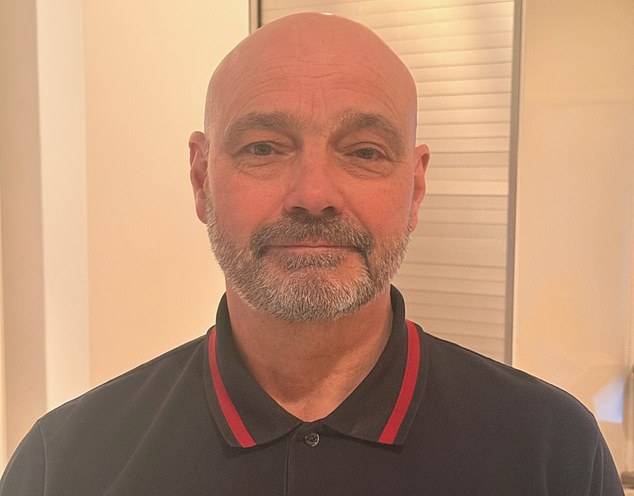
Tough times: Eddie Nelder, 61, from near Blackpool, is the owner of Choice Hotels, a family business overseeing five hotels in the North-West
The hotel owner explained that as a result, his initial reaction to the chancellor’s announcement about a further increase to the minimum wage, was pure disbelief. ‘That means finding another £300,000 a year.’
He said: ‘We run at 90 per cent capacity year-round, so it can’t realistically come from more guests.
‘And it won’t come from redundancies either — we’ve already made twenty staff redundant and are working on a shoestring, running lean. So the only option left is to cut whatever else we can, wherever we can.
‘The future feels so bleak that I’ve been waking up asking myself what the point of it all really is. I work 80 hours a week, but more hours can’t fix a business model that keeps being pulled apart from the outside in.
‘We’re proud of what we built, and we want to keep building — not just for us, but for the communities that grew with us.
‘Right now, it feels like we’re fighting for survival alone. I just wish the people making the decisions could see what we see: businesses like ours don’t just serve people, we hold ecosystems together.
‘If we fall, many fall with us. And that’s not a future anyone should accept willingly.’
No choice but to pass on costs to customers
James Nye, 44 from Hitchin, oversees ten pubs in the East Anglia region, and with margins already razor thin, is concerned about the future under Rachel Reeves.
Mr Nye said: ‘When we emerged from the Covid pandemic, we thought we’d endured the worst that could be thrown at us. We were wrong.
‘What we’re facing now is far harder, because at least during Covid we had recognition and meaningful government support through furlough and business loans.
‘Now it feels like the government are piling on pressure at the very moment we need their backing most.’
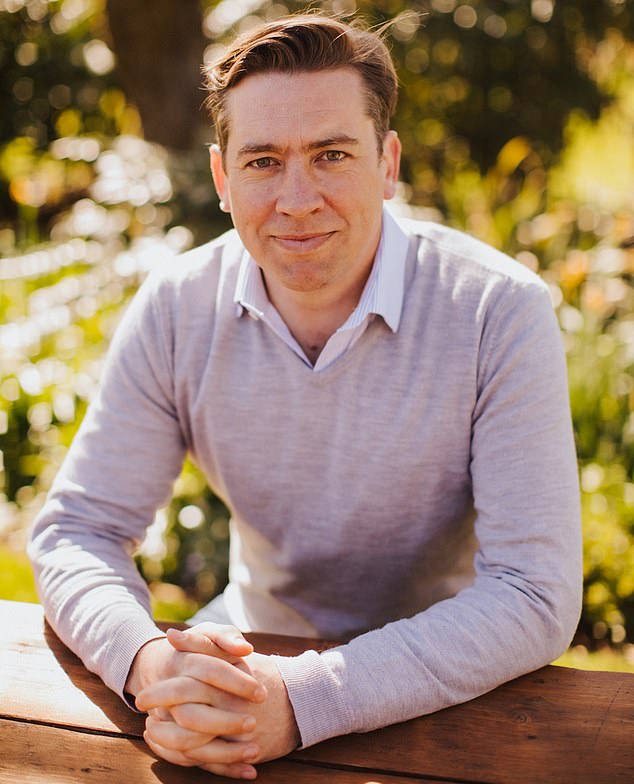
Rising costs: James Nye from Hitchin, oversees ten pubs in the East Anglia region
The Managing Director of the thirty-year-strong family business explained: ‘What will truly scupper us now is the 8.5 per cent uplift in the minimum wage for 18-to 20-year-olds to £10.85. We were already grappling with last year’s National Insurance and minimum wage rises.’
He points out that like all responsible business owners, he wants to pay his teams as well as he can.
‘But the reality is that shrinking margins mean this may end up disincentivising us from employing young people at all. That’s a real shame, as pubs like ours are major employers of youngsters.
‘We’ve had remarkable success stories, watching talent flourish to the point where twenty-somethings manage large budgets and lead thriving teams.’
A budget meeting this morning only served to underline his fears. ‘I saw our costs will rise again next year,’ Mr Nye explained.
‘The only realistic way to absorb it is passing costs to customers — yet footfall is already falling, because people can’t afford to go out as often.’
Meanwhile, he remains baffled by Rachel Reeves’ claims that pubs will pay lower business rates. ‘I honestly cannot understand how she can claim this, as everyone I know is paying more,’ he says.
‘We know what that means: pubs closing at a rate of two a day. That creates less revenue for government coffers and leaves a deeper hole in communities.’
‘Labour doesn’t understand rural communities’
Together with his wife Jane Tyler, 72, Mark Goodey, 69, runs two café-restaurants in the south-west, the Winking Prawn and the Cracking Crab.
Mr Goodney said, ‘I’ve long believed that as a political party, Labour don’t understand anything south of Bristol, particularly rural communities, and this latest budget has only reinforced that view.
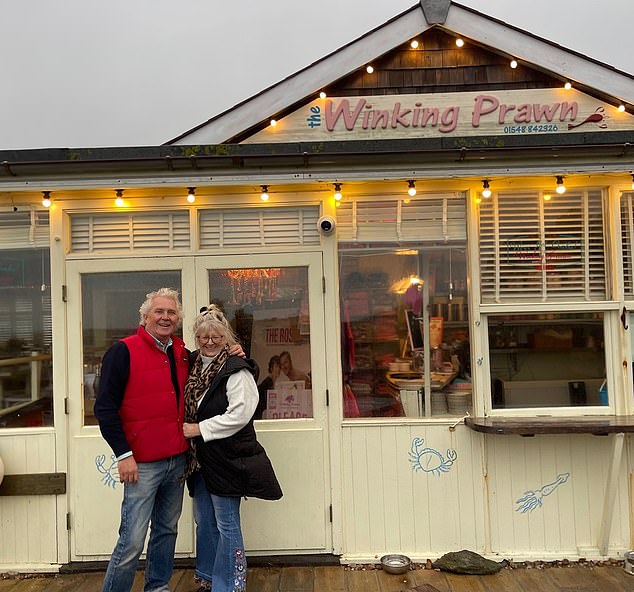
Fresh challenges: Husband and wife team Mark Goodey and Jane Tyler run two café-restaurants in the south-west, the Winking Prawn and the Cracking Crab
A three generation family business – their son and daughter Lucy and Luke Culkin, 43 and 41 also work in the cafes, along with their 20-year-old granddaughter Bella – they say that having been in the trade for thirty years it’s never been harder.
‘Like many in hospitality, we’ve been battling ever-decreasing margins caused by spiralling rent, rates, and wage costs,’ Mr Goodey explains.
‘However, last year’s rise in National Insurance was a real blow, not least because we had no chance to plan for it.
Heading into this year’s budget, we clung to hope around the rumoured rates reduction, only to find that the rateable value of both our sites has increased.
So we’re worse off, and that’s before factoring in the minimum wage rise for 18- to 20-year-olds.’
In their case, while all staff aged 21 and over are already paid above the minimum wage, the expectation now is that 18 to 20-year-olds will receive the full minimum wage, regardless of capability or experience.
‘That’s a major challenge with new seasonal hires,’ Mr Goodey says. ‘It also makes protecting pay differentials for older staff far harder.
‘I know the government wants to promote apprenticeships, but apprentices need twelve months of stable employment, which we simply can’t offer.’
It has left both he and his wife worried about the challenges facing their children who will eventually take over altogether. ‘We can’t run it for ever and I do worry what the future holds,’ he says.
‘Minimum wage hike means we can’t hire anyone’
Hasna and Shahid Vakkayil, run a convenience shop at a filling station near Sawtry, Cambs.
Mr Vakkayil, 43, said of his wife: ‘Hasna worked as a research associate at a university before we decided to take on the lease of the shop.
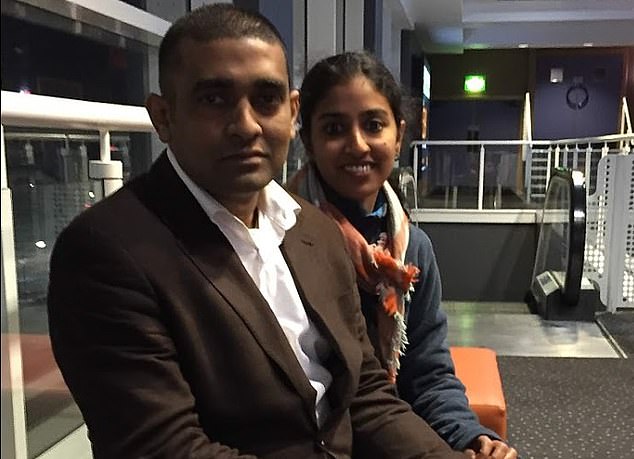
No help: Hasna and Shahid Vakkayil, run a convenience shop at a filling station near Sawtry, Cambs
‘We saw it as a challenge – the area is very quiet, and it looked like it was going to shut down which would have been a disaster for locals who would have to travel miles to get a pint of milk.
‘We wanted to try and turn it around, but I didn’t realise quite how hard it would be. While I have business experience, the margins are so small – we only earn around £40,000 a year between us.
‘We can survive on that – just – but the hike in the minimum wage means we can’t afford to employ anyone at all.’
The store owner points out that as parents to Dilawar, seven, and Dilhan, three, the couple are limited in terms of the hours they can put into the shop.
‘We’d love to open more, but we have a family to look after, so that in turn affects what we earn,’ he says.
‘I wish the government would give people like us more support. We really want to contribute, but things just get harder.
‘Our request for a bus stop near here to increase footfall is met with stonewalling. So it’s a struggle, but we will do our best to open this shop for the public as much as we can.’